 | Create a one of a kind personalized gift. It's fun and easy to design! From our sponsors |
| CNN.com - Top Stories |
| CNN.com delivers up-to-the-minute news and information on the latest top stories, weather, entertainment, politics and more. |
North Korea to 'judge' American
9/7/2014 6:57:22 PM
- Matthew Todd Miller accused of tearing up visa, seeking asylum
- He told CNN he expected to be sent directly to prison
(CNN) -- Matthew Todd Miller, an American being held in North Korea, has a September 14 judgment date, according to state news agency KCNA.
Miller, who is accused of tearing up his tourist visa and seeking asylum upon entry, implored the U.S. government for help during a recent interview with CNN's Will Ripley.
"My situation is very urgent, that very soon I am going to trial, and I would directly be sent to prison," he told Ripley.
He said he's admitted his guilt and apologized to the North Korean government, but he will not learn of his charges until the September 14 hearing.
The report Sunday on KCNA said only, "The Supreme Court of the Democratic People's Republic of Korea decided to judge American Miller Matthew Todd now in custody on September 14, according to the indictment of a relevant institution."
CNN also had brief interviews with Kenneth Bae and Jeffrey Edward Fowle in North Korea.
North Korean diplomacy: Americans as bait
How North Korea may be using U.S. detainees as 'bargaining chips'
Ebola a U.S. 'national security priority'
9/7/2014 8:08:07 PM
- President Barack Obama: "We have to mobilize the international community"
- On "Meet the Press," he warns inaction could have dire consequences down the road
- The president of Doctors Without Borders has criticized the U.S. response
Washington (CNN) -- President Barack Obama on Sunday signaled for the first time that he is likely to dispatch U.S. military resources to help fight the serious outbreak of Ebola in several countries in West Africa.
"We have to make this a national security priority. We have to mobilize the international community, get resources in there," the President said to Chuck Todd on NBC's "Meet the Press."
"We're going to have to get U.S. military assets just to set up, for example, isolation units and equipment there, to provide security for public health workers surging from around the world."
Obama's comments come after sharp criticism from Dr. Joanne Liu, president of Doctors Without Borders, last week.
"States with the required capacity have a political and humanitarian responsibility to come forward and offer a desperately needed, concrete response to the disaster unfolding in front of the world's eyes ... rather than limit their response to the potential arrival of an infected patient in their countries," Liu said.
Obama cautioned that inaction could have dire consequences.
"If we don't make that effort now, and this spreads not just through Africa but other parts of the world, there's the prospect then that the virus mutates. It becomes more easily transmittable. And then it could be a serious danger to the United States," Obama said.
American Ebola survivor Dr. Keith Brantly pleaded for help from the international community in a recent op-ed for Time.
"The national governments of West Africa are overwhelmed," Brantly said.
"This is a global problem, and it requires the action of national governments around the world."
Obama echoed Brantly's sentiments, arguing that U.S. leadership is necessary for a health crisis of this magnitude.
"When I go before Congress, and I say, 'Let's give some public health aid to countries like Liberia, so that they can set up hospitals and nurses and vaccinations, et cetera,' you know, sometimes, you know, the American public says, 'Why are we wasting money on them?' " Obama said, explaining, "When we make those short-term investments now, it really pays a lot of dividends in the future."
The Ebola outbreak has been centered in Guinea, Sierra Leone and Liberia, with a handful of cases in Nigeria. The overall fatality rate is 50%, WHO said, ranging from 39% in Sierra Leone to 64% in Guinea, according to the latest figures.
Sierra Leone plans nationwide lockdown
Mariano Castillo and Greg Botelho contributed to this report
Scotland: Could it really go it alone outside UK?
9/8/2014 8:44:44 AM
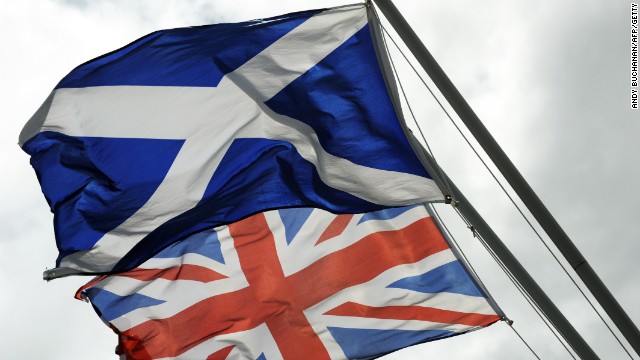
- Scotland is holding a referendum on independence on September 18
- Voters will face a yes/no question: "Should Scotland be an independent country?"
- A poll on Sunday for the first time suggested that the "yes" campaign had the edge
- YouGov says that reflects a statistical dead heat; other polls also suggest "yes" is gaining
(CNN) -- With less than two weeks to go until Scotland's referendum, polls suggest an increase in those favoring independence from the United Kingdom, with one survey for the first time putting the "yes" vote ahead.
On September 18, voters in Scotland will be presented with a simple yes/no question: Should Scotland be an independent country?
A "yes" vote would mean Scotland splits from the rest of the United Kingdom -- that is, England, Wales and Northern Ireland.
Activists on both sides are stepping up their efforts as the historic referendum approaches.
A YouGov poll conducted for The Sunday Times and released on Sunday showed the "yes" vote at 51% and "no" at 49%. The poll of 1084 voters excluded undecided voters and YouGov said the numbers represented "a statistical dead heat."
YouGov President Peter Kellner said a 2-point gap was too small to predict the outcome of the referendum but demonstrated that support for the "Better Together" campaign had fallen "at an astonishing rate." Four weeks ago YouGov put "no" at 58% and "yes" at 42%, Kellner said.
"The Yes campaign has not just invaded No territory; it has launched a blitzkrieg," he said.
Kellner said voters from the Conservative party had continued to oppose independence but that all other voters had moved closer toward a breakaway Scotland.
Meantime a Panelbase poll commissioned by Yes Scotland and also released Sunday suggested that 48% of voters supported independence -- excluding undecideds -- while 52% wanted to remain united.
A "poll of polls" compiled by ScotCen put the "yes" vote for independence at 47% and the "no" vote at 53%. The company, which describes itself as an independent social research center, said those results were based on three polls from YouGov, two from Panelbase and one from Survation.
It also suggested that the "yes" vote was gaining momentum, while the "no" vote was losing it.
Negative campaign?
The Scottish government, led by the Scottish National Party, says this is a "once in a generation opportunity" for Scotland's people to take control of the decisions that affect them most. A "yes" vote means that "Scotland's future will be in Scotland's hands," it says, and that life will be better and fairer for its people.
Scotland's first minister and SNP leader Alex Salmond has been a vocal proponent of independence.
British Prime Minister David Cameron wants Scotland to remain part of an undivided United Kingdom of Great Britain and Northern Ireland. He says that it is a decision solely for the Scottish people -- but that remaining part of the United Kingdom will give them security and strength. "There will be no going back," he warns.
YouGov said voters felt that the Better Together campaign had been negative, while Salmond was "offering an optimistic future."
"It may be that some voters are finding the prospect of voting for positive and well-presented vision of their country's future as more attractive than the negative mood coming from the No camp," ScotCen commented.
Pound sinks
The British pound sank on Monday, with CNNMoney reporting that it reflected uncertainty over the outcome of the Scottish referendum and an increased risk of a "messy divorce."
Salmond has said he wants Scotland to continue to use the pound in a currency union with the rest of the United Kingdom.
But the three main parties in Parliament -- David Cameron's Conservatives, their coalition partners the Liberal Democrats, and Labour -- have all said that won't be an option.
The referendum could end Scotland's 300-year union with England and Wales as Great Britain and see it launch into the world as an independent nation of some 5.3 million people.
The Scottish government anticipates it would become formally independent in March 2016, ahead of elections in May of that year.
Scotland has long had a testy relationship with its more populous neighbor. The Act of Union in 1707 joined the kingdom of Scotland with England and Wales, but many Scots were unhappy at being yoked to their longtime rival south of the border.
Since 1999, Scotland has had devolved government, meaning many, but not all, decisions are made at the Scottish Parliament in Holyrood, Edinburgh. In May 2011 the nationalist SNP, which had campaigned on a promise to hold an independence referendum, surprised many by winning an outright majority in the Scottish Parliament.
In October 2012, the UK and Scottish governments agreed that the referendum would be held, and the question to be put to voters was agreed on early last year.
Read more: Referendum -- what you need to know
Expert: Vote hinges on economy
9/8/2014 8:39:26 AM
CNN's Jim Clancy speaks to Ben Page about the key issues that Scottish citizens must decide on for the independence vote.
If your browser has Adobe Flash Player installed, click above to play. Otherwise, click below.
Royal baby: Does 'spare heir' matter?
9/8/2014 12:50:48 PM
- The Duchess of Cambridge is expecting her second child, Buckingham Palace announced
- "Throughout history, the only way to secure a throne has been with a phalanx of children"
- Aristocratic wives were once told they needed to provide an "heir and a spare" at least
- The second child has a vital role in carrying out royal duties and obligations
(CNN) -- The Duchess of Cambridge's announcement today puts an end to months of pregnancy speculation. Number Two is on the way and with him or her comes a huge boost for the Royal Family. The level of excitement won't quite be the same as it was for Prince George -- but we can still expect great interest across the world and massive baby fever early next year.
But why does the "spare heir" matter?
One child is never enough for a monarch. Throughout history, the only way to secure a throne has been with a phalanx of children -- nine for Victoria, thirteen for George III.
Aristocratic wives were once told they needed to provide an "heir and a spare" at least -- and the same has always been true for the royals.
Once, this was because high mortality rates meant that the more children the better -- for the first born son didn't always come to be King. Henry VIII was the second son, who became heir and ascended at 17 after the untimely death of his brother, Arthur.
George V was also the second son -- and also became heir after his elder brother died young from influenza. Both men married the women who'd been betrothed to their brothers -- Henry made Catherine of Aragon his queen and George wed Mary of Teck.
The current Queen's father, George VI, was the second son of George V, and was never meant to be king. But when his elder brother, Edward VIII, gave up the throne in 1936 to marry American divorcee Wallace Simpson, the heir became the king -- much to his own surprise.
Now we don't expect the second child will come to rule, but he or she still has a vital role in carrying out royal duties and obligations. The Royal Family - or "Firm," as the current royals like to call it -- needs plenty of employees for the huge number of royal visits and receptions.
What is different in 2014 is that the heir and the spare heir can be female. After the law changed last year to allow women the same rights of accession to the throne as men, females are no longer pushed to the back of the line.
If the Duchess of Cambridge's baby is a girl, she will be the next in line to the throne after her brother -- even if more sons follow.
This baby will be a huge boost to the Royal Family - and "Brand Windsor" across the world. But what will his or her life be like? The role of the second-in-line is not easy.
For Princess Margaret being younger sister of the heir was no picnic -- she had all of the downsides of being royal, such as lack of privacy and restrictions on freedom, without the great compensation of becoming Queen. Unable to find a role for herself or marry the man she loved, the Princess sank into depression and ill health.
Prince Harry, too, has been clear on how hard it is to find an occupation -- he was eager to fight on the frontline in Afghanistan but was accidentally exposed by Australian media and had to return. It's also been hard for him to find a woman who will take on the royal role.
"Royals are only private in the womb," said the governess of Elizabeth II. We are fascinated by royal children -- most of all by the second or the "spare heir." What will be even more difficult for this second child is that he or she will grow up in a world of camera phones and social media, where private photos are gold dust and royals are the biggest celebrity big game of all.
The life of the second child can be exciting and dynamic -- but most of all it is one of extreme fame -- and a lot of responsibility.
READ: Prince George: 5 things to know
READ: Royal baby name: The history behind George Alexander Louis
6 months on, no end to MH370 mystery
9/8/2014 12:57:55 PM
- On March 8, MH370 veered off course and vanished from radar en route to Beijing
- Millions of square kilometers of ocean surface have been searched
- The deepest parts of the sea will be the next place searchers send their equipment
- Family members of the 239 people on the plane have been left still seeking answers
(CNN) -- Six months ago, the story began as a puzzling news bulletin. A Malaysia Airlines passenger jet with 239 people on board had vanished from radar screens as it was flying from Kuala Lumpur to Beijing.
The disappearance was quite the mystery. Was it a terrorist attack? Was there a mechanical failure that led to a crash? Did the plane go down over land or water? Were there any survivors?
We all figured the answers would come after searchers found the aircraft or its wreckage.
Half a year later, it remains a deep mystery. No part of the plane has been discovered. Not one speck of debris.
A Boeing 777-200ER just disappeared. With 227 passengers and 12 crew members on board, it just vanished.
Authorities are convinced the plane crashed March 8 in the southern Indian Ocean. Satellite data and radar information indicate the plane turned off course and most likely went down about the time it would have run out of fuel.
Officials don't know why it flew off course.
Looking for debris yielded nothing but garbage
Airplanes and ships searched the surface of the ocean for nearly two months, with each report of debris turning out to be a false lead or flotsam from another source. To date, more than 4.5 million square kilometers of sea have been scoured.
An underwater drone with sonar took the search beneath the waves in mid-April and looked for the source of four underwater pings picked up by devices towed by ships.
The pulses were encouraging because they were of a frequency close to that used by the locator beacons on the plane. The four signals were within 30 kilometers of one another.
More days of searching followed. Dozens of underwater missions over hundreds of kilometers. Still nothing.
Heartbroken family members of the people on board the plane have been left still seeking answers.
Deciphering the noise
Recently, Australian researchers said they had recovered another underwater sound recorder that was in the ocean when MH370 vanished. They found a signal similar to one they noticed on recordings from other devices pulled from the water. It could be a noise made by the plane crashing.
As with many possible clues in this strange case, there is a big but.
The researchers at Curtin University believe the sound or sounds came from an area thousands of kilometers to the northwest of the search area.
The signal seems to have originated close to the tip of India, near a geologically active ridge -- meaning the recordings are most likely those of a seismic event.
Experts poring over data
The latest clue comes from a failed satellite phone call from the airline's staff on the morning the plane disappeared. Subsequent analysis of the failed call has given experts a better idea of the aircraft's position and where it was traveling, Australian Deputy Prime Minister Warren Truss said August 28.
And that data indicates the missing passenger jet may have turned south slightly earlier than previously thought.
The next phase of the search for the remains of the plane and the people on board is primarily focused on a 60,000-square-kilometer area, roughly the size of West Virginia, in the southern Indian Ocean.
Forbidding undersea terrain
A deepwater search that will involve three ships is expected to start in the area in late September, using a range of sophisticated sonar equipment. The process is forecast to take as long as a year and cost $48 million, officials have said.
Ships have already been mapping the undersea terrain in the isolated swath of ocean to help the searchers. Much of the geography of the area was previously unknown before MH370's disappearance drew attention there.
And some of it will be very, very difficult to search, with the mapping survey showing undersea volcanoes and steep ridges.
The latest analysis of the data indicates that southern areas of the huge search grid may be of high interest, Australian officials have said, suggesting that the zone is likely to be further adjusted.
Job cuts at airline
The loss of MH370 and the shoot-down of Malaysia Airlines Flight 17 over Ukraine in July have contributed to 6,000 people at the airline losing their jobs because of heavy financial losses.
The carrier reported in late August that it lost $97.4 million in the second quarter.
Malaysia Airlines was once a symbol of national pride. But the airline was in big financial trouble before the twin disasters of Flight 370 and Flight 17 claimed the lives of 537 people.
Australia: MH370 may have turned south earlier than previously thought
Hard areas found in search zone unlikely to be man-made
CNN's David Molko contributed to this report.
Turn ISIS crisis into opportunity
9/9/2014 1:28:23 AM
- Jane Harman: President Obama is right to go to Congress over ISIS strategy
- Since 9/11, relationship between Congress, president has collapsed, Harman says
- Poll: 60% of Americans support air and drone strikes against ISIS in Syria
- Crisis over ISIS can be seen as opportunity to abandon blame-game politics, Harman adds
Editor's note: Jane Harman is president and chief executive of the Woodrow Wilson International Center for Scholars. A former U.S. representative from California, she was the ranking Democrat on the House Intelligence Committee from 2002 to 2006. The opinions expressed in this commentary are solely those of the author.
(CNN) -- President Barack Obama has properly decided to go to Congress and then the American people this week to reveal his strategy to degrade and destroy the Islamic State of Iraq and the Levant (ISIL or ISIS). To paraphrase former White House Chief of Staff Rahm Emanuel, this is a crisis the President should not waste. How individual members of Congress respond to this call should matter and should be a 2014 election issue -- the duck and blame game stops here.
Since September 11, 2001, the relationship between Congress and the president has collapsed. Following the lead of President George W. Bush, President Obama has used Article II commander-in-chief authorities, plus the quaint and seemingly ancient 2001 Authorization for Use of Military Force, or AUMF, to hijack Congress' constitutional responsibility over war and peace.
As a member of Congress, I witnessed the transformation. I was there on 9/11 and a senior member of the House Intelligence Committee. But House Speaker John Boehner, The New York Times recently pointed out, is the only member of House Republican leadership who was in office on the day that changed this country. And Democrats have faced turnover, too; institutional memory of a time before the 2001 AUMF is fading fast.
Speaking to Chuck Todd for "Meet the Press" this weekend, Obama suggested he has "the authorization he needs" for the mission he has in mind,- but no one is clear on what authority he's invoking. Jack Goldsmith, writing for Lawfare, suggested recently that the Obama administration might think it can restart the War Powers clock with each notification it sends to Congress. By this otherworldly interpretation, we aren't fighting a war with ISIL, we're picking a dozen sequential fights with ISIL (which calls itself the "Islamic State"), and will continue doing so until the President decides he has achieved his objectives.
With all this going on, it's no wonder that we've struggled to craft a coherent response to this depraved band of thugs. There's a reason Obama doesn't feel able to trust this hyper-partisan Congress, but this is a poor way of shaping strategy. It's also an attitude that blows the War Powers Resolution to pieces and evokes Richard Nixon's actions in Vietnam.

But it doesn't have to be this way. A change can start immediately, at no cost to the President.
When he speaks with congressional leaders, Obama should -- at the very least -- be explicit about what he believes his authorities to be. Can he strike Syria on his own authority? Can he keep up the air campaign in Iraq indefinitely by hitting the snooze button on the War Powers alarm every few weeks? If he believes the answer is yes, Congress deserves to know as much. But if the President believes he has these authorities, he's setting a very dangerous precedent. He does need a vote -- and he should want it, too.
President Obama has an opportunity to unite Congress and the American people behind a cause on which they seem (for a change) to agree. This is not the same country that Obama addressed last year, when Syrian President Bashar al-Assad's use of chemical weapons came to light. In September 2013, 55% of Americans opposed airstrikes against al-Assad even if the President were to secure congressional approval. Today, 60% of Americans, including majorities in both parties, support air and drone strikes against ISIL in Syria.
If the President will explain and defend his plan for countering ISIL, he likely has a congressional and public majority ready to back it. Its outlines are clear: no American boots on the ground; strikes on ISIL wherever it is (Iraq, Syria, and beyond if necessary); sustained support for the Kurds, Syrian opposition fighters, and Iraqi troops on the front lines; and a coalition of Western and Arab nations dedicated to shepherding ISIL into its grave. This seems to be the fight that President Obama already has in mind.
On Tuesday, he should ask congressional leaders for the authority to wage it. On Wednesday, he should be clear about his objectives and the costs, and he should ask the American people for their support. And on Thursday, we should hope to mark a sea change in the way the United States conducts foreign policy.
We used to treat these debates with reverence. Describing the vote to authorize the use of military force in the Gulf War, venerable Sen. Robert Byrd said, "I've cast 12,822 votes during my 39 years in Congress, but this vote is the most important vote that I shall have cast in my career." We could use more of that spirit today -- and we'll need it when the next threat, whatever it may be, rears its head. After all, the current dysfunction is deeper than ISIL.
The fact is that this crisis can be an opportunity for both ends of Pennsylvania Avenue. Voters are paying attention. The duck and blame game on this issue isn't good politics -- and it's reckless policy.
Join us on Facebook.com/CNNOpinion.
Follow us on Twitter @CNNOpinion.
Read CNNOpinion's new Flipboard magazine
Rabies fight kills 5,000 dogs
9/8/2014 7:58:19 PM
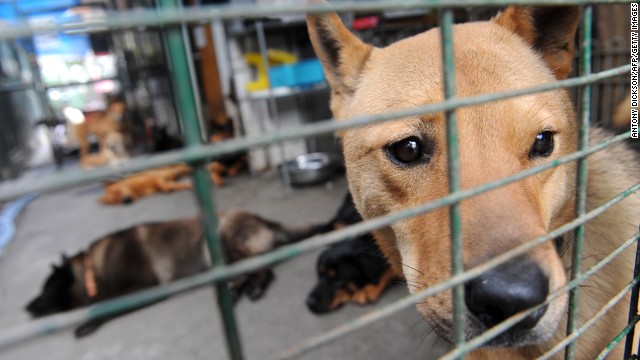
- City in southwest China kills almost 5,000 dogs
- Rabies has killed five people in Baoshan
- Municipal government has vaccinated 100,000 dogs
Hong Kong (CNN) -- Authorities have killed almost 5,000 dogs in one Chinese city after rabies was blamed for the death of five people, China's official Xinhua news agency reported on Sunday.
Municipal authorities in Baoshan, in the southwestern province of Yunnan, culled 4,900 dogs and vaccinated 100,000 in its anti-rabies campaign, Xinhua reported.
The report said that four people died from rabies in August and one in July following dog bites.
Rabies outbreaks had been relatively rare in the past five years, Xinhua said. In 2006, at least 16 people died of the disease in the eastern province of Shandong.
China often orders stray dogs to be culled in an effort to prevent outbreaks of rabies but, as dog ownership has become more popular in affluent areas, some animal activists have decried the practice, calling for animals to be vaccinated or sterilized to keep dog numbers down.
According to the World Health Organization, rabies is a virus that spreads to human through close contact from animals, usually a deep bite or scratch. It spreads through the central nervous system, leading to fatal inflammation of the brain and spinal cord.
Effective treatment with a course of vaccines can prevent the onset of symptoms and death.
READ: Chinese festival serves up dog meat
READ: Dog boom as China's attitudes on pets changes
Muslims: We're not all extremists
9/8/2014 12:56:38 PM
- It's depressing to witness the branding of all Muslims as the "same," writes Lauren Booth
- Booth: Muslims are labeled as sharing the values of groups that do not represent our faith
- Extremist jihadist groups have focused its killing on Muslims first and foremost, she writes
- One ingredient for a long-term solution is the ideal of "fairness," she says
Editor's note: Lauren Booth is a freelance journalist and broadcaster. Her ground breaking work includes "Remember Palestine" and "Diaspora" for Press TV. In 2010 she embraced Islam. Lauren currently hosts "Talking Booth" on British Muslim TV. She tours internationally, giving lectures on topics including: The Media and Islam and Why Women Convert. To read more articles by this writer visit: LaurenBooth.org. The opinions expressed in this commentary are solely those of the author.
London (CNN) -- "Here we go again," I sigh, browsing news channels. Each one, leading with the chilling buzzwords: "Islamic State" and "Jihadist Murder."
Not since the weeks following the September 11, 2001 attacks in New York has turning on the TV been so demoralizing for Muslims across the globe.

I have that same sinking feeling whenever an atrocity takes place which is broadly placed at the feet of the "Muslim world." Because, "Hi, I am Lauren and I am a Muslim" -- should there be a new support group?
What's depressing as a "revert" (Muslims believe everyone is born into their faith) to Islam is to witness the casual sleepwalk towards the branding of all Muslims -- wherever we live and whatever our lives -- as the "same."
As the wider community watches this dangerous pantomime unfold, it is significant that the question asked (again) of Muslim Britons or Americans is not: "How do we tackle these challenges together?" but "what can be done about 'extremism' in your community?" This question pushes millions of us outside mainstream society, causing fissures where fault lines already exist.
Almost a decade ago, as the (Christian) head interviewer at the Islam Channel in the UK, my job put me into contact with some of the Muslim world's most prominent clerics, academics and leaders. My contact with many chilled-out, clean-living and gentle people -- offering me kindness, food and shelter -- led me to research the world's fastest growing faith. I came to embrace its central concept: the "Oneness of God."
During this time, I also visited Palestine as a reporter. My working life in the Western media had not prepared me for the experience. I realized that I had been misguided about Islam and its people by the political mantra, best summarized as: "You're either with us or against us."
One day, reporting from a refugee camp in Gaza, I was led by a group of shoeless children to a dark living room, lit only by candles due to a power cut. An elderly lady offered me tea and I found myself alone with a short-bearded young man in jeans and a t-shirt, with a serious expression.
"You are now in the house of Islamic Jihad," he said. My eyes took in the impoverished home. My hair was out, my arms on show, and I was in my usual London-style clothes.
"Why aren't you afraid?" The young man asked.
"Because your mum's making me tea," I said.
He went on to tell me that whether I was Christian, American, secular or Jewish, so long as I came to Palestine in peace, he and his colleagues would protect me with their lives and treat me (the sister in law of Tony Blair, former UK prime minister -- no friend of Islam) as their honored guest. For the best part of a decade, this has remained my professional experience. I have also interviewed members of Hamas, Hezbollah and the Al Aqsa Martyrs Brigades. The men I met expressed the same promise to protect my safety.
That particular young man in Gaza would no more recognize the aims or behavior of the so-called "Islamic State," in beheading journalists and threatening the mass murder of other faiths, than your own kids or, for that matter, your average Muslim teenager in Los Angeles, London or Lille would. Yet Muslims -- whether involved in genuine armed resistance in Gaza or simply preparing for college in the Midwest -- are labeled as sharing the values of groups I can confidently say do not represent our faith, our many cultures, or much less our hopes and aspirations.
Lauren Booth
In response to Israeli Prime Minister Benjamin Netanyahu's attempt to link all resistance groups' aims to those of ISIS, Al Falistinya TV in Palestine aired a film clip that better reflects the way ISIS is viewed by most Muslims in the region.
It is pertinent to remind ourselves that despite the abject horror of Western journalists being murdered, ISIS, like all extremist jihadist groups, has focused its killing on Muslims first and foremost.
The NCTC Report on Terrorism (2012) found that "In cases where the religious affiliation of terrorism casualties could be determined, Muslims suffered between 82 and 97% of terrorism-related fatalities over the past five years."
So, do you really think we don't care about extremism? That it's divorced from our reality, or unimportant to our community?
There is an experience that wannabe members of chilling al Qaeda offshoots and people like me share: the inevitable hurried, ill-thought out policy-on-the-run that politicians in the U.S., UK and France will now make off the back of the regular appearance of murder videos.
Every day, Muslims in market places from Kabul to Mosul are more likely to be blown up by "jihadists." And in the West, it is everyday Muslims like me who hold our breaths waiting for the next raft of CIA and British intelligence "measures," which will target citizens based solely on the basis of our religion or ethnicity.
In the U.S., databases showing where Muslims live, where we shop, what Internet cafes we use and even where we like to watch sport are now accepted practices.
Informants -- aptly nicknamed "mosque crawlers" by the CIA -- are sent to our Friday services, pretending to share our faith, then reporting back to the secret service. Unsurprisingly as a result, government bodies are viewed as a hostile entity by Muslim voters who are not radicalized -- simply frustrated. A 2012 survey by the Arab American Institute found that 55% of Arab American Muslims experienced discrimination, while 71% were afraid of expected future increases in discrimination.
Meanwhile in Britain, as Prime Minister David Cameron grandstands using phrases that inflame tensions on the streets here, mosques have been burned and vandalized. Muslims are the target of countless and increasing hate crimes across cities in the UK and Europe.
Those headlines -- the ones that may reassure you -- about "deradicalization" and "crackdowns," mean that your quiet, non-drinking Muslim neighbors and I must now prepare for more phone spying, more friends receiving alarming visits from secret agents and more hassle at the airport.
For those young men whose inner confusion, drug addiction, mental health problems or yes, even extremist grooming, makes them want to join some murderous group, one of the biggest recruiting lines is "the West vilifies you and your community."
So why do politicians think more mass surveillance and persecution is the answer?
One ingredient for a long-term solution to the brainwashing of a small number of young people is one that is missing from this week's political rhetoric -- yet again. This is the ideal of "fairness," at home and abroad, for Muslims.
This may be shocking to read at a time when "Muslims" are shown wearing bonnets and carrying long knives for slaughter videos. Yet the answer is staring us all in the face and has been since 9/11 first made Muslims in the West afraid to turn on the TV. Millions felt the same horror watching footage of Bagram and Guantanamo Bay. Are we all humans with rights or are we not?
The U.S. and its allies are preparing to re-enter Iraq again by air and perhaps eventually by land. Now is the time to propose a coherent strategy abroad that does not, and will never again, name the mass slaughter of Muslim civilians as "collateral damage" in a war they want no part in. A strategy should be proposed at home that includes honest, free debate between the Muslim community and the government on issues such as foreign policy and anti-terror measures, without prompting fear for our own freedom and security.
Now that really would be radical. In a good way.
READ: Exclusive: From Scottish girl to ISIS bride
READ: Why we must all challenge ISIS
MAPS: Where do jihadis come from?
Hot car death charges 'strong'
9/8/2014 10:09:33 PM
- Justin Harris was charged in eight-count indictment in hot car death case
- Cevallos: The counts are structured to maximize the chance of a conviction
- Cevallos: In Georgia, even an unintentional act can be grounds for murder conviction
- He says sexting charges will be easiest to prove and could influence entire case
Editor's note: Danny Cevallos is a CNN legal analyst, criminal defense attorney and partner at Cevallos & Wong, practicing in Pennsylvania and the U.S. Virgin Islands. Follow him on Twitter: @CevallosLaw. The opinions expressed in this commentary are solely those of the author.
(CNN) -- Justin Ross Harris was indicted last week on eight counts in the hot-car death of his 22-month-old son, Cooper. Harris could face the death penalty if prosecutors decide to seek it and he's convicted of the most serious charge.
However, the felony murder charge predicated on second-degree child neglect -- which was the original charge at the probable cause hearing months ago -- still poses the biggest threat to Harris' freedom. That, and, of course, the sexting charges, which will likely be the easiest to prove.
But make no mistake: That felony murder charge will be how the prosecution can convict Harris of his son's murder, even if the killing was unintentional, and, in Georgia, if the underlying felony was unintentional.

Each of the eight counts plays a key strategic role in maximizing the state's chances of a conviction against Harris. Following is a breakdown of these carefully calculated charges. The brilliance of the strategy is in the details.
Murder in Georgia: Most states divide murder into degrees. Georgia does not. In Georgia, there's only one degree of murder, but with very different kinds of killings qualifying as murder.
In this case, two types of murder are alleged: 1) an intentional killing called "malice" murder, and 2) "felony murder," an enigmatic unintentional killing, that is still classified as murder because it is the result of an enumerated felony.
Even more complicated, in this case, two different subcategories of felony murder are alleged using child neglect crimes as the predicate felony. Any of these convictions carries a minimum life sentence, but only malice murder is eligible for the death penalty.
Count 1 -- malice murder: This is the murder with which we are all familiar. It's the kind committed in the Rue Morgue, or by Professor Plum with the candlestick in the billiard room; or any of the "Murders She Wrote." Film, literature and even our board games reflect our cultural assumptions about murder -- that it's an evil crime reserved for the most wicked intent. In Georgia, that's called malice murder, which is defined as a killing with "malice aforethought," or intent to kill.
There are two kinds of malice: express and implied. Express malice is that deliberate, manifested intention to end another's life. The reality is, however, that direct evidence of deliberate intent is a rarity. Defendants don't always volunteer: "I shot the sheriff."
It's quite the opposite. Nearly all defendants steadfastly maintain their innocence; they're more likely to deny shooting the deputy. That's why the law allows for malice to also be implied from the circumstances, as long as the defendant's behavior demonstrates an "abandoned and malignant heart."
Whether express or implied, to convict here the prosecution has a heavy burden to prove this mental element. That's why felony murder is a much more appealing and devastating weapon in the charging arsenal.
Counts 2 and 3 -- felony murder (which are predicated on counts 4 and 5, respectively): Felony murder is more of a legal fiction than it is traditional "murder." It is an unintentional killing, but one that happens during the commission of another crime.
The rationale is that if you commit an inherently dangerous felony, you accept the high possibility that a person will die during the act.
An example would be that if you were robbing a bank and one of your co-conspirators went crazy and shot a teller and a cop? Well, you'd be charged with felony murder, even though you didn't pull the trigger. You committed a felony, and a death resulted.
So, to prove felony murder, the prosecution need not prove intent to kill. It only need prove: 1) commission of the underlying felony and 2) a resulting death.
Count 2 is felony murder based upon count 4: intentional child neglect. So, if the defendant acted intending to cause his child cruel and excessive physical pain, and death resulted, he has committed felony "murder" under count 2.
Still the most problematic for this defendant, however, is count 3, which is the original charge from the preliminary/probable cause hearing. This is felony murder predicated on another felony, count 5, second degree child cruelty. But, instead of having to prove the defendant intentionally caused excessive physical pain (first degree), the prosecution here need only prove that he caused pain with criminal negligence (second degree), even if it was unintentional.
The traditional felonies eligible for felony murder were intentional crimes: burglary, arson, rape, robbery and kidnapping.
To allow felony murder for an accident seems inconsistent, but Georgia courts hold that this crime of criminal negligence can be the predicate crime for felony murder. That's right: In Georgia, you can be convicted of murder -- society's most heinous crime -- for your unintentional negligence.
Count 6 -- criminal attempt: As a society, we punish not only completed crimes but also attempts to commit crimes. It makes sense: suppose a bank robber trips and breaks his leg on his way into the bank with his Glock and his President Nixon mask. He is then arrested without even entering the bank to rob it.
We all agree that he cannot escape punishment simply because he's unsuccessful at robbing banks. At the same time, if the would-be robber simply fills up his gas on the way to buy a Glock and a Nixon mask, so he can rob a bank in the future, has he "attempted" a robbery yet? Where's the line?
To the courts, as long as whatever the defendant does is a "substantial step," then he's guilty of attempt. Here, the attempt is connected not to the death of his child but rather to the alleged sexual exploitation of another minor -- the target of the text messaging.
Counts 7 and 8 -- dissemination of harmful material to minors: To many, these charges seem like they are tacked on, but they are anything but. In fact, they are devastating to the defendant tactically. Here's why:
Harris is now additionally charged with knowingly disseminating and furnishing to a minor female sexually explicit printed matter and photographs -- or, as the detective testified at the preliminary hearing: sexting. The Cobb County detective testified that while Cooper was in the car, Harris sent a photo of his erect penis to an underage girl and was sexting with several women.
At that hearing, the defendant had a strong argument that the sexting was improper character evidence (generally not admissible to prove criminality), and more, that evidence that Harris was a creep was not admissible on the neglect or murder charges.
But watch what happens now that he's been indicted on these charges: evidence supporting the sexting charges is now relevant. That evidence will at a minimum cause a jury to dislike Harris. At worst, it will be viewed as motive to be rid of his child.
Second, of all the charges, these are arguably the easiest to prove, thanks to technology. Did phone 1 send something to phone 2? Was that something considered "harmful material"? Was a recipient a minor? Most of those elements can be established with phone records and a birth certificate. As for the "harmful material," so far, if the allegations are true, it sounds like it could fit.
Ultimately, this is hardly a scatter-shot indictment. Each charge plays a vital role, but the most potentially damaging is still the same charge from the preliminary hearing: the felony murder based upon the second-degree criminal neglect.
After all, whether you condemn this defendant or sympathize with him, there is a preliminary consensus that at minimum he did something tragically and massively careless. And under modern law, that is apparently what we call "murder."
Read CNNOpinion's new Flipboard magazine.
Follow us on Twitter @CNNOpinion.
Join us on Facebook.com/CNNOpinion.
Corden to host 'Late Late Show'
9/8/2014 5:00:03 PM

- James Corden will replace Craig Ferguson on "The Late Late Show"
- Reports in August suggested that the British actor and comedian would do so
- He isn't exactly a household name in the U.S., but he does have hosting experience
- He's also worked across film, TV and theater
Editor's note: A version of this story was previously published on August 6, 2014.
(CNN) -- After weeks of speculation, CBS has confirmed that James Corden is the next host of the network's "The Late Late Show."
The official announcement, which arrived Monday, wasn't a surprise. Back in August, reports indicated that Corden was being considered as the replacement for current host Craig Ferguson, who announced in April that he plans to depart at the end of the year.
Craig Ferguson to leave "The Late Late Show"
In a statement, CBS Entertainment Chairman Nina Tassler praised Brit personality Corden as a "rare entertainment force who combines irresistible charm, warmth and originality with a diverse range of creative instincts and performance talent. He is the ultimate multi-hyphenate -- a writer, creator and performer who is loved and respected in every medium he touches, including theater, comedy, music, film and television."
Corden's expected to take over "The Late Late Show" in 2015, although it's unclear whether the show will stay in Los Angeles, as CNNMoney reports.
CNNMoney: What James Corden represents for CBS
In the meantime, here's what those unfamiliar with Corden should know:
1. He's already a familiar face in Britain
If you're a fan of UK programming, you probably already know James Corden well. As an actor he got his start in the 1997 dramedy "24 7: Twenty Four Seven," and then bounced around between film, the stage and TV, including an appearance on "Doctor Who."
In 2008, he won a BAFTA for television comedy performance with the series he co-created and starred in, "Gavin & Stacey."
2. You'll see more of him this year at the movies
If you've seen Keira Knightley's musical drama with Mark Ruffalo, "Begin Again," then you spotted Corden playing Steve, the best friend of Knightley's character.
This fall, Corden's also starring as "Britain's Got Talent" winner Paul Potts in the October biopic "One Chance," and he'll play the Baker in Disney's anticipated December release, "Into the Woods."
3. He has a strong social media following
He may not be as well-known Stateside as he is overseas, but The Wrap pointed out in August that Corden has something CBS execs would want: 4.3 million followers on Twitter. As late-night hosts from Jimmy Fallon to Stephen Colbert have shown, having a social army can only help.
4. He's a Tony winner
How does Corden do in front of a live audience? Just fine, apparently. When Corden starred in the play "One Man, Two Guvnors" on Broadway, he won a Tony for it in 2012.
5. Yes, he has some hosting and interviewing experience
In addition to co-hosting the sports-themed comedy show "A League of Their Own," Corden's manned the stage for the BRIT Awards since 2011, after first hosting the music show in 2009.
CNN's Brian Stelter contributed to this report.
Serena Williams joins legends
9/8/2014 7:05:37 PM
- Serena Williams reflects on record-equaling 18th grand slam title at U.S. Open
- Williams victory sees her match career totals of Chris Evert and Martina Navratilova
- World No. 1 is now four off Steffi Graf's Open era tally of 22 grand slam singles titles
(CNN) -- Serena Williams is without peer in the modern women's game and now she is on a par with two American tennis legends from the past.
The world No. 1 clinched her third straight U.S. Open title at Flushing Meadows on Sunday and in doing so sealed an 18th career grand slam singles title, equaling the feats of both Chris Evert and Martina Navratilova, who became a naturalized American citizen in 1975 after defecting from Czechoslovakia.
It may have been a case of when and not if Williams would reach the totals amassed by her feted compatriots in the 1970s and 1980s, but the 32-year-old is still finding the achievement hard to comprehend.
""I don't know. It just doesn't seem right -- Chrissie, Martina, Serena, it's like oh my goodness!" Williams told CNN's Rachel Nichols following her 6-3 6-3 win over Denmark's Caroline Wozniacki.
"It feels great because you hear these names growing up ... you don't think about yourself like that," Williams added.
"You just think, I want to work hard and do the best I can. Then you start chasing titles, then you start chasing legends and it's just a great feeling."
A 17-year-old Williams won her first grand slam singles titles at Flushing Meadows in 1999, beating Switzerland's Martina Hingis to become the first African American woman to win a grand slam tournament since Althea Gibson in 1958.
Fifteen years on, Williams now has six U.S. Open singles titles to her name -- a feat only matched by Evert in the Open era -- to go with five titles at both the Australian Open and Wimbledon and two at the French Open.
Success at this year's final slam caps a season of highs and lows for Williams who has won six WTA titles so far this year but, until now, had struggled on the biggest stage.
In January, Williams exited the Australian Open in the fourth round and followed it with shock second and third round defeats at Roland Garros and Wimbledon respectively.
"(It's been) a super crazy year -- I expect so much out of myself. So definitely the highs have been great. Getting the 18th (title) here at the Open -- I think it was fitting."
Williams will now be eyeing Steffi Graf's Open era record of 22 grand slam singles titles.
Read more: Serena Williams overpowers Caroline Wozniacki
Why it's time for drug regulation
9/8/2014 7:01:19 PM
- New report by Global Commission on Drug Policy calls for drug policy rethink
- Group calls for permitting the "legal regulation of psychoactive substances"
- What's needed are appropriately regulated legal drug markets, says Richard Branson
- U.S. example of prohibition shows why current drug policies won't work
Editor's note: Sir Richard Branson is the founder of Virgin Group and a member of the Global Drug Commission. The views expressed are his own.
(CNN) -- In business, if one of our companies is failing, we take steps to identify and solve the problem. What we don't do is continue failing strategies that cost huge sums of money and make the problem worse.
It's this kind of logic that underpins a new report published Tuesday by the Global Commission on Drug Policy, one that aims to take the debate on drug regulation to the next level.
I'm a member of the commission, and I am pleased to note that since our initial report in 2011, international leaders and heads of state have increasingly echoed our calls for a major shift in global drug policy. Colorado and Washington took the discussion from theory to reality in 2012 by becoming the first political jurisdictions in the world to approve the legal regulation of the production, distribution and sale of marijuana. Uruguay took it a step further last December by becoming the first country in the world to do so.

This latest report, "Taking Control: Pathways to Drug Policies that Work," reflects a new evolution in our thinking. We not only reiterate the case for decriminalization, alternatives to incarceration, and greater emphasis on public health approaches, but we now also call for permitting the legal regulation of psychoactive substances.
The reality is that the most effective way to advance the goals of public health and safety is to get drugs under control through responsible legal regulation. Much can be learned from the successes and failures in regulating alcohol, tobacco, pharmaceutical drugs and other products and activities that pose health risks to individuals and societies.
And drug regulation is not as radical as some might think. In fact, it doesn't even require a fundamental reconsideration of established policy principles. There is a wide spectrum of policy options to control various types of drugs. At one end of this spectrum are illegal, criminally controlled markets subject to a full-scale war on drugs. At the other end are legal, unfettered free markets controlled by commercial enterprises. Both of these options are characterized by an absence of regulation, with governments essentially forfeiting control of the drug trade. What's needed are appropriately regulated legal drug markets.
True, the importance to public health of legally regulating drugs comes not because they are safe, but precisely because they can be dangerous and pose serious risks. Yet however dangerous a particular drug may be on its own, its risks increase dramatically when it is produced, sold and consumed in an unregulated criminal environment. Putting accountable governments and regulatory bodies in control of this market can significantly reduce these risks.
When thinking about how to best reduce the harms of drugs, alcohol prohibition in United States is a lesson in unintended, disastrous consequences, as I wrote in 2012 on CNN on the anniversary of the end of alcohol prohibition, that policy prompted an increase in consumption of hard liquor, organized crime taking over legal production and distribution, and widespread anger with the federal government.
Since the war on drugs began in 1971, over $1 trillion has been wasted and the United States has the highest prison population in the world. Some of these prisoners, from Ironwood State Prison, shared the stage with me in May during California's first TEDX talk at a prison: while it was encouraging to see their anti-recidivism efforts and preparation for productive lives after prison, we should not be overcrowding prisons in the first place with people who need treatment and people who are nonviolent offenders.
Under prohibition, no product controls exist. Illegal drug markets are driven by economic processes that encourage the production and supply of more potent -- and therefore more profitable -- drug preparations. Effective regulation could help gradually reverse this dynamic.
In the United States and around the world, ending drug prohibition is being openly discussed. Elected officials, businessmen, physicians, educators, civil society and religious leaders are breaking the taboo and engaging in debate about common sense alternatives including reducing the harm done by existing drug policies.
Law enforcement officials such as San Francisco District Attorney George Gascon support the upcoming Safe Neighborhood and Schools Act, which Californians will vote on this November. If a majority says "yes on 47," nonviolent drug crimes will be treated as a misdemeanor, reducing prison overcrowding, focusing law enforcement to go after violent criminals, and freeing up $1 billion over the next five years from prisons to education and health care. Imagine the possibilities when drugs are treated like a health issue, not a criminal issue.
The one thing we cannot afford to do is to go on pretending the war on drugs is working.
California has a chance to reverse the harm done to its communities and its fiscal health by failed drug policies. More voters deserve opportunities to support alternative approaches to public safety, health and education that go hand in hand with the responsible regulation of legalized drugs.
If drug policy, which costs $100 billion annually, were my business, I would call it a failure and shut it down before it ruins more lives. It's time to apply that sort of thinking to our failed drug policies.
Follow @CNNOpinion on Twitter
Join us at Facebook/CNNOpinion
Obama: Golfing was a bad idea
9/7/2014 6:56:43 PM
- Obama says he deserved criticism for golfing after speaking about James Foley
- Obama was vacationing when Islamic militants released the gruesome beheading video
- When asked if he's "exhausted," Obama admits to being sleep-deprived at times
(CNN) -- President Obama said he should have known better than to go golfing immediately after speaking about the beheading of an American journalist.
In an interview that aired Sunday on NBC's "Meet the Press," Obama said he "should have anticipated the optics" because "part of the job is the theater of it," conceding "it's not something that comes naturally" to him.
Obama was vacationing in Martha's Vineyard, Massachusetts, when Islamic militants released the gruesome video of James Foley, who was brutally killed as a payback for U.S. airstrikes against the terror group ISIS.
Obama strongly condemned the killing, saying "the entire world is appalled by the brutal murder of Jim Foley." Minutes later, he was photographed golfing, which caused critics to accuse him of insensitivity.
Obama said he was deeply affected by the beheading of the American journalist. "After having talked to the families, where it was hard for me to hold back tears listening to the pain that they were going through," he said, "I think everybody who knows me -- including, I suspect, the press -- understands that ... you take this stuff in. And it's serious business. And you care about it deeply."
The President said he understands "optics" is important. "It matters. And I'm mindful of that."
At the same time, Obama conceded that the "theater" of the presidency is a challenge for him. "You're followed everywhere. And the part of what I'd love is the vacation from the press."
When asked by NBC's Chuck Todd if he was "exhausted," Obama admitted to being sleep-deprived at times. "There are days where I'm not getting enough sleep, because we've got a lot on our plate," he said.
Key allies in ISIS fight NOT the big nations
9/8/2014 2:09:09 PM
- NEW: U.S. Secretary of State John Kerry is heading to the Middle East
- The Obama administration announces a 10-member "core coalition" to fight ISIS
- The coalition may help, but nations around Iran and Syria will be the key, analysts say
- Saudi Arabia could play a major role, experts say
(CNN) -- A 10-nation group the Obama administration has gathered to fight ISIS could help, but more important will be the nations that surround the Islamist militant group's self-declared "caliphate," experts say.
After meetings at last week's NATO Summit, U.S. Defense Secretary Chuck Hagel spoke of a newly formed "core coalition." President Barack Obama said it would take on ISIS. The nations are Australia, Britain, Canada, Denmark, France, Germany, Italy, Poland and Turkey, in addition to the United States.
Turkey, a NATO member, is the only nation in that group located close to ISIS, which is also known as ISIL and calls itself the Islamic State. It has taken over parts of Iraq and Syria.
U.S. Secretary of State John Kerry said he'll be heading to the Middle East on Tuesday to work on building a broader coalition to defeat ISIS.
"The most important element of this coalition is the local and the regional," said Fawaz Gerges, chairman of Middle Eastern studies at the London School of Economics.
"The U.S. and allies won't put boots on the ground. ... The Iraqis, Kurds, and Syrians will basically be doing the fighting."
Analyst: Stop ISIS' 'social oxygen'
Defeating the group known for horrific acts of terror -- seizing towns, slaughtering civilians, beheading many people including journalists -- will demand much more than military action, said Gerges. "The most important element is to deny ISIS its social oxygen."
ISIS has blended in with local communities "to portray itself as defender," he said.
Members of the persecuted Yazidi community in Iraq told CNN that after ISIS came into town, Arab neighbors turned on the minorities and helped ISIS kill.
Stopping ISIS means convincing Sunni Arabs -- who have felt disaffected by the Iraqi government -- that ISIS is an enemy. The goal is to "drive a wedge between local Sunni communities and ISIS," Gerges said.
To that end, Saudi Arabia and Jordan, which are Sunni states, can play a critical role, Gerges said. They're home to many Sunnis, including former Iraqi military officers who fled after the U.S. invasion in 2003. "I bet you U.S., Saudi and Jordanian officials are working 24 hours a day to try to convince these leaders to join their alliance, and to in turn convince their counterparts to stand up against the Islamic State."
Analysts: It's up to the Saudis
"Saudi Arabia is the only authority in the region with the power and legitimacy to bring ISIS down," two analysts write in The New York Times.
Stephen Biddle, political science professor, George Washington University
The country "effectively eradicated al Qaeda in the kingdom," write Nawaf Obaid of Harvard's Belfer Center and Saud al-Sarhan of the King Faisal Center for Research and Islamic Studies. It also "has a unique form of religious credibility and legitimacy," since Saudi Arabia is the epicenter of Islam.
Having Saudi Arabia "in the lead can only add to the legitimacy of the campaign against ISIL," said Dennis Ross, a former U.S. ambassador who is now with the Washington Institute for Near East Policy. "The Arab states in this campaign must also provide military support -- involving forces, arms, training, subsidies for the tribes, intelligence, and diplomatic and even religious efforts to discredit ISIL."
Analyst: How to bring in Iran
These efforts could bring about an alignment between Saudi Arabia and Iran in fighting the militants, said Stephen Biddle, a political science professor at George Washington University.
"The Middle East is characterized by a welter of conflicting fault lines and interests," he said. When Muslim nations have aligned along Sunni and Shia lines, Saudi Arabia and Iran moved further apart, "and in fact waged a proxy war against each other." Now, Biddle said, new fault lines pit radical groups against authoritarian governments threatened by them -- and on that, the two nations could come together.
Trita Parsi, president of the National Iranian American Council, believes Iran is even better equipped to fight ISIS than Saudi Arabia is.
"The Iranians have far more battle experience, particularly with asymmetric warfare, as well as fighting against guerrilla forces," he said.
But Michael Rubin of the American Enterprise Institute cautions against the U.S. coordinating with Iran.
"Some diplomats might say because the United States and Iran have a mutual interest in seeing ISIS defeated, we should work together. That's like saying because arsonists and firefighters both have an interest in fires, they should work together," Rubin says. "Iran seeks not to defeat terrorism, but swap one flavor for another."
Iran's and Syria's regimes are close, so Iranian involvement would create the "awkward political problem of what you do with Syrian President Bashar al-Assad," says Biddle. "This is not unlike the problem of politics generally. When you build coalitions, not everybody likes every policy."
Analyst: Syria let ISIS grow
The dire situation reflects a success of al-Assad's regime, some analysts say.
"The Syrian regime, backed by Iran, allowed ISIS to proliferate so that they could present the U.S. and Europe with a 'devil you know' choice" -- pushing against U.S. calls for al-Assad's ouster amid the nation's bloody civil war, argues Rebecca Abou-Chedid of the Truman Project.
"Each of the actors in the region has some kind of responsibility for the position we are in now," she adds. "Ironically, each of those players, Iran included, is looking to the U.S. to fight the monster they created."
Obama's "core coalition" may be torn over just what role Syria should play in fighting ISIS, said Justin Logan of the Cato Institute. "The Gulf Arabs would like very much for Assad to fall, but U.S. airstrikes on his most militarily significant enemy aren't going to help that end. So there's going to be a lot of disagreement about what to do with that problem."
Rebecca Abou-Chedid, Fellow, Truman Project
Given U.S. tensions with both Iraq and Syria, incorporating them into a joint effort against ISIS will be "very complicated diplomatically," notes Christopher Chivvis of Rand Corporation. "The United States is extremely unlikely to cooperate directly with the Assad regime or Iran at this juncture."
The focus, Chivvis said, will be on working with the Peshmerga -- Kurdish forces in northern Iraq -- and with Iraq's own security forces.
Analyst: Plan for post-ISIS
Obama has repeatedly called on the Iraqi government to build an inclusive government that brings together Sunnis, Shiites, and Kurds.
Whether the government does so will be a critical factor in determining whether the country stands up to ISIS and other militants looking to seize power.
It's also important to think ahead to what happens if ISIS is defeated, said Abou-Chedid. "Once ISIS is gone, what will local governance look like in these areas? How will federal governments reassert their presence?"
While ending ISIS' reign of terror is an immediate concern, a long series of problems with Islamist groups in the Middle East and North Africa stemmed from political vacuums in which extremists grabbed power. For governments to succeed after ISIS, particularly in Iraq, they'll have to include people in areas freed from ISIS' grip.
"If the Iraqi government remains dominated by Shia politicians and if Syria remains a failed state," said Abou-Chedid, "this will be impossible."
Royal baby: Does 'spare heir' matter?
9/8/2014 8:28:30 PM
- The Duchess of Cambridge is expecting her second child, Buckingham Palace announced
- "Throughout history, the only way to secure a throne has been with a phalanx of children"
- Aristocratic wives were once told they needed to provide an "heir and a spare" at least
- The second child has a vital role in carrying out royal duties and obligations
(CNN) -- The Duchess of Cambridge's announcement today puts an end to months of pregnancy speculation. Number Two is on the way and with him or her comes a huge boost for the Royal Family. The level of excitement won't quite be the same as it was for Prince George -- but we can still expect great interest across the world and massive baby fever early next year.
But why does the "spare heir" matter?
One child is never enough for a monarch. Throughout history, the only way to secure a throne has been with a phalanx of children -- nine for Victoria, thirteen for George III.
Aristocratic wives were once told they needed to provide an "heir and a spare" at least -- and the same has always been true for the royals.
Once, this was because high mortality rates meant that the more children the better -- for the first born son didn't always come to be King. Henry VIII was the second son, who became heir and ascended at 17 after the untimely death of his brother, Arthur.
George V was also the second son -- and also became heir after his elder brother died young from influenza. Both men married the women who'd been betrothed to their brothers -- Henry made Catherine of Aragon his queen and George wed Mary of Teck.
The current Queen's father, George VI, was the second son of George V, and was never meant to be king. But when his elder brother, Edward VIII, gave up the throne in 1936 to marry American divorcee Wallace Simpson, the heir became the king -- much to his own surprise.
Now we don't expect the second child will come to rule, but he or she still has a vital role in carrying out royal duties and obligations. The Royal Family - or "Firm," as the current royals like to call it -- needs plenty of employees for the huge number of royal visits and receptions.
What is different in 2014 is that the heir and the spare heir can be female. After the law changed last year to allow women the same rights of accession to the throne as men, females are no longer pushed to the back of the line.
If the Duchess of Cambridge's baby is a girl, she will be the next in line to the throne after her brother -- even if more sons follow.
This baby will be a huge boost to the Royal Family - and "Brand Windsor" across the world. But what will his or her life be like? The role of the second-in-line is not easy.
For Princess Margaret being younger sister of the heir was no picnic -- she had all of the downsides of being royal, such as lack of privacy and restrictions on freedom, without the great compensation of becoming Queen. Unable to find a role for herself or marry the man she loved, the Princess sank into depression and ill health.
Prince Harry, too, has been clear on how hard it is to find an occupation -- he was eager to fight on the frontline in Afghanistan but was accidentally exposed by Australian media and had to return. It's also been hard for him to find a woman who will take on the royal role.
"Royals are only private in the womb," said the governess of Elizabeth II. We are fascinated by royal children -- most of all by the second or the "spare heir." What will be even more difficult for this second child is that he or she will grow up in a world of camera phones and social media, where private photos are gold dust and royals are the biggest celebrity big game of all.
The life of the second child can be exciting and dynamic -- but most of all it is one of extreme fame -- and a lot of responsibility.
READ: Prince George: 5 things to know
READ: Royal baby name: The history behind George Alexander Louis
Key allies in ISIS fight NOT the big nations
9/8/2014 5:33:34 PM
- NEW: Official: U.N. Security Council will weigh a resolution on ISIS foreign fighters
- The Obama administration announces a 10-member "core coalition" to fight ISIS
- The coalition may help, but nations around Iran and Syria will be the key, analysts say
- Saudi Arabia could play a major role, experts say
(CNN) -- A 10-nation group the Obama administration has gathered to fight ISIS could help, but more important will be the nations that surround the Islamist militant group's self-declared "caliphate," experts say.
After meetings at last week's NATO Summit, U.S. Defense Secretary Chuck Hagel spoke of a newly formed "core coalition." President Barack Obama said it would take on ISIS. The nations are Australia, Britain, Canada, Denmark, France, Germany, Italy, Poland and Turkey, in addition to the United States.
Turkey, a NATO member, is the only nation in that group located close to ISIS, which is also known as ISIL and calls itself the Islamic State. It has taken over parts of Iraq and Syria.
This month the United States plans to ask the U.N. Security Council to support a resolution aimed at cracking down on foreign fighters in ISIS, a U.S. official said. And U.S. Secretary of State John Kerry says he'll be heading to the Middle East on Tuesday to work on building a broader coalition to defeat the Islamist group.
The key to winning the battle against ISIS, analysts say, could be courting countries in the region.
"The most important element of this coalition is the local and the regional," said Fawaz Gerges, chairman of Middle Eastern studies at the London School of Economics.
"The U.S. and allies won't put boots on the ground. ... The Iraqis, Kurds, and Syrians will basically be doing the fighting."
Analyst: Stop ISIS' 'social oxygen'
Defeating the group known for horrific acts of terror -- seizing towns, slaughtering civilians, beheading many people including journalists -- will demand much more than military action, said Gerges. "The most important element is to deny ISIS its social oxygen."
ISIS has blended in with local communities "to portray itself as defender," he said.
Members of the persecuted Yazidi community in Iraq told CNN that after ISIS came into town, Arab neighbors turned on the minorities and helped ISIS kill.
Stopping ISIS means convincing Sunni Arabs -- who have felt disaffected by the Iraqi government -- that ISIS is an enemy. The goal is to "drive a wedge between local Sunni communities and ISIS," Gerges said.
To that end, Saudi Arabia and Jordan, which are Sunni states, can play a critical role, Gerges said. They're home to many Sunnis, including former Iraqi military officers who fled after the U.S. invasion in 2003. "I bet you U.S., Saudi and Jordanian officials are working 24 hours a day to try to convince these leaders to join their alliance, and to in turn convince their counterparts to stand up against the Islamic State."
Analysts: It's up to the Saudis
"Saudi Arabia is the only authority in the region with the power and legitimacy to bring ISIS down," two analysts write in The New York Times.
Stephen Biddle, political science professor, George Washington University
The country "effectively eradicated al Qaeda in the kingdom," write Nawaf Obaid of Harvard's Belfer Center and Saud al-Sarhan of the King Faisal Center for Research and Islamic Studies. It also "has a unique form of religious credibility and legitimacy," since Saudi Arabia is the epicenter of Islam.
Having Saudi Arabia "in the lead can only add to the legitimacy of the campaign against ISIL," said Dennis Ross, a former U.S. ambassador who is now with the Washington Institute for Near East Policy. "The Arab states in this campaign must also provide military support -- involving forces, arms, training, subsidies for the tribes, intelligence, and diplomatic and even religious efforts to discredit ISIL."
Analyst: How to bring in Iran
These efforts could bring about an alignment between Saudi Arabia and Iran in fighting the militants, said Stephen Biddle, a political science professor at George Washington University.
"The Middle East is characterized by a welter of conflicting fault lines and interests," he said. When Muslim nations have aligned along Sunni and Shia lines, Saudi Arabia and Iran moved further apart, "and in fact waged a proxy war against each other." Now, Biddle said, new fault lines pit radical groups against authoritarian governments threatened by them -- and on that, the two nations could come together.
Trita Parsi, president of the National Iranian American Council, believes Iran is even better equipped to fight ISIS than Saudi Arabia is.
"The Iranians have far more battle experience, particularly with asymmetric warfare, as well as fighting against guerrilla forces," he said.
But Michael Rubin of the American Enterprise Institute cautions against the U.S. coordinating with Iran.
"Some diplomats might say because the United States and Iran have a mutual interest in seeing ISIS defeated, we should work together. That's like saying because arsonists and firefighters both have an interest in fires, they should work together," Rubin says. "Iran seeks not to defeat terrorism, but swap one flavor for another."
Iran's and Syria's regimes are close, so Iranian involvement would create the "awkward political problem of what you do with Syrian President Bashar al-Assad," says Biddle. "This is not unlike the problem of politics generally. When you build coalitions, not everybody likes every policy."
Analyst: Syria let ISIS grow
The dire situation reflects a success of al-Assad's regime, some analysts say.
"The Syrian regime, backed by Iran, allowed ISIS to proliferate so that they could present the U.S. and Europe with a 'devil you know' choice" -- pushing against U.S. calls for al-Assad's ouster amid the nation's bloody civil war, argues Rebecca Abou-Chedid of the Truman Project.
"Each of the actors in the region has some kind of responsibility for the position we are in now," she adds. "Ironically, each of those players, Iran included, is looking to the U.S. to fight the monster they created."
Obama's "core coalition" may be torn over just what role Syria should play in fighting ISIS, said Justin Logan of the Cato Institute. "The Gulf Arabs would like very much for Assad to fall, but U.S. airstrikes on his most militarily significant enemy aren't going to help that end. So there's going to be a lot of disagreement about what to do with that problem."
Rebecca Abou-Chedid, Fellow, Truman Project
Given U.S. tensions with both Iraq and Syria, incorporating them into a joint effort against ISIS will be "very complicated diplomatically," notes Christopher Chivvis of Rand Corporation. "The United States is extremely unlikely to cooperate directly with the Assad regime or Iran at this juncture."
The focus, Chivvis said, will be on working with the Peshmerga -- Kurdish forces in northern Iraq -- and with Iraq's own security forces.
Analyst: Plan for post-ISIS
Obama has repeatedly called on the Iraqi government to build an inclusive government that brings together Sunnis, Shiites, and Kurds.
Whether the government does so will be a critical factor in determining whether the country stands up to ISIS and other militants looking to seize power.
It's also important to think ahead to what happens if ISIS is defeated, said Abou-Chedid. "Once ISIS is gone, what will local governance look like in these areas? How will federal governments reassert their presence?"
While ending ISIS' reign of terror is an immediate concern, a long series of problems with Islamist groups in the Middle East and North Africa stemmed from political vacuums in which extremists grabbed power. For governments to succeed after ISIS, particularly in Iraq, they'll have to include people in areas freed from ISIS' grip.
"If the Iraqi government remains dominated by Shia politicians and if Syria remains a failed state," said Abou-Chedid, "this will be impossible."
CNN's Richard Roth and Catherine E. Shoichet contributed to this report.
India offers help to Pakistan on floods
9/8/2014 6:11:26 AM
- NEW: At least 205 killed in Pakistan, 150 in India, authorities say
- India's military has rescued 20,000 people in India's Jammu and Kashmir state
- Indian leader pledges aid to affected areas and offers to help Pakistanis across the border
(CNN) -- At least 355 people have been killed in flooding caused by intense monsoon rains across northern India and Pakistan over the past few days.
The death toll in Pakistan is 205 as of Monday, according to Pakistan's National Disaster Management Authority. In India, the toll has reached 150, according to the Ministry of Home Affairs.
Thousands more have been stranded.
Army units equipped with helicopters and boats have rescued 20,000 people in India's Jammu and Kashmir state, India's Ministry of Defence said Monday. Indian media call it the worst flooding in six decades.
Much of the state's capital, Srinagar, was submerged, forcing thousands to move to rooftops as they became trapped in their homes across the city.
Indian Prime Minister Narendra Modi visited the flood-hit region over the weekend to assess the situation and immediately declared it a "national-level disaster." He said everything would be done to provide aid and restore bridges and communication links washed away by the incessant rains.
Offer to Pakistan
Modi also offered help to Pakistanis living across the border in Pakistan-administered Kashmir, which has also been lashed by heavy rains and flooding.
"It is a matter of great distress that the retreating monsoon rains have played havoc in many parts of our two countries," he wrote in a letter to Pakistani Prime Minister Nawaz Sharif, adding that "the devastation caused by the record rains and the consequent flooding is unprecedented."
"While reviewing the situation in Jammu and Kashmir, I was informed that the damage to life and property is equally, if not more, severe in areas across the 'Line of Control' as well. My heart goes out to the affected people and my deepest sympathies are with them and their families.
"In this hour of need, I offer any assistance that you may need in the relief efforts that will be undertaken by the Government of Pakistan. Our resources are at your disposal wherever you need them."
The Pakistani government had reported that up to a foot of rain had fallen in eastern parts of the country Thursday.
Suicide bombing kills 16 in Somalia
9/8/2014 9:53:24 AM
- 16 killed in Somalia suicide bombing targeting governor's convoy
- Two African Union Mission in Somalia troops are wounded, he said
- Al-Shabaab claims responsibility for attack
(CNN) -- A suicide bomber hit an African Union Mission in Somalia convoy on Monday, killing 16 people, Lower Shabelle Gov. Adukadir Mohamed Sidi said.
Sidi said the explosion destroyed two buses traveling behind the military convoy, which was transporting the governor as he traveled back from Mogadishu.
The blast killed 16 civilians and injured 22 people, including two soldiers, he said.
The Al-Shabaab terrorist group claimed responsibility for the attack and said Americans and South Africans were among those killed.
The bombing comes a week after a U.S. airstrike claimed the life of the group's leader, Ahmed Godane.
The group appointed a new leader last week and said Godane's death would not stop its attacks. Somalia has been on high alert for strikes since.
Al-Shabaab names successor to slain leader; Somalia on alert
CNN's Faith Karimi, Jason Hanna and Michael Pearson contributed to this report.
You are receiving this email because you subscribed to this feed at feedmyinbox.com
If you no longer wish to receive these emails, you can unsubscribe from this feed, or manage all your subscriptions

No comments:
Post a Comment