 | Enjoy HD DVR service in every room. Get every game every Sunday. Watch hit movies and shows anywhere. Bundle and save today! From our sponsors |
| CNN.com - Top Stories |
| CNN.com delivers up-to-the-minute news and information on the latest top stories, weather, entertainment, politics and more. |
Critical alert for Philippine volcano
9/16/2014 10:17:52 PM

- Seismology agency: Mount Mayon has shown "a noticeable escalation of unrest"
- It raises the alert level to "critical," saying an eruption could happen within weeks
- Authorities in the region begin evacuating more than 10,000 people from the area
(CNN) -- Thousands of people are being evacuated from the area around an active volcano in the Philippines after the country's seismology agency issued an alert saying a hazardous eruption could happen "within weeks."
Mount Mayon, which towers over the city of Legazpi in the central Philippines, has shown "a noticeable escalation of unrest," the Philippine Institute of Volcanology and Seismology said in a bulletin late Monday.
Molten lava and volcanic gas are making the mountain's crater glow red, it said.
Are you there? Share your photos, videos if you can safely
The agency raised the alert level to "critical" for Mayon, which is famed for its near-perfect conical shape. Critical is the agency's third highest alert level after eruption and imminent eruption.
Authorities in the region of Albay responded Tuesday by launching efforts to relocate more than 10,000 people from a 6-kilometer radius around the volcano, the official Philippines News Agency reported.
The seismology agency said 39 rockfalls, caused by breaches of a bulging lava dome at the volcano's summit, had been detected over the course of Monday. It also said low level volcanic earthquakes had been recorded.
The raised alert level "means that Mayon is exhibiting relatively high unrest and that magma is at the crater and that hazardous eruption is possible within weeks," the agency said.
Lava from volcano threatens to cut off community on Hawaii's Big Island
Previous deadly eruptions
Situated on the island of Luzon, about 330 kilometers (205 miles) southeast of Manila, Mayon is one of the world's most active volcanoes.
Since 1616, the imposing stratovolcano has erupted 47 times, with many of the explosions causing deadly mudflows and ash falls.
In 2013, five climbers died when they were hit by falling rocks thrown up by a particularly violent blast.
The volcano's most devastating eruption took place in 1814, killing at least 1,200 people.
READ: Iceland's Bardarbunga volcano rumbles
READ: 10 of the world's most photogenic volcanoes
Wheelchair row Kanye West hits back
9/16/2014 6:15:06 PM
- Kanye West has responded to criticism over handicapped concert-goers
- He came under scrutiny for insisting that all audience members stand
- West called the response to the incident an attempt to demonize him
- West: "I'm a married Christian man. ... Pick another target"
(CNN) -- Kanye West has fired back at those criticizing him for an awkward incident involving a wheelchair-bound concertgoer.
The uncomfortable moment happened during West's Friday concert in Sydney, when the rapper stopped the event midshow and demanded that his audience stand. The Grammy winner didn't resume the show until he confirmed that a pair of audience members who weren't standing were unable to do so because they were handicapped.
Kanye West's controversial concert demand
After that incident, the Twitterverse went into overdrive with anger at West -- and on Monday, the rapper and his wife, Kim Kardashian, offered a defense.
During a performance in Brisbane on Monday, West took a moment to explain his side of the story and criticize the media for highlighting Friday's misunderstanding. He called out the likes of Matt Lauer, Michael Strahan, Whoopi Goldberg and Robin Roberts and asked them to look at him from a new perspective before covering stories on his actions.
"They've got this thing where they want the masses, the people who've never even heard one of my albums, to somehow read a headline that reads negative and to think that I'm a bad person. But the thing is ... I'm a married Christian man with a family," West said during his five-minute speech. "At my concerts, I make sure everybody has as good a time as possible. So all this demonizing me, it ain't going to work after a while. Pick a new target, because I'm not one of these dumba** artists that you're used to."
Kardashian turned to Instagram to show her support for her husband.
Kim Kardashian's marriage milestone: 73 days with Kanye West
"It's frustrating that something so awesome could be clouded by lies in the media," the reality star vented alongside a video of West's performance. "Kanye never asked anyone in a wheel chair to stand up & the audience videos show that. He asked for everyone to stand up & dance UNLESS they were in a wheel chair."
As video from Friday's concert in Sydney shows, West did take his demand that all audience members stand seriously, but he didn't insist that disabled attendees get up.
Regardless, fans will have to prepare themselves for more than music from a Kanye West concert. Monday's show marked the final date on West's current tour, but he finished his statement teasing the likelihood of more interruptions going forward.
"You come at me, I'm going to take my platform, and break this s*** down for real, intelligent people every night," West told his audience. "And then we'll get back to the music."
Talks of U.S. troops reveal discord
9/17/2014 6:48:24 AM
- President: It's more effective for the United States to support partners on the ground
- The President spoke Wednesday at MacDill Air Force Base in Florida
- On Tuesday, testimony before Congress led to questions about policy contradictions
Washington (CNN) -- The U.S. is not returning combat troops to Iraq, President Barack Obama insisted again Wednesday, despite the suggestion by his top general that option is something the Pentagon could consider.
Speaking at U.S. Central Command in Florida, Obama said again that U.S. troops "do not and will not have a combat mission" in Iraq against the Islamic State in Iraq and Syria.
"After a decade of massive ground deployments, it is more effective to use our unique capabilities in support of partners on the ground so they can secure their own countries' futures," he said. "And that's the only solution that will succeed over the long term."
"As your commander in chief, I will not commit you and the rest of our armed forces to fighting another ground war in Iraq," Obama told troops at MacDill Air Force Base in Tampa. Rather, the U.S. forces will support Iraqi forces on the ground as the Iraqis fight ISIS, he said.
"When we do things alone and the countries -- the people of those countries -- aren't doing it for themselves, as soon as we leave, we start getting the same problems," Obama said.
Gen. Martin Dempsey's recommendation
Not sending U.S. combat troops back into Iraq has been the one tenet of Obama's ISIS strategy that's remained ironclad -- at least until Tuesday, when Gen. Martin Dempsey, chairman of the Joint Chiefs of Staff, told members of Congress he hasn't ruled out recommending U.S. ground forces deploy to attack ISIS targets if the current air campaign in Iraq fails.
"To be clear, if we reach the point where I believe our advisers should accompany Iraqi troops on attacks against specific ISIL targets, I will recommend that to the President," Dempsey said.
Top U.S. military officer: U.S. ground troops to fight ISIS, if necessary
The hypothetical remark, which sources say was vetted by the White House beforehand, managed to undercut what Obama and his aides have been promising for weeks: that combat troops were out of the question for Iraq.
The crossed wires come after a concerted White House effort to spell out a plan against ISIS terrorists, which itself was a response to the President's frank admission late last month that he lacked a "strategy" for dealing with ISIS in Syria.
The vow to keep U.S. troops out of combat extends as far back as Obama's presidential campaigns, which were run first on the promise to end the Iraq War, and four years later on the assurance that that era of American warfare was over.
While three-quarters of Americans support airstrikes in Syria and Iraq, a majority still oppose any combat "boots-on-the-ground" scenario.
Obama: training and intelligence-gathering only
When Obama addressed the nation last week, he made clear the American military advisers being deployed in Iraq "will not have a combat mission" and would act in a training and intelligence-gathering capacity only.
"We will not get dragged into another ground war in Iraq," he said in the remarks on September 10.
Officials are adamant that possibility remains out of the question and say Dempsey's suggestion was using a hypothetical situation -- a practice rarely seen at the message-driven White House.
Opinion: What an anti-ISIS strategy should look like
While Dempsey could recommend deploying U.S. combat forces to Obama, the President will ultimately make military decisions himself.
"It's the responsibility of the President's military advisers to plan and consider all the wide range of contingencies," press secretary Josh Earnest said Tuesday. "It's also the responsibility of the commander in chief to set out a clear policy. And the President has been clear about what that policy is."
A spokesman for Dempsey, Col. Ed Thomas, said the Joint Chiefs chairman "doesn't believe there is a military requirement for our advisers to accompany Iraqi forces into combat."
"The context of this discussion was focused on how our forces advise the Iraqis and was not a discussion of employing US ground combat units in Iraq," he wrote in a statement.
Strategy questions
Tuesday isn't the first time the White House's aim for clarity has fallen short. Obama's frank admission late last month the United States lacked a "strategy" for combating ISIS in Syria drew sharp criticism, leading to his eventual prime-time address announcing the potential for airstrikes in the country.
The goals cited by the administration in battling ISIS have similarly drawn some confusion, going from reducing the force to a "manageable problem" to "degrading and ultimately destroying" the terrorists.
Opponents of the President quickly accused the administration of muddying the message.
"First of all, the President is just flat not telling the truth," Sen. James Inhofe, R-Oklahoma, said on CNN's "The Lead with Jake Tapper."
"We already have boots on the ground there. He knows we have to have boots on the ground. Let's admit we're in a war."
Obama: We will not put ground troops into Iraq
9/17/2014 12:07:46 PM
- President: It's more effective for the United States to support partners on the ground
- The President spoke Wednesday at MacDill Air Force Base in Florida
- On Tuesday, testimony before Congress led to questions about policy contradictions
Washington (CNN) -- The U.S. is not returning combat troops to Iraq, President Barack Obama insisted again Wednesday, despite the suggestion by his top general that option is something the Pentagon could consider.
Speaking at U.S. Central Command in Florida, Obama said again that U.S. troops "do not and will not have a combat mission" in Iraq against the Islamic State in Iraq and Syria.
"After a decade of massive ground deployments, it is more effective to use our unique capabilities in support of partners on the ground so they can secure their own countries' futures," he said. "And that's the only solution that will succeed over the long term."
"As your commander in chief, I will not commit you and the rest of our armed forces to fighting another ground war in Iraq," Obama told troops at MacDill Air Force Base in Tampa. Rather, the U.S. forces will support Iraqi forces on the ground as the Iraqis fight ISIS, he said.
"When we do things alone and the countries -- the people of those countries -- aren't doing it for themselves, as soon as we leave, we start getting the same problems," Obama said.
Gen. Martin Dempsey's recommendation
Not sending U.S. combat troops back into Iraq has been the one tenet of Obama's ISIS strategy that's remained ironclad -- at least until Tuesday, when Gen. Martin Dempsey, chairman of the Joint Chiefs of Staff, told members of Congress he hasn't ruled out recommending U.S. ground forces deploy to attack ISIS targets if the current air campaign in Iraq fails.
"To be clear, if we reach the point where I believe our advisers should accompany Iraqi troops on attacks against specific ISIL targets, I will recommend that to the President," Dempsey said.
Top U.S. military officer: U.S. ground troops to fight ISIS, if necessary
The hypothetical remark, which sources say was vetted by the White House beforehand, managed to undercut what Obama and his aides have been promising for weeks: that combat troops were out of the question for Iraq.
The crossed wires come after a concerted White House effort to spell out a plan against ISIS terrorists, which itself was a response to the President's frank admission late last month that he lacked a "strategy" for dealing with ISIS in Syria.
The vow to keep U.S. troops out of combat extends as far back as Obama's presidential campaigns, which were run first on the promise to end the Iraq War, and four years later on the assurance that that era of American warfare was over.
While three-quarters of Americans support airstrikes in Syria and Iraq, a majority still oppose any combat "boots-on-the-ground" scenario.
Obama: training and intelligence-gathering only
When Obama addressed the nation last week, he made clear the American military advisers being deployed in Iraq "will not have a combat mission" and would act in a training and intelligence-gathering capacity only.
"We will not get dragged into another ground war in Iraq," he said in the remarks on September 10.
Officials are adamant that possibility remains out of the question and say Dempsey's suggestion was using a hypothetical situation -- a practice rarely seen at the message-driven White House.
Opinion: What an anti-ISIS strategy should look like
While Dempsey could recommend deploying U.S. combat forces to Obama, the President will ultimately make military decisions himself.
"It's the responsibility of the President's military advisers to plan and consider all the wide range of contingencies," press secretary Josh Earnest said Tuesday. "It's also the responsibility of the commander in chief to set out a clear policy. And the President has been clear about what that policy is."
A spokesman for Dempsey, Col. Ed Thomas, said the Joint Chiefs chairman "doesn't believe there is a military requirement for our advisers to accompany Iraqi forces into combat."
"The context of this discussion was focused on how our forces advise the Iraqis and was not a discussion of employing US ground combat units in Iraq," he wrote in a statement.
Strategy questions
Tuesday isn't the first time the White House's aim for clarity has fallen short. Obama's frank admission late last month the United States lacked a "strategy" for combating ISIS in Syria drew sharp criticism, leading to his eventual prime-time address announcing the potential for airstrikes in the country.
The goals cited by the administration in battling ISIS have similarly drawn some confusion, going from reducing the force to a "manageable problem" to "degrading and ultimately destroying" the terrorists.
Opponents of the President quickly accused the administration of muddying the message.
"First of all, the President is just flat not telling the truth," Sen. James Inhofe, R-Oklahoma, said on CNN's "The Lead with Jake Tapper."
"We already have boots on the ground there. He knows we have to have boots on the ground. Let's admit we're in a war."
Kurds push back ISIS militants
9/17/2014 11:39:17 AM
- U.S. airstrikes hit southwest of Baghdad for a second day, military says
- U.S. warplanes provide support; Peshmerga reclaim villages
- ISIS claims to have shot down a Syrian military fighter jet
- Comminuqué: International fight against ISIS will continue "by any means necessary"
(CNN) -- It began before dawn: One thousand troops taking up position.
The goal? Push ISIS fighters back toward Mosul and farther from Irbil, the capital of Iraq's Kurdish region.
ISIS had already destroyed a bridge linking the two cities a month ago, hoping to prevent any opposing force from advancing on Mosul -- the country's second largest city.
But the Kurdish fighting force, known as the Peshmerga, found another way, taking a long route around, traveling on dirt roads through mountainous areas -- first north, then west, then back south, past the bridge.
They stopped near villages seized by ISIS, which refers to itself as the Islamic State. Most people had fled or been forced out of the area, the Peshmerga told CNN.
Only fighters for the terrorist group and its sympathizers remained. ISIS, also known as ISIL, has seized large swaths of land as part of its effort to create a caliphate -- an Islamic state -- that stretches from western Syria to eastern Iraq.
Once the Kurdish forces were in place, the firing began -- a series of loud explosions of mortar and artillery, says CNN producer John Fiegener, who along with CNN correspondent Anna Coren embedded with the Peshmerga.
"Then you hear the aerial bombs, and those are bigger. Then you hear the small arms -- the machine guns." That sound indicates the Peshmerga forces have reached the areas where ISIS fighters are holed up, he said.
It lasted hours. "You see a lot of fires, smoke coming out -- whether it's a fuel station or a gas tanker."
Hidden bombs and snipers
But ISIS, known for its ferocious acts of terror and military tactics, expected Pesherga forces to arrive at some point, so the militants were prepared with hidden bombs and snipers.
"ISIS had a tanker full of explosives that they tried to drive into the Peshmerga," Fiegener says. It caused a "really huge explosion," followed by a "very large cloud of dust."
The United States played an instrumental role in the operation Tuesday, with airstrikes that shattered some ISIS positions.
"At least two jets were flying the entire time that we were there," Fiegener said.
There were two U.S. airstrikes northwest of Irbil, according to the U.S. military. That's the same area where the Peshmerga operation was underway.
The strikes targeted an armored vehicle and ISIS fighting position, according to the military.
The Peshmerga estimated it faced about 100 ISIS fighters, killing between 20 and 30 of them. Six or seven members of the Kurdish forces were killed in explosions, a commander said.
The Peshmerga did not say whether they had captured any ISIS fighters.
The Kurdish forces took back enough terrain to include the bridge site and nearby villages.
ISIS says it downed Syrian fighter jet
But in Syria, ISIS claimed a victory of its own. The group said it shot down a Syrian military fighter jet.
Photos distributed by the Reuters news agency and the London-based Syrian Observatory for Human Rights show ISIS fighters posing with pieces of what is described as debris from the aircraft.
The observatory, based in London, said the plane was shot down while it was conducting airstrikes on the ISIS stronghold Raqqa, in Syria.
The incident came as world leaders worked to develop strategies to combat the terror group, which claims it has established an Islamic caliphate.
If ISIS is allowed to fester, it will threaten "our homeland," U.S. Defense Secretary Chuck Hagel warned Congress on Tuesday.
U.S. strikes close to Baghdad
U.S. military aircraft targeted ISIS positions southwest of Baghdad for a second day.
Three airstrikes targeted ISIS vehicles and weapons, as well as a small ground unit and two small boat on the Euphrates River that was resupplying the extremist fighters, according to the military.
President Barack Obama announced last week that the United States would lead "a broad coalition to roll back this terrorist threat" and that U.S. airstrikes against ISIS would expand from Iraq into Syria.
The United States has said nearly 40 nations have agreed to contribute to the fight against ISIS, which has seized control of large areas of northern Iraq and Syria. But it remains unclear exactly which countries are on that list and what roles they'll play.
ISIS put its brutality on display once again over the weekend, posting a video showing the beheading of British aid worker David Haines and threatening the life of another hostage from the United Kingdom.
It was the third videotaped killing of a Western hostage released in less than a month. The latest killing, ISIS said, was "a message to the allies of America."
What will world do about ISIS?
How many more Western captives is ISIS holding?
What should the world know about Muslims?
CNN's Jethro Mullen, Barbara Starr and Jim Sciutto contributed to this report.
The photo blogger who dodged ISIS
9/17/2014 6:01:46 AM
- Brandon Stanton launched Humans of New York blog
- Partnering with U.N., he's on a world tour that started in Iraq and Jordan
- His mini narratives reveal the struggles and dreams of ordinary people
(CNN) -- Four years ago, Brandon Stanton became New York City's unofficial photo-chronicler. With his blog, Humans of New York -- which has over eight million followers on social media -- he has captured the heart and soul of the city's multi-national inhabitants.
His trademark -- the micro narratives that accompany each image -- has been imitated in the far reaches of the globe, from Sydney to Khartoum.
Last month, he turned his lens, and poignant interview style, to the world at large. In partnership with the United Nations, he is touring roughly a dozen countries in a bid to raise awareness for the peacekeeping organization's Millennium Development Goals. His first stop: Iraq and Jordan.
'My eyes were opened'
Though his trip was "months in the works," Stanton didn't anticipate that his arrival in Erbil, Iraq would coincide with that of ISIS. The first people he questioned were Yazidi refugees who had only freshly fled their homes, their families, their lives as a whole.
"My idea of what constitutes personal tragedy has been expanded a lot just listening to what these people are going through," admits Stanton.
For the Yazidis he approached -- from the student who had to abandon his long sought after Master's degree to flee bombs to the mother whose children can't stop crying for home -- Stanton found himself falter at the prospect of pursuing his traditional line of questioning.
"When you've just abandoned your house, and your family is surrounded by a hostile army, and you don't know if they're going to survive, it's just inappropriate to ask what your happiest memory with your mother is," he says.

"I felt I couldn't ask them beyond their present circumstances, because their lives were absolutely consumed by those circumstances."
'Pack a bag and get ready to run'
The day Stanton landed in Iraq, ISIS captured the Mosul Dam. The day he left, the United States started air strikes. His time there, he admits, was often terrifying.
Brandon Stanton, photographer, Humans of New York
"When I was in Dohuk, there was a moment I got a call in the middle of the night from UNICEF telling to pack a bag and get ready to run, because ISIS was shelling the town and had broken through the lines," he recalls.
"It was an abundance of caution it turned out, but it was a sleepless night."
It was one of many moments, he admits, when he appreciated what it means to feel secure.
"I went to this place where all people wanted was a bit of security: to send their kids to school, to start a business, to get married and live a normal life. And I realized that in the absence of physical security, no other layers of life can really be experienced," he says.
"That constant uncertainty seeps into your psyche in a way that you can't really pinpoint until you go back to a place that is secure."

For Stanton, that place was Jordan.
"I really noticed when I landed in Jordan, where the infrastructures was in place and there was no imminent threat, that there was a load lifted from my psyche," he says.
The stories he heard were different as well. The tenor, though often still heart-breaking (he visited Zaatari Refugee Camp that houses around 80,000 Syrians), demonstrated a lighter side of the human character. In the absence of immediate danger, there was hope.
"The other thing this trip has made me realize is the depth of ambition, particularly in underdeveloped countries," he says.
"Everybody I talked to had such big dreams, and often such limited opportunities with which to achieve those dreams."
Read: Syria's filmmakers show different side of war
Read: Can Syria's lost generation be saved?
ISIS moves to slick propaganda
9/17/2014 12:31:38 PM
- NEW: Peshmerga forces have killed an ISIS commander, a senior Peshmerga official says
- "Flames of War" ISIS video is an apparent response to President Obama's speech last week
- It plays like a movie trailer
- The video was produced by Al Hayat Media Center
(CNN) -- The production is slick. The imagery: ominous.
The Islamic State in Iraq and Syria is out with a new video from its Al Hayat Media Center. ISIS also produced the videos of the beheadings of two American journalists and a British aid worker.
It took nearly a week, but this appears to be the terror group's response to President Barack Obama's speech in which he said the U.S. objective in expanded airstrikes would be to "degrade, and ultimately destroy" ISIS.
The President is expected to speak Wednesday about the U.S. strategy for combating ISIS, which also calls itself the "Islamic State."
The 52-second video plays much like a trailer for an action-adventure movie.
There are plenty of slow-motion explosions, and flames are shown engulfing American troops.
There are cameos from President George W. Bush and his "Mission Accomplished" banner, along with plenty of menacing fighters with masks over their faces, ready to execute civilians.
The producers even toss in a clip from Obama at the White House: "American combat troops will not be returning to fight in Iraq," he says.
A lingering explosion puts an exclamation point on the whole thing.
And then the logo, fit for a Hollywood blockbuster: "Flames of War -- fighting has just begun ... Coming soon."
The video fades to black.
An ISIS magazine
Named after a town in northern Syria, Dabiq magazine publishes stories portending a battle between Islam and the West. It has portrayed Obama and Republican Sen. John McCain of Arizona as "crusaders" who will "bring about the complete collapse of the modern American empire."
It also carries images evoking apocalyptic battles between the Sunni extremist group's fighters and the rest of the world, including American soldiers enveloped in flames.
ISIS is taking a page from the playbook of al Qaeda, a former ally that has praised and advocated terrorist attacks in its glossy magazine, Inspire.
But experts say the terrorist groups don't appear have the same propaganda goals.
Inspire focuses more on practical advice for terrorists planning attacks, publishing guides on how to make bombs and get them onto planes.
Dabiq is a vehicle intended to spark desire in its readers to join and fight with ISIS, said Seth Jones, a security analyst at the RAND Corporation.
Read more about "Inspire"
Kurds say they killed an ISIS commander
The Kurdish fighting force known as the Peshmerga killed an ISIS commander during battle Tuesday, according to a senior Peshmerga official who took part in the operation.
The Peshmerga killed ISIS commander Abu Abdullah during a Kurdish operation to push ISIS farther from Irbil, the capital of Iraq's Kurdish region, the official said on condition of anonymity Wednesday.
In the battle, the Peshmerga reclaimed five Iraqi villages as well as a bridge along the main highway linking Irbil to Mosul, Iraq's second-largest city, according to a senior Peshmerga official taking part in the operations.
The Peshmerga said the battle was meant to push ISIS fighters back toward Mosul, to the west of Irbil -- and part of the Peshmerga's larger plan to reclaim areas that ISIS claimed this year.
ISIS destroyed the bridge linking the two cities a month ago, hoping to prevent any opposing force from advancing on Mosul, but the Peshmerga said its forces went around the bridge for Tuesday's attack.
U.S. air power appeared to play a role in the offensive. Two U.S. airstrikes targeted an armored vehicle and ISIS fighting position northwest of Irbil, according to the U.S. military. That's the same area where the Peshmerga operation was under way.
ISIS has seized large swaths of land as part of its effort to create a caliphate -- an Islamic state -- that stretches from western Syria to eastern Iraq.
CNN's Anna Coren and John Fiegener contributed to this report.
Auschwitz: 93-year-old charged
9/17/2014 6:15:44 AM
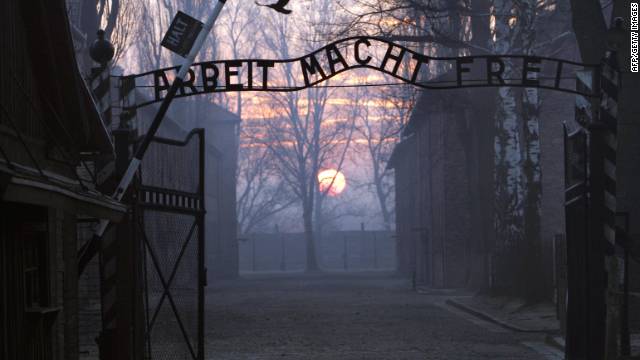
- A 93-year-old man is charged with being an accessory to at least 300,000 murders
- Prosecutors in Germany say he removed luggage left by new arrivals at Auschwitz
- He was tasked with counting any cash found and sending it to Nazi HQ in Berlin
- Prosecutors says the man must have known that those arriving would be murdered
Berlin (CNN) -- German prosecutors have charged a 93-year-old man with being an accessory to murder in at least 300,000 cases while working for the Nazis at the Auschwitz concentration camp.
The man, from the German state of Lower Saxony, is accused of having helped remove the luggage left by new arrivals to the camp at the Birkenau rail platform.
The aim was to get rid of any clues to the mass killings going on at the camp for inmates arriving later, the state prosecutor's office in Hanover said in a statement.
The man, who was not named in the statement, was also tasked with counting the cash found in the belongings and sending it to Nazi headquarters in Berlin, it said.
"The accused must have known that those arriving, mostly Jews, inmates who were deemed as not being fit for labor after the selection process, would immediately be murdered in the purpose built gas chambers," the statement said.
"With his actions, the accused helped the Nazi regime gain economic profit and supported the killing that was going on."
The charges are limited to a period that started with an operation by the Nazis to deport mostly Jews from Hungary in 1944.
"Between May 16 and July 11, 1944 at least 137 prison trains arrived at the camp Auschwitz Birkenau, carrying around 425,000 prisoners from Hungary. According to the charges at least 300,000 of those were killed," the statement said.
The accused was previously charged in 1985 but that case was dropped because of a lack of evidence, it said.
A regional court will decide whether the new charges are brought to trial, the state prosecutor's office said.
There are already 16 applications from survivors and relatives of survivors of the Hungary operation to be secondary plaintiffs in the case, it added.
89-year-old Philadelphia man accused of war crimes as Nazi death-camp guard
Suspected Nazi war criminal dies hours before court approves extradition
CNN's Frederik Pleitgen reported from Berlin and Laura Smith-Spark wrote in London.
Uyghur scholar goes on trial in China
9/17/2014 2:03:39 AM
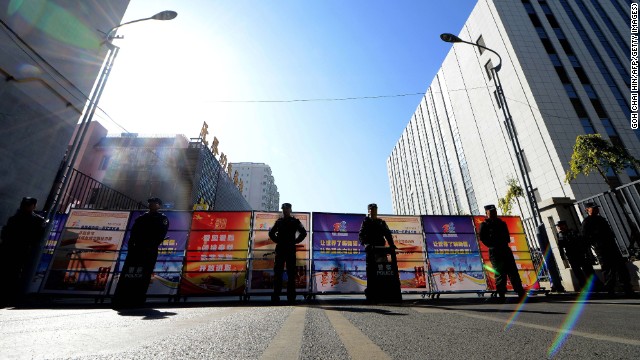
- Ilham Tohtia, a prominent Uyghur scholar, was charged with "separatism"
- Detained by police in January, he was taken to his native province of Xinjiang
- Police say they gathered firm evidence of him colluding with overseas forces to "spread separatist ideas"
- Tohti's lawyers have said that the scholar continues to emphasize his innocence
Beijing (CNN) -- Nine months after his detention by Chinese authorities, a prominent Uyghur scholar charged with "separatism" went on trial Wednesday amid tight security, his lawyer said.
Ilham Tohti, an economics professor at Beijing's Minzu University, was detained by police in January and taken to his native Xinjiang, China's restive northwestern region where a spate of recent violent incidents have been blamed by the government on Muslim Uyghur separatists seeking to establish an independent state.
Liu Xiaoyuan, one of Tohti's lawyers, told CNN earlier this week that he expected the trial to be short at the Intermediate People's Court in Urumqi, the capital of Xinjiang, and a verdict and sentencing would likely be announced at a later date.

Liu later tweeted that the hearing would last two days and the government allowed four family members -- including Tohti's wife -- to be present. The authorities cordoned off the street in front of the court Wednesday morning, and the area was teeming with uniformed and plainclothes police, the lawyer said online before the trial began.
Although the government charged Tohti only in late July, Xinjiang police said in a statement in January that they had gathered firm evidence of him colluding with overseas forces to "spread separatist ideas, incite ethnic hatred and advocate Xinjiang independence." The police statement also said Tohti had taught students about "violent Uyghur resistance" in his class and encouraged them to overthrow the Chinese government.
Advocate for understanding
Tohti's lawyers have said that the scholar emphasized his innocence throughout his detention.
"He reiterated that he has advocated to improve the rule of law, democracy and ethnic harmony in Xinjiang," Li Fangping, Tohti's other lawyer, told CNN earlier.
"Tohti has consistently, courageously and unambiguously advocated peacefully for greater understanding and dialogue between various communities, and with the state," said Sophie Richardson, China director of the international advocacy group Human Rights Watch, in a statement. "If this is Beijing's definition of 'separatist' activities, it's hard to see tensions in Xinjiang... decreasing."
Li, the lawyer, also complained about the treatment of Tohti in jail, saying he was put in shackles again recently after receiving the same treatment for three weeks upon arrival.
"He went on a hunger strike for some 10 days in January after they refused to provide him with Muslim food," Li said. "They also denied him food for about 10 days in March after the Kunming incident," he added, referring to the stabbings at a train station in the southwestern city of Kunming that left 29 people dead.
Uyghur separatists were blamed for the attack.
CNN's phone calls to the Xinjiang government for comment went unanswered.
'Waves of Han'
Tohti is known for his research on Uyghur-Han relations and has been a vocal critic of the government's ethnic policies in Xinjiang, a resource-rich region long inhabited by the Turkic-speaking, largely Muslim Uyghurs. The arrival of waves of Han, China's predominant ethnic group, over the past decades has fueled ethnic tensions.
Some Uyghurs have expressed resentment toward the Han majority in recent years over what they describe as harsh treatment from Chinese security forces and loss of economic opportunities to Han people in Xinjiang.
Sophie Richardson, Human Rights Watch
READ: Winning hearts with 'Princess Fragrant' cartoon
Amnesty International has said Uyghurs face widespread discrimination in employment, housing and education, as well as curtailed religious freedom. Other critics, including exiled Uyghur activists, have attributed the rise of violence in Xinjiang to Beijing's increasingly repressive rule there -- a claim the government vehemently denies.
In late July, the state-run Xinhua news agency reported that a gang wielding knives and axes attacked civilians, a police station, government offices and smashed vehicles in southern Xinjiang, killing 37 people. The government called the incident an "organized and premeditated" terrorist attack and said police at the scene shot dead 59 people in the mob and arrested more than 200, according to Xinhua.
In the region's deadliest single violent incident in recent history, a suicide bombing in May killed 39 people at a street market in Urumqi. Another apparent suicide bombing left three dead in April at an Urumqi train station.
The Chinese government has responded by launching a massive anti-terrorism campaign as well as pouring more economic resources into Xinjiang.
Last week, four people were convicted of plotting the knife attack at the Kunming Railway Station. Three were sentenced to death and the fourth to life imprisonment.
In June, China executed 13 people convicted of terrorism charges related to attacks on public places in Xinjiang in recent months. Also in June, a court in Urumqi sentenced three people to death for their roles in a deadly attack in Beijing's Tiananmen Square last October. Defendant names revealed by state media all sounded Uyghur.
"The long-term solution to Xinjiang's unrest is not further repression, but greater understanding of the Uyghurs' grievances and perspectives," said Richardson of Human Rights Watch. "If Tohti -- a peaceful, articulate critic -- is given a harsh sentence, what confidence can any Uyghur have that their very real grievances will ever get a hearing with Chinese authorities?"
READ: Chinese city bans beards, 'Islamic' clothing on buses during event
Why Ukraine should get military help
9/17/2014 11:00:16 PM
- Ukrainian President Petro Poroshenko visits Washington on Thursday
- He seems intent on a peaceful settlement, write Strobe Talbott and Steven Pifer
- Obama should agree to provide defensive arms on an expedited basis, authors say
- Talbott and Pifer: Moscow has grossly violated the Budapest memorandum
Editor's note: Strobe Talbott, president of the Brookings Institution, served as deputy secretary of state in the 1990s. Steven Pifer, a senior fellow at the Brookings Institution, served as U.S. ambassador to Ukraine from 1998 to 2000. Both were involved in negotiation of the Budapest memorandum. The views expressed are the writers' own.
(CNN) -- When Ukrainian President Petro Poroshenko visits Washington on Thursday, he will almost certainly again ask for U.S. military assistance, including defensive weapons. President Barack Obama should say yes. Arming Kiev can deter Russian Vladimir Putin from further aggression and support the fragile Ukraine ceasefire and settlement process. Doing so would also bolster U.S. efforts to prevent nuclear proliferation.

Russia illegally occupied and annexed Crimea in March. Just weeks later, armed separatists -- assisted and, in some cases, led by Russian intelligence officers -- began seizing government buildings in the eastern Ukrainian regions of Donetsk and Luhansk.
Ukrainian counterattacks started making headway in the summer. Russia responded by supplying heavy weapons to the separatists -- including, it is widely believed, the Buk anti-aircraft system believed to have shot down Malaysia Airlines flight 17 in mid-July.
Despite the influx of arms, Ukrainian forces continued to make progress. By early August, the separatists looked on the verge of defeat. That would have stopped Putin's strategy in its tracks. So, as NATO noted, elite Russian military units invaded and occupied Ukrainian territory, hitting Ukrainian forces hard.
Vastly outgunned, Poroshenko had little choice but to accept a ceasefire on September 5. The truce is shaky, but the Ukrainian president seems intent on pursuing a peaceful settlement. Whether common ground can be found among Kiev, the separatists and Moscow is unclear. At best, the negotiation will be long and arduous.
The Ukrainian government has for some time sought lethal military assistance, such as anti-armor weapons, as well as secure communications equipment and reconnaissance drones. When he hosts Poroshenko in the Oval Office, Obama should agree to provide defensive arms on an expedited basis. Such assistance would enhance Kiev's ability to deter further Russian aggression, aggression that would threaten, perhaps fatally, the possibility of a negotiated settlement.
A better-armed Ukrainian military would give Putin pause, because it could impose greater costs on the Russian army if the Russians break the ceasefire and renew the fighting. Reports detail the extraordinary lengths, such as nighttime burials, to which the Kremlin has gone to hide from its public the fact that Russian soldiers have fought and died in Ukraine. The more costly the Ukrainians can make any fighting for the Russians, the less Moscow's interest in resuming the conflict.
Some may argue that providing lethal military assistance would provoke Putin to escalate. But he has already escalated the situation -- from instigating separatist actions to providing heavy weapons to sending in the Russian army. This suggests the opposite may well prove true: Arming Ukraine will raise the costs of escalation to Russia and thus make it less likely.
Putin has made clear his contempt for the Western response to date. Inaction could embolden him to escalate in Ukraine and test the waters elsewhere, perhaps in a NATO member state such as Estonia.
Moreover, the Ukrainians will bear the risks and brunt of any escalation. If they are willing to accept those risks, we should give them the tools to defend themselves.
And there is an additional important reason to respond favorably to Ukraine's request for defensive arms: to restore credibility to the notion of security assurances.
In December 1994, the leaders of the United States, Britain and Russia signed the Budapest memorandum on security assurances, which committed those countries to respect Ukraine's sovereignty and territorial integrity and not use force against Ukraine. Those commitments paved the way for Kiev's decision to give up about 1,900 strategic nuclear warheads, at the time the world's third-largest nuclear arsenal.
Moscow has grossly violated the Budapest memorandum by its seizure of Crimea and assaults on Ukraine. The United States and Britain have an obligation to respond. Washington has imposed economic sanctions on Russia and provided Ukraine a modest amount of nonlethal military aid. Those are appropriate steps, but they do not suffice.
Last Friday, former President Leonid Kuchma, who signed the Budapest memorandum for Ukraine, suggested his country had been cheated. That reflects general sentiment in Kiev.
The widely held impression that Moscow has violated its Budapest commitments at low cost badly weakens the value of security assurances in the future. That is unfortunate, as security assurances could play a role as part of the package to resolve the Iran and North Korea nuclear issues. But how much value will security assurances have if Tehran and Pyongyang see that they can be violated with relative impunity?
Washington can change that impression.
Providing lethal military assistance to Ukraine could not only deter Putin from further war against Ukraine, but could help to reestablish security assurances as part of the solution to critical nuclear proliferation challenges.
5 other secessionist movements
9/17/2014 7:49:26 PM

- Scotland goes to the polls Thursday to vote: "Do you agree that Scotland should be an independent country?"
- The country is not alone: From Belgium to China, separatists are looking to break away
- Separatists across the world will be looking closely at Scotland's referendum and its result
- 97% of eligible Scots have registered to vote -- an unprecedented amount of engagement
(CNN) -- "Do you agree that Scotland should be an independent country?"
This is the question the people of Scotland will be asked on Thursday as the country holds a referendum that could ultimately set in motion the breakup of the United Kingdom as it exists today.
It is one of the most important events in the history of Britain, and will have far-ranging ramifications, both at home and abroad. Engagement in Scotland is at record levels, with 97% of eligible Scots registered to vote.
But Scotland is not alone when it comes to seceding from larger political entities -- across the globe, independence movements agitate for separation. So what will the Scottish outcome -- either "Yes" or "No" to that all-important question -- mean for these independence hopefuls?

QUEBEC
With polls suggesting the Scottish independence campaign is too close to call, those on both sides of the debate may be looking back to the last referendum in Quebec with a feeling of dread at the prospect of some nerve-shredding final hours.
In 1995 Quebec held its second referendum in 15 years on a split from Canada, and while the 1980 vote had seen Quebecers reject sovereignty by a conclusive 58.2% to 41.8%, the later ballot was an altogether tighter race.
More than 93% of the province's registered voters turned out to have their say at the end of a sometimes bitter campaign, which ended with the separatist Parti Quebecois defeated by an agonizingly narrow margin of just over 1%, 50.6% to 49.4%.
Some blamed the clunky and confusingly-worded question for the loss. While Scots will this week be asked simply: "Should Scotland be an independent country?" back in 1995, voters in Quebec faced an altogether more challenging proposal:
"Do you agree that Quebec should become sovereign, after having made a formal offer to Canada for a new Economic and Political Partnership, within the scope of the Bill respecting the future of Quebec and of the agreements signed on June 12, 1995?"
After the 1980 poll, Premier Rene Levesque conceded bullishly with the words: "until next time!" but since the 1995 vote Quebec's appetite for independence appears to have shrunk: support for both the regional Parti Quebecois and the national Bloc Quebecois has waned.
But the Quebecers' distinctive identity is still going strong: festivals celebrate the province's history, blue-and-white fleur-de-lis flags fly over its towns and cities, and French is widely spoken.
In 2006, Canada's parliament voted to recognize Quebec as "a nation within a united Canada," and for the moment, at least, it seems Quebecers are happy with that.
CATALONIA
For the third year running, hundreds of thousands of people took to the streets of Barcelona on September 11, Catalan national day, demanding a vote on independence be held.
They and some of their political leaders want to hold a referendum on November 9, which the Spanish government staunchly opposes, and says is unconstitutional.
Madrid argues that Catalonia, which represents one fifth of Spain's economy, already has broad home-rule powers, including its own parliament, police force and control over education and health. And it insists that the Spanish Constitution does not allow any of Spain's 17 regions to unilaterally break away.
Last week, one of Catalonia's key political figures, Oriel Junqueras, leader of the Esquerra Republicana -- or Republican Left -- party, said if the government in Madrid were to block citizens' exercising their "fundamental right" to vote, there could be a need for civil disobedience.
Those in the crowd Barcelona earlier this month said that if Madrid blocked the referendum, people should still deposit their ballots.
"Many of the people we spoke to in the street have drawn immediate parallels to the Scottish referendum saying, 'the British government has agreed to let Scotland vote -- why isn't Spain letting Catalans vote?'," CNN's Al Goodman, who covered the protests, said.
A referendum is expected to ask a two-part question: "Should Catalonia be a state?" And those who vote yes to that can then go to vote on the second question: "Should that state be independent?"
Goodman says polls indicate that a majority of Catalans want to have a chance to vote but that less than a majority would vote for independence, given the chance.
But despite numbering in the hundreds of thousands, those calling for independence in Barcelona last week did not represent all the region's 7.5 million people.
A smaller gathering of several thousand took to the streets the same day in Catalonia's second largest city, Tarragona, calling for the region to remain a part of Spain.
One of those protesters told CNN: "The reason we want to remain a part of Spain, is because we are a part of Spain."

BELGIUM
As a country with famously diverse provinces, and given its proximity, both geographically and culturally to Scotland, it could be seen that the Scottish vote this week would be an important test-bed for independence movements in the European nation.
But not necessarily, said Regis Dandoy, a political scientist and associate researcher at the University of Brussels (ULB) and the University of Louvain (UCL).
First off, Belgium has some bad experiences with referendums. In 1950, one pushed the country almost "to the brink of civil war" over the question of whether the king, who was accused of having Nazi sympathies, would be allowed to return from self-imposed exile in Switzerland.
And despite the much-publicized differences between the Belgian provinces, Dandoy says that within Flanders, the region most cited to break away, support for full independence hovers only at around 12-15%.
"Devolved powers over time are the reason why independence is not yet an issue in Flanders," he said. "We've had six state reforms since 1970 and in each of these we've given more power to the region. Nowadays Flanders is one of the most autonomous regions in Europe.
"As soon as the Flemish nationalist party becomes strong, well, then you have a reform that gives more autonomy."
It is a tactic that is being employed by the Unionists in Scotland -- as polls narrow, the UK's main political parties have all pledged further devolved powers to the Scottish parliament in an effort to head off the threat of secession.
And what of EU membership, an issue so close to so many Belgian hearts? Dandoy says that, despite the efforts of some parts of the media and the "No" campaign concerning Scotland's EU membership, Dandoy said the threat of Scotland's ejection from the body is a "fake argument."
"This is not an argument, this is what has been used by the people who want 'No' to win. There would be no problem for Scotland, Flanders, Catalonia to join the EU because they are democratic states, they respect all the rules, so there would probably not even be a process of application to the EU."
Scotland, Dandoy said, "should not be afraid of independence."
CHINA
China has reason to be wary of secessionist movements, with voices from Tibet to Hong Kong -- not to mention the "renegade province" of Taiwan -- championing independence from Beijing.
With this in mind, the state-controlled Global Times recently took a scathing line on Scottish independence, stating that "if Scotland gains independence, the UK will descend from a first-class country to a second-rate one, which will once again break the balance within Europe. And its consequence may even wield influence upon international geopolitics."
The restive western province of Xinjiang, home to a sizable population of ethnic Uyghurs, has one of the most vocal independence movements.
Uyghurs accused of being separatists by the government have been making headlines lately amid a spate of violent incidents. Attacks in railway stations and other public places in the province and further afield have prompted Chinese authorities to launch a massive anti-terrorism campaign in Xinjiang, which ethnic Uyghur activists call East Turkestan.
Rebiya Kadeer, the president of the World Uyghur Congress told CNN that her cause does not even have the "rudimentary elements" of a road map to self-determination.
"We'd certainly like to see the implementation of the same model (as the Scottish referendum) in our homeland ... if there are parties in the British parliament that openly campaign for independence, this is something that is unimaginable in East Turkestan," she said, via a translator. "The day we raise our voice, the day we raise our concerns, we are killed.
"Freedom and to be free independent is the god-given right of every individual, every nation and people. Nothing is more precious that independence and liberty. Freedom and independence is the greatest happiness. From this point of view, I support the decision of the people of Scotland to conduct a referendum to determine their political future."
KURDISTAN
The Kurdish people have long agitated for a homeland of their own, and paradoxically, it is now, when a united front is needed against ISIS, that the Kurds have their best chance of at least gaining significantly more autonomy in Northern Iraq.
After disbanding the government in Baghdad in the face of the looming crisis, lawmakers in July appointed Fouad Massoum, a highly-regarded Kurdish politician, to the role of president.
The Kurds have been divided and repressed since the end of the Ottoman empire, when the current international borders of the region were largely devised leaving Kurdistan, as proponents like to say, as the largest stateless nation in the world.
Kurds have suffered at the hands of Iraq's former dictator Saddam Hussein's regime, as well as by successive governments in Syria, Turkey and Iran and have endured much in their quest for their own state.
As a result, many from the ethnic group wish to see their own homeland, independent from the countries that split up their heartland at the beginning of the 20th century. Iraq wishes to maintain the integrity of the country -- any split could also see the southern Shiites agitate for a greater degree of independence, and the autonomous region provides a buffer from ISIS incursions.
Like Scotland, Kurdistan is rich in oil, another reason Iraq would be loath to countenance a split.
Syria and Turkey, too, have sizable Kurdish populations and would be loathe to see any move to give Iraqi Kurds greater independence.
Indeed, the idea of a split for Turkey's southern population is so far from a reality that an editorial on Turkey's Cihan news agency stated: "We don't even need to discuss the willingness of Ankara to recognize the outcome of a unilateral effort by the Kurds in southeastern Turkey to gain independence through a referendum."
Kurdish fighters have had some success in repelling ISIS and regaining footholds in previously-held extremist territories. It remains to be seen what value the new Iraqi government places on their defensive capabilities, and what leverage the Kurdish government can gain for their assistance in repelling ISIS forces.
CNN's Al Goodman contributed to this report
What's U.S. strategy against ISIS?
9/17/2014 7:32:32 PM
Should Obama have taken a combat mission off the table in the fight against ISIS? Our political roundtable discusses.
If your browser has Adobe Flash Player installed, click above to play. Otherwise, click below.
New jazz spreads out of Africa
9/17/2014 2:32:03 PM
- Mulatu Astatke is the creator of ethio-jazz
- He blended traditional Ethiopian music with western jazz and funds
- The pioneering musician was the first African to enroll at Berklee College
- Astatke's music was used in the soundtrack of Jim Jarmusch's "Broken Flowers"
(CNN) -- You'd expect a conversation with Mulatu Astake to be about music. He is, after all, the father of a musical genre: Ethio-jazz. But when he talks about the art form, he tends to focus on its scientific merits.
"When you start talking about jazz, they're usually telling us that Africans contributed to the rhythm parts of jazz music, but it's not only the rhythms. We have contributed to the science of jazz as well," he says.
While innovators like Charlie Parker may get credit for the creation of modern jazz music by using diminished scales (as done in classical music by composers like Claude Debussy), Astake offers an alternative view:
"In southern Ethiopia, there are tribes called the Derashe -- I call them the scientists of music. By cutting different size bamboos, [they] have been playing this diminished scale [for centuries]. So who first created it? Debussy, Charlie Parker, or the Derashe tribes?"
Unsurprisingly, I'm not the only one who's been presented with such questions by Astatke, whose passion about Africa's contribution to music extends back to the 1960s when he went on to fuse the traditional Ethiopian five-tone scales with western 12-note harmonies to give life to a whole new music genre: the hypnotizing and eerily seductive soundscape of ethio-jazz.

Music pioneer
Astatke, whose performance Saturday at Africa Utopia was one of the highlights of the London-based festival, has been outspoken about his country's cultural heritage throughout his five-decade career. Yet, the father of ethio-jazz first had to go outside Ethiopia to find his musical calling.
Born in Jimma, southwestern Ethiopia, in 1943, Astatke was sent to Wales as a teenager to further his high school studies, with the goal of studying aeronautical engineering. It was there where his fascination with music began, after being encouraged by his teachers to pick up various musical instruments.
Astatke quickly discovered his natural musical talent -- and has never looked back. After shelving plans to study engineering, he moved to London to study classical music at Trinity College. During those years, he also started performing live, playing congas and timpani in various clubs across the London capital.
Keen to explore jazz, Astatke then decided to enroll at Boston's Berklee College of Music, becoming the famed institution's first African student. At Berklee, Astatke analyzed the work of jazz giants -- anyone from Duke Ellington and Count Basie to Gil Evans and John Coltrane -- but was also encouraged to explore his own musical vision.
"I remember at Berklee we had a fantastic teacher who always used to tell us, 'guys, be yourselves,'" says Astatke. "So I started concentrating, working things out my own way and experimenting."
The result was a captivating musical fusion of the four pentatonic Ethiopian modes with western jazz.
"I started combining the five notes against the 12 notes, and it's not easy," recalls the multi-instrumentalist, who after Berklee moved to New York and recorded three albums with the Ethiopian Quintet.

"It's so difficult because it can easily lose the beauty, the character and the feel of the Ethiopian modes and scales," he continues. "I really had to think and work out how to combine it both and come up with something beautiful and very interesting -- that's how Ethio-jazz was created, in New York."
Cultural ambassador
By the late 1960s, Astatke had returned to Ethiopia, bringing his electrifying new sounds with him. At first, his radical approach was met with some resistance, especially his use of instruments like vibraphones, electric pianos, trumpets and wah wah pedals.
Yet, he eventually managed to win the hearts and minds of his co-patriots and became a leading figure in the "Swinging Addis" era of the late 1960s and early 1970s, when the Ethiopian capital of Addis Ababa became famous for its experimental music scene and vibrant nightlife. During that period Astatke also got to work with one of his heroes, Duke Ellington, escorting the great American jazz composer during his visit to Ethiopia in 1973.
"We talked about Ethiopian music and the great African contribution -- especially the tribes in Ethiopia," recalls Astatke, "and I made him listen to our great traditional music players."
Astatke enjoyed a successful career in the last years of Haile Selassie's reign and continued making music after the Ethiopian emperor got deposed in 1974 by the Derg military regime, which lasted until the early 1990s.

But his big break -- at least for the wide public -- came in 2005, when award-winning director Jim Jarmusch decided to use Astatke's music for his bittersweet masterpiece "Broken Flowers."
"Jim helped so much for my success, he's a great man," says Astatke, recalling his first ever encounter with the American filmmaker. "I was playing in New York and his secretary called up one afternoon and said Jim Jarmusch would love to come to your concert," says Astatke. "I said OK, you're welcome... We met backstage after the concert and I remember him telling me, 'Mulatu I've been a fan of your music for a long time, do you mind if I use your pieces in my film? I said, 'great, just go ahead, there's no problem.'"
Mulatu Astatke, musician
Jarmusch used Astatke's music as the soundtrack to the travels of Bill Murray's character, and even included an Ethiopian character in the story. The film was widely successful, and helped to introduce Astatke's music to a large and diverse audience -- from jazz and funk enthusiasts to hip-hop and rap fans.
Several successful tours, collaborations and recordings have since followed, as well as a number of academic accolades -- in recent years Astatke has been awarded an honorary doctorate from Berklee, has completed a Radcliffe Institute Fellowship at Harvard and is working with MIT on creating modern versions of traditional Ethiopian instruments.
"Sometimes I just don't believe myself," says Astatke. "I am really so surprised when I see that we play for 120,000 people in Japan; in Glastonbury I played twice for 140,000 people," he continues.
"There are some great people who created something and probably died before seeing the fruit [of their work]. But I'm still alive, seeing my music being played all over the world. I'm very happy and very pleased to see this thing happening while I'm alive."
Read: Music icons get stamp of approval
Read: Capturing apartheid in South Africa
Talks of U.S. troops reveal discord
9/17/2014 12:18:29 PM
- NEW: House approves Obama's request to train and arm Syrian rebels to fight ISIS
- Kerry tells Senate committee that no countries have agreed to put boots on the ground
- Report: Iraq's PM says foreign troops are "put of the question"
- President: It's more effective for the United States to support partners on the ground
Washington (CNN) -- The U.S. is not returning combat troops to Iraq, President Barack Obama insisted again Wednesday, despite the suggestion by his top general that option is something the Pentagon could consider.
Speaking at U.S. Central Command in Florida, Obama said again that U.S. troops "do not and will not have a combat mission" in Iraq against the Islamic State in Iraq and Syria.
"After a decade of massive ground deployments, it is more effective to use our unique capabilities in support of partners on the ground so they can secure their own countries' futures," he said. "And that's the only solution that will succeed over the long term."
"As your commander in chief, I will not commit you and the rest of our armed forces to fighting another ground war in Iraq," Obama told troops at MacDill Air Force Base in Tampa. Rather, the U.S. forces will support Iraqi forces on the ground as the Iraqis fight ISIS, he said.
"When we do things alone and the countries -- the people of those countries -- aren't doing it for themselves, as soon as we leave, we start getting the same problems," Obama said.
Kerry: 'We will have enough allies'
Obama's position was reiterated by U.S. Secretary of State John Kerry, who testified before the Senate Foreign Relations Committee about the administration's plan to defeat ISIS, the terror group that refers to itself as the Islamic State.
Kerry also told the senators that a number of countries have agreed to contribute to the fight against the militants.
Asked whether any of the nations agreed to put boots on the ground to fight ISIS, Kerry said no. However, Kerry confirmed that some of the countries have committed to carrying out airstrikes. He did not publicly identify the countries.
"We will have enough allies" for the military action needed to fight ISIS, he said.
Kerry's testimony before the Senate committee came at the same time the House approved Obama's request to arm and train Syrian rebels to fight ISIS. The vote was 273 -156, with significant opposition to the proposal in both parties.
The proposal would authorize the Pentagon to provide assistance to "appropriately vetted" members of the Syrian opposition and require the administration to give Congress a detailed plan for helping the rebels before that assistance could begin.
The Senate vote on the proposal could come as early as Thursday.
During the sometimes contentious Senate committee hearing, which broke mainly on partisan lines, Kerry defended the U.S. policy, saying he did not want to "rehash" debates about the Gulf War and the Iraq War.
"The issue that confronts us today is one which (all should) be able to agree -- ISIL must be defeated. Period. End of Story," he said. ISIS is also known as ISIL.
What that fight will look like is still in question.
Iraq Prime Minister Haider al-Abadi told The Associated Press on Wednesday that foreign troops are "out of the question."
"The only contribution the American forces or the international coalition is going to help us with is from the sky," al-Abadi told The AP. "We are not giving any blank check to the international coalition to hit any target in Iraq."
Gen. Martin Dempsey's recommendation
The Prime Minister's remarks came a day after Gen. Martin Dempsey, chairman of the Joint Chiefs of Staff, told members of Congress he hasn't ruled out recommending U.S. ground forces deploy to attack ISIS targets if the current air campaign in Iraq fails.
"To be clear, if we reach the point where I believe our advisers should accompany Iraqi troops on attacks against specific ISIL targets, I will recommend that to the President," Dempsey said.
Top U.S. military officer: U.S. ground troops to fight ISIS, if necessary
The hypothetical remark, which sources say was vetted by the White House beforehand, managed to undercut what Obama and his aides have been promising for weeks: that combat troops were out of the question for Iraq.
The crossed wires come after a concerted White House effort to spell out a plan against ISIS terrorists, which itself was a response to the President's frank admission late last month that he lacked a "strategy" for dealing with ISIS in Syria.
The vow to keep U.S. troops out of combat extends as far back as Obama's presidential campaigns, which were run first on the promise to end the Iraq War, and four years later on the assurance that that era of American warfare was over.
While three-quarters of Americans support airstrikes in Syria and Iraq, a majority still oppose any combat "boots-on-the-ground" scenario.
Obama: training and intelligence-gathering only
When Obama addressed the nation last week, he made clear the American military advisers being deployed in Iraq "will not have a combat mission" and would act in a training and intelligence-gathering capacity only.
"We will not get dragged into another ground war in Iraq," he said in the remarks on September 10.
Officials are adamant that possibility remains out of the question and say Dempsey's suggestion was using a hypothetical situation -- a practice rarely seen at the message-driven White House.
Opinion: What an anti-ISIS strategy should look like
While Dempsey could recommend deploying U.S. combat forces to Obama, the President will ultimately make military decisions himself.
"It's the responsibility of the President's military advisers to plan and consider all the wide range of contingencies," press secretary Josh Earnest said Tuesday. "It's also the responsibility of the commander in chief to set out a clear policy. And the President has been clear about what that policy is."
A spokesman for Dempsey, Col. Ed Thomas, said the Joint Chiefs chairman "doesn't believe there is a military requirement for our advisers to accompany Iraqi forces into combat."
"The context of this discussion was focused on how our forces advise the Iraqis and was not a discussion of employing US ground combat units in Iraq," he wrote in a statement.
Strategy questions
Tuesday isn't the first time the White House's aim for clarity has fallen short. Obama's frank admission late last month the United States lacked a "strategy" for combating ISIS in Syria drew sharp criticism, leading to his eventual prime-time address announcing the potential for airstrikes in the country.
The goals cited by the administration in battling ISIS have similarly drawn some confusion, going from reducing the force to a "manageable problem" to "degrading and ultimately destroying" the terrorists.
Opponents of the President quickly accused the administration of muddying the message.
"First of all, the President is just flat not telling the truth," Sen. James Inhofe, R-Oklahoma, said on CNN's "The Lead with Jake Tapper."
"We already have boots on the ground there. He knows we have to have boots on the ground. Let's admit we're in a war."
Catalans eye Scottish vote
9/17/2014 12:01:20 AM
Many Catalans are tracking the Scottish independence vote and its effect on their own push for independence from Spain.
If your browser has Adobe Flash Player installed, click above to play. Otherwise, click below.
Briton hunted in Thai beach killings
9/17/2014 2:27:21 PM

- The man and woman were found dead early Monday on a beach on Koh Tao
- Families pay tribute to the two tourists, who were said to have met only recently
- Police said they were looking for a British man in connection with the deaths
- But they are still pursuing other lines of inquiry.
Bangkok, Thailand (CNN) -- The families of two Britons battered to death on a popular Thai resort island have paid tribute to them, as police said they were looking for a British man in connection with their killings.
The bodies of the two tourists, identified as David Miller, 24, and Hannah Witheridge, 23, were found on a beach on the small southern island of Koh Tao on Monday.
In a statement issued by the British Embassy in Bangkok, Witheridge's family said she was "a beautiful, intelligent, loving young woman who poured joy into the lives of all who knew her" and they were "utterly devastated and shocked by what has happened."
Miller's family said: "David was an artist by temperament, so talented. He had a creative eye that he carried with him through life and in his degree. He was hard-working, bright and conscientious, with everything to look forward to."
Col. Prachum Ruangthong, the police chief of the local precinct, said on Wednesday one line of inquiry focused on a British friend of the male victim. He said that police had interviewed the man, who shared a room with the victim, but he had since left the island.
He added that he had asked the British Embassy for their help in locating the man.
However, Prachum told CNN that they were still pursuing other leads. He added that "from initial forensic examination, the victims were repeatedly hit."
Police issued a grainy image from a CCTV camera outside the bar where the two tourists were last seen. They said they were interested in speaking with the person, who they said was an Asian man.
Robbery ruled out
The deaths are being investigated as murders and police said they had ruled out robbery as a motive for attack.
The victims were discovered partially undressed with severe injuries to their heads, and a hoe with blood on it was found near the bodies, police said.
The two Britons were last seen hanging out with friends at a bar in the early hours of Monday before leaving together, said Maj. Gen. Kiatthipong Khaosumarng, the provincial police chief.
David Miller's family
The deaths have shaken residents on the idyllic island, which takes up only 21 square kilometers (8 square miles) amid bright blue waters in the Gulf of Thailand. Authorities said it was the first homicide case on Koh Tao in at least eight years.
The island is popular among tourists for its diving locations, white sand beaches and vibrant nightlife.
Police said that interviews with friends of the victims indicated that the two Britons may have only recently met while on the nearby larger island of Koh Phangan before traveling to Koh Tao for a party excursion.
The British Consul arrived in Koh Tao on Tuesday, the British Embassy in Bangkok said.
"The Embassy is urgently seeking information from the local authorities and Consular staff stand ready to provide assistance to friends and family at this tragic time," it said in a statement, declining to give any further details on the case.
READ: Thailand horrified after 13-year-old girl raped, thrown from train
CNN's Jethro Mullen contributed to this report.
Rivers' doctor took selfie before biopsy
9/16/2014 11:33:18 PM
- Rivers' personal doctor who did the biopsy was not certified by the clinic, a source says
- The doctor took a selfie while Rivers was under anesthesia, a clinic staffer tells investigators
- Biopsy was done without Rivers' prior consent, the source says
- Rivers died a week after suffering cardiac arrest at the Manhattan clinic
(CNN) -- The cardiac arrest leading to Joan Rivers' death happened as the comedian's personal doctor began performing a biopsy on her vocal cords, a source close to the death investigation told CNN.
A staff member at Manhattan's Yorkville Endoscopy clinic told investigators that the doctor, who has not been publicly identified, took a selfie photo in the procedure room while Rivers was under anesthesia, the source said.
Rivers, 81, was at the clinic for a scheduled endoscopy by another doctor, gastroenterologist Dr. Lawrence Cohen. That procedure, intended to help diagnose her hoarse voice and sore throat, involved the insertion of a camera down her throat.
After Cohen, the clinic's medical director, finished his work, a biopsy was done on Rivers without her prior consent, according to the source.
An ear, nose and throat specialist not certified by the clinic as required by law performed a biopsy on her vocal cords. The doctor is described by the source as Rivers' personal ear-nose-throat physician.
Clinic: Vocal-cord biopsy did not kill Joan Rivers
"Even though you are a licensed physician, you still should have, if you will, the checks and balances to get your approval to practice in that particular place," said Dr. Arthur Caplan, a medical ethicist at New York University's Langone Medical Center.
Investigators believe that Rivers' vocal cords began to swell during the allegedly unauthorized biopsy, cutting off the flow of oxygen to her lungs, which led to cardiac arrest on the morning of August 29, the source said.
Rivers, 81, was rushed by paramedics from Yorkville Endoscopy to New York's Mount Sinai Hospital a mile away, where she died a week later.
Yorkville Endoscopy issued a statement last Thursday denying reports that any vocal cord biopsy has ever been done at the clinic, although federal privacy law prevented any patient information from being released.
The day after the denial was issued, the clinic confirmed that Dr. Cohen "is not currently performing procedures... nor is he currently serving as medical director."
The source said that at this time neither Cohen nor the ear, nose and throat doctor have been accused of wrongdoing by investigators.
The clinic declined to respond to the source's comments about a biopsy or a selfie, citing federal privacy law.
Timeline emerges in Joan Rivers' death
See more about the comedy business at CNN Comedy.
Why Rihanna is right
9/17/2014 7:26:34 PM
- A song featuring Rihanna, a past victim of violence, was shelved after Ray Rice case
- Carol Costello praises Rihanna for refusing to be victimized in the process
- She says Rihanna gave voice to anger simmering as result of recent controversy
- Costello: Good for Rihanna that she wouldn't be victimized again
Editor's note: Carol Costello anchors the 9 a.m. to 11 a.m. ET edition of CNN's "Newsroom" each weekday. The opinions expressed in this commentary are solely those of the author.
(CNN) -- I love you Rihanna.
You succinctly gave voice to the anger that's been building ever since Washington Post columnist George Will wrote skeptically about young women caught up in a "supposed campus epidemic of rape, a.k.a. 'sexual assault.'"
You remember that? Will said, in his special Will way, that when colleges and universities "make victimhood a coveted status that confers privileges, victims proliferate. "
You, Rihanna, gave voice to the anger that's been simmering since Rush Limbaugh said, "no means yes if you know how to spot it," and Fox & Friends joked about "taking the stairs" 'cause there are cameras in the elevator to record you punching your lady.

You, Rihanna, succinctly said, in two words, how many women feel for getting blamed for everything from raising "problem children" to "feminizing" men.
F*** you!
Rihanna slams CBS for pulling song
Mr. Goodell, if you're wondering why you're getting so much grief for that that two-game suspension you handed to Ray Rice for decking his fiancée, I'll spell it out. You provided the tipping point for the anger women feel for getting blamed for just about everything bad that happens to them.
Voices of domestic violence
It's why Rihanna is so upset that CBS pulled her song "Run This Town" from Thursday Night Football because, well, in Rihanna's words: "Y'all are sad for penalizing me for this ... CBS you pulled my song last week, now you wanna slide it back in this Thursday? NO, F*** you! Y'all are sad for penalizing me for this."
Oh, and don't say you didn't penalize Rihanna for what Ray Rice did to Janay Palmer.
CBS Sports Chairman Sean McManus told the Associated Press that Rihanna's history of domestic abuse at the hands of Chris Brown was "among several factors considered (for pulling her song) but was not the overriding one." To make matters worse, it wasn't even Rihanna's song! It was Jay Z's song. Rihanna was merely performing alongside the man who discovered her.
As Rihanna tweeted, "The audacity..." and forbade CBS to use any of her songs in its Thursday Night Football lineup ever again. CBS promptly announced: "Beginning this Thursday, we will be moving in a different direction with some elements of our Thursday Night Football open. We will be using our newly created Thursday Night Football theme music to open our game broadcast."
Wise move CBS. It would have been a colossal mistake to bully Rihanna into singing for the NFL.
There have been so many strong, female voices speaking out about crimes against their sisters, and you know what? People are listening.
Universities (Princeton most recently) are more aggressively tackling sexual assaults on campus, there are now consequences -- at least for some -- for spouting irresponsible garbage about female victims. And the NFL? It has now hired female advisers to shape its domestic violence policy.
Dare I say again, I love you Rihanna.
Read CNNOpinion's new Flipboard magazine.
Follow us on Twitter @CNNOpinion.
Join us on Facebook.com/CNNOpinion.
You are receiving this email because you subscribed to this feed at feedmyinbox.com
If you no longer wish to receive these emails, you can unsubscribe from this feed, or manage all your subscriptions

No comments:
Post a Comment