 | Find great prices for amazing hotels wherever your next destination may be. It's simple to search 100+ sites at once! From our sponsors |
| CNN.com - Top Stories |
| CNN.com delivers up-to-the-minute news and information on the latest top stories, weather, entertainment, politics and more. |
Swiss 'suicide tourism' doubles
8/21/2014 12:03:59 AM
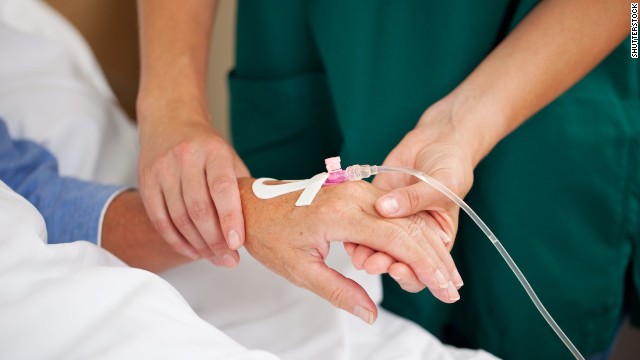
- "Suicide tourism" describes the act of traveling to another country for assisted suicide
- Between 2008 and 2012, 611 people went to Switzerland to commit suicide
- More than half of these were women, many had neurological disorders
(CNN) -- The law on assisted suicide in Switzerland isn't clear, according to a paper published in the journal Law, Ethics and Medicine this week. That's why, the authors say, people from other countries are traveling to the state of Zurich for the "sole purpose of committing suicide."
They're called suicide tourists.
Between 2008 and 2012, 611 "tourists" came to Switzerland for assisted suicide, according to the published analysis. They arrived from 31 countries around the world, though the majority were from Germany and the United Kingdom.
"In the UK, at least, 'going to Switzerland' has become a euphemism for (assisted suicide)," the study authors write. "Six right-to-die organizations assist in approximately 600 cases of suicide per year; some 150-200 of which are suicide tourists."
This published paper is the result of a pilot study completed for a larger project on assisted suicide in Switzerland being done by experts at the Institute of Legal Medicine in Zurich.
Of the 611 assisted suicides identified during the four-year study period, just over 58% were women. The patients' ages ranged from 23 to 97, researchers found, but the average age was 69. Close to half of the patients had a neurological disease. Others stated they had cancer, rheumatic disease or cardiovascular disease. Many had more than one condition.
In all but four cases, the assisted suicides were done using sodium pentobarbital. A fatal dose of this drug causes the patient to slip into a deep coma, according to DIGNITAS, a Swiss right-to-die organization that was involved in most of the identified cases.Sodium pentobarbital paralyzes the patient's respiratory system, causing him or her to stop breathing.
The total number of suicide tourism cases dropped from 123 in 2008 to 86 in 2009. But the number of cases doubled between 2009 and 2012, to 172.
Assisted suicide laws around the globe are in flux as countries debate the pros and cons of allowing doctors to help terminally ill patients, or patients in a lot of pain, die.
In Switzerland, the study authors write, there are no rules to regulate under which conditions someone can receive assisted suicide, though medical professional codes allow it in certain circumstances.
In Germany, there is no formal legal language in the criminal code about assisted suicide, but doctors are not ethically allowed to help someone commit suicide -- and can be held criminally responsible for not helping a patient if they witness him or her going unconscious.
In the United Kingdom, Ireland and France, assisted suicide is illegal, though recent cases have been presented to high courts.
"If Switzerland is happy to continue providing the facility then, however intellectually dishonest it may be to allow her to siphon of all our own English pain, fear, angst and debate, is it likely to do less harm overall than introducing any conceivable assisted suicide law into England," medical lawyer Charles Foster wrote in a commentary accompanying the new journal study.
An international survey of 12 European countries found the majority of people favor legalizing assisted suicide, according to the study authors. This seems to match opinion in the United States, where four states -- Oregon, Washington, Montana and Vermont -- allow assisted suicide.
Opinion: Suicide doesn't set you free
But others have argued that legalizing assisted suicide is not addressing the real issue, which is the need for better palliative care, and that assisted suicide laws would put vulnerable populations at risk.
Alison Twycross of London South Bank University, in an editorial accompanying the new study, writes that advocates for assisted suicide often have a friend or relative who experienced a long, painful death. "So the issue," she writes,"may be a need to provide good end-of-life care."
"We need to start asking questions such as: Is it appropriate to give antibiotics to a terminally ill patient who develops a chest infection? It is possible that a tendency to carry on with curative treatment even in those clearly dying explains the general public's support for (assisted suicide)."
Twycross cites data from Oregon that suggests regulations put in place when assisted suicide was legalized are not always followed.
"Autonomy is important," she writes. "But it could be that, in matters of life and death, you cannot create freedom for the few without taking away adequate safeguards for the many."
James Foley's captors 'demanded $132M ransom'
8/21/2014 1:06:13 PM
- ISIS has been hit with new airstrikes from U.S. war planes
- GlobalPost rep says captors wanted $132 million for James Foley's release
- Bahrain, Qatar, Tunisia leadership says beheading contrary to Islamic teachings
- Elite U.S. troops participated in a failed rescue attempt this summer, a U.S. official says
(CNN) -- The captors of American journalist James Foley had demanded a ransom of 100 million euros ($132.5 million) for his release, according to GlobalPost spokesman Richard Byrne.
Foley, 40, was a freelancer for the online news outlet.
Earlier, Philip Balboni, the president and chief executive of GlobalPost, told the Wall Street Journal that the captors also demanded that money from Foley's family.
Balboni told CNN Thursday that the company "never took the $100 million seriously" because ransoms paid for other hostages in ISIS captivity were "dramatically less." He did not say what those lower amounts were, but that there was an attempt to raise money that was more in line with the lower sums.
CNN national security analyst Peter Bergen also felt the ransom for Foley was so excessive that it couldn't be considered "a serious demand."
"The kinds of money that we've seen be paid for hostages is much lower than that," he said.
There was never any true negotiation between the news outlet and Foley's captors, Balboni stressed, saying that ISIS simply made demands.
The Islamic extremist group ISIS, which refers to itself as the Islamic State, controls large areas of Syria and Iraq. It published a video Tuesday showing the journalist's beheading.
Several French journalists were released by ISIS militants this spring.
James Foley's prayers and the dark side of faith
A militant who appears in the video of Foley's beheading links the killing to the U.S. intervention in Iraq against ISIS. The killer says the fate of another American journalist shown in the footage, believed to be Steven Sotloff, depends on what U.S. President Barack Obama does next.
But the threat has done little to curb U.S. military operations in Iraq. Thursday, American warplanes continued airstrikes against ISIS targets near Mosul Dam, which had been in control of ISIS but was recently reclaimed by Kurdish forces. The United States launched six more airstrikes near the dam in support of Iraqi Security Force operations, according to Centcom.
The strikes destroyed or damaged three ISIS Humvees, one ISIS vehicle and multiple locations where improvised explosives had been placed, the U.S. military said.
Calling ISIS a "cancer," Obama said Wednesday that the United States "will continue to confront this hateful terrorism and replace it with a sense of hope and civility."
U.S. Attorney General Eric Holder spoke Thursday about Foley, saying "We have long memories and our reach is very wide."
"We will not forget what happened, and people will be held accountable, one way or another," Holder said in Washington.
A failed rescue attempt
U.S. officials revealed that they had tried to rescue Foley and other captives earlier this summer in a special military operation in Syria. But the special forces from units such as Delta Force and Navy SEAL Team 6 failed to find the hostages.
Hunt is on for suspected British jihadi in beheading video
"Unfortunately, the mission was not successful because the hostages were not present at the targeted location," Pentagon spokesman Rear Adm. John Kirby said Wednesday.
Several ISIS operatives were killed in the special operation, a U.S. official said. No U.S. personnel were killed, but one was slightly wounded. Fighters jets and surveillance aircraft provided overhead protection to the troops.
Bergen compared the mission to the one in which Osama bin Laden was killed in 2011. The commandos going into the compound in Pakistan couldn't have known for certain that bin Laden was there. "There's always uncertainty," he said.
Former Navy SEAL Chris Heben said there's real-time intelligence gathering all the way up to the second a raid begins.
"The intelligence gathering is massive and it happens at a high rate of speed," he said, with analysts "chewing through" data even while commandos are en route.
'Vitriolic and filled with rage'
Messages from Foley's captors began last fall, Balboni said Wednesday.
Foley, a native of New Hampshire, was on assignment when he disappeared on November 22, 2012, in northwest Syria, near the border with Turkey.
"The captors never messaged a lot. There was a very limited number with a very specific purpose. ... They made demands," Balboni said.
Some messages were political and some were financial.
Then last week, his family received an e-mail saying he would be killed.
"The message was vitriolic and filled with rage against the United States. It was deadly serious," Balboni said.
"Obviously, we hoped and prayed that would not be the case. ... Sadly, they showed no mercy."
Foley's family, according to Balboni, responded in an e-mail, pleading for mercy and asking for more time.
They did not hear back.
Foley's father's broke down several times as he spoke Wednesday about his son.
"We beg compassion and mercy" for the other American journalist shown in the video, John Foley said. Sotloff, a contributor to Time and Foreign Policy magazines, was kidnapped at the Syria-Turkey border in 2013.
"They never hurt anybody," John Foley said. "They were trying to help. There is no reason for their slaughter."
Opinion: Foley is a reminder why freelance reporting is so dangerous
Condemnation from the region
On Thursday, at least three countries in the region condemned Foley's murder.
A statement on the Facebook page of the Egyptian Foreign Ministry called for a "concerted and combined effort" from the international community to fight against "terrorism as a global phenomenon" that threatens the stability of the world.
Bahrain said the beheading was a "terrorist act" that violated "the principles of the Islamic relation, human value and international law and norms," according to a statement from its information ministry.
Qatar's Ministry of Foreign Affairs called the killing a "heinous crime that goes against all Islamic and humanitarian principles, as well as international laws and conventions."
The ministry said Foley "showed courage in conveying the truth from the most dangerous spots in the world, including the suffering of Syrians."
The Deputy Secretary General at the Arab League, Ahmad bin Hilli, condemned the murder, also saying it was contrary to Islamic teachings and calling it "inhuman."
A statement from the office of Tunisia's president called crimes ISIS has committed "heinous" and a "serious threat to multiculturalism."
"These terrorist organizations pose a threat to all countries in the region," it read.
Obama says ISIS a 'cancer' that must be eradicated
Beheading of American journalist James Foley recalls past horrors
CNN's Allison Brennan and Hamdi Alkhshali contributed to this report.
Ukraine helicopters, jet 'shot down'
8/20/2014 6:46:39 PM
- NEW: Pro-Russian separatists hit two helicopters, Ukranian military confirms
- NEW: A Ukranian military jet also was struck on Wednesday
- Another Ukrainian fighter jet was shot down on Sunday
- Ukraine continues a battle with pro-Russian rebels in the country's east
Kiev, Ukraine (CNN) -- Pro-Russian separatists struck two helicopters as well as a jet with portable air defense systems Wednesday in the Luhansk region of Ukraine.
A source within the Ukrainian military confirmed the statement by the "South-East Army," which claims the group downed an Ukrainian Su-25 military jet and a Mi-24 helicopter.
Another Ukrainian Mi-24 helicopter was struck, also in the Luhansk region, but it is unclear as to whether that aircraft crashed.
On Sunday, a Ukrainian fighter jet was shot down in the Luhansk region, Leonid Matyuhin, the spokesman for Ukraine's counterterrorist operation, told CNN.
The pilot managed to eject and is safe, Ukrainian state media reported.
The ongoing fighting -- sparked last year with by political crisis over whether Ukraine would seek closer ties with Europe or Russia -- has left more than 2,000 people dead and just under 5,000 wounded in eastern Ukraine since mid-April, according to estimates from U.N. officials.
The United States and the European Union have applied steadily increasing sanctions against Russian officials, banks and other interests since March, when Russia annexed the Black Sea Ukrainian peninsula of Crimea.
Who are Ukraine's pro-Russia rebels?
Russia's move came a month after Ukraine's parliament ousted pro-Moscow President Viktor Yanukovych.
Yanukovych left office after violent protests against his government in the capital, Kiev.
Those protests were motivated in part by his decision to back out of a trade deal with the European Union in favor of closer ties with Russia.
Global Public Square: Make Russia an offer it can't refuse
Ukraine's secret weapon: Funding from the country's millionaires
CNN's Lindsay Isaac reported from Kiev. CNN's Jason Hanna wrote from Atlanta. CNN's Victoria Butenko and Joshua Berlinger contributed to this report.
'Grief stays with you after Gaza'
8/21/2014 2:54:37 PM
"If you're not scared, there's probably something wrong with you." Producer Jon Jensen reflects on his Gaza assignment.
If your browser has Adobe Flash Player installed, click above to play. Otherwise, click below.
Foley's final months: Mock executions, failed rescue bid
8/21/2014 7:04:29 PM
- NEW: James Foley's captors never really negotiated after demand, official says
- ISIS has been hit with new airstrikes from U.S. warplanes
- GlobalPost rep says captors wanted $132 million for Foley's release
Washington (CNN) -- An outrageous ransom demand. A failed rescue attempt. A taunting e-mail.
These were the details emerging about the final months of the life of American journalist James Foley, whose execution at the hands of Islamic extremists was captured on video and posted online this week as a warning to the United States.
Foley's captors demanded 100 million euros ($132.5 million) in exchange for his release, according to an official with GlobalPost, the U.S.-based online publication the freelance journalist was working for at the time of his abduction in Syria in 2012.
GlobalPost "never took the 100 million seriously" because ransoms paid for other hostages being held by ISIS, which refers to itself as the Islamic State, were "dramatically less," Philip Balboni, president and chief executive of news agency, told CNN.
He did not say what those amounts were, but that there was an attempt to raise money that was more in line with the lower sums.
There was never any true negotiation between the news outlet and Foley's captors, Balboni stressed, saying that ISIS simply made demands.
Foley, 40, was last seen on November 22, 2012, in northwest Syria, near the border with Turkey.
E-mail demands
In six e-mails during the time Foley was missing, the captors "never really negotiated their demands," Balboni said. "They stated a demand and it was 100 million (euros) or the release of Muslim prisoners."
No prisoner was ever named in the messages exchanged between GlobalPost and the captors.
Early on in the contact with the captors, there was an attempt to ascertain whether Foley was indeed alive.
The Foley family was allowed to send three questions that were so specific and personal that only Foley would have known the answers. They received the correct responses, Balboni said, letting them know the journalist was alive.
The last time Balboni heard from ISIS about Foley was August 13, he told CNN.
"The captors never messaged a lot. There was a very limited number with a very specific purpose. ... They made demands," Balboni has said.
Some messages were political and some were financial.
Then came the final e-mail message that was sent to Foley's family last week. In it, the captors made no demand and said the journalist would be killed.
Foley's family, according to Balboni, responded in an e-mail, pleading for mercy and asking for more time.
They did not hear back.
Rescue attempt
The video of Foley's execution was posted online on Tuesday. In it, the executioner, dressed in black, with his face covered, warned the life of another American journalist -- believed to be Steven Sotloff -- hangs in the balance.
The militant in the video, who speaks English with what sounds like a British accent, said the fate of the journalist depends on whether the United States ends its military operations in Iraq.
Obama says ISIS a 'cancer' that must be eradicated
The threat has done little to curb U.S. military operations in Iraq.
Thursday, American warplanes continued airstrikes against ISIS targets near Mosul Dam, which had been in control of ISIS but was recently reclaimed by Kurdish forces. The United States launched six more airstrikes near the dam in support of Iraqi Security Force operations, according to the U.S. Department of Defense.
Opinion: Foley is a reminder why freelance reporting is so dangerous
The United States was so concerned about the fate of Foley and that of other American hostages held by ISIS that it attempted a rescue in Syria in July, U.S. defense and administration officials said.
During the July 4 holiday weekend, a time when Americans mark their nation's independence, several dozen U.S. commandos landed just outside the ISIS stronghold of Raqqa, where U.S. intelligence indicated the hostages were being held, a U.S. official with direct knowledge of the operation told CNN.
The commandos -- with the U.S. Army Delta Force and the Navy's Seal Team Six -- landed in the dark, and then made their way on foot to an abandoned oil refinery where the hostages were believed to be located, officials said.
When they arrived at the building, there was no sign of Foley or the other hostages, they said.
While Gen. Martin Dempsey, chairman of the Joint Chiefs of Staff, confirmed the operation, he declined to provide details other than to say that he believes the hostages were in the building at some point.
Defense Department spokesman, Navy Rear Adm. John Kirby, told CNN the Pentagon confirmed the secret operation because several news organizations were about to go public with details.
Foley in captivity
It is not clear where ISIS moved Foley and the hostages. But several French journalists freed by ISIS this spring have stepped forward to say they had been held in captivity with Foley.
Journalist Didier Francois told French radio Europe 1 that he and Foley were in the same cell at one point.
"He was an excellent cellmate in detention because he was very caring. He was brave. He had great courage," said Francois.
James Foley's prayers and the dark side of faith
Foley stood up to his captors and often asked the militants for simple things like bread for the other prisoners, he said.
He recalled his captors forcing prisoners to endure mock executions. Francois remembers seeing Foley, a Catholic, forced to pose against a wall as if he was being crucified.
Another journalist, Nicolas Henin, told CNN that he had been held with Foley, who he said worked hard to bring up the spirits of other prisoners.
Henin, who has never before spoken about Foley because he didn't want to jeopardize his safety, said he was held for seven months with the American journalist.
"It's a lot of stress, a lot of pressure all the time, a lot of starvation as well," said Henin, clearly emotional. "We were always lacking everything and James, in these specific harsh circumstances, (was) a very good friend and great support. He was always (there) when one of us was not feeling well... to always have some nice words."
Hunt is on for suspected British jihadi in beheading video
Condemnation from the region
On Thursday, a number of countries in the region condemned Foley's murder.
Qatar's Ministry of Foreign Affairs called the killing a "heinous crime that goes against all Islamic and humanitarian principles, as well as international laws and conventions."
The ministry said Foley "showed courage in conveying the truth from the most dangerous spots in the world, including the suffering of Syrians."
The Deputy secretary general at the Arab League, Ahmad bin Hilli, condemned the murder, also saying it was contrary to Islamic teachings and calling it "inhuman."
Egypt, Bahrain and Tunisia also condemned the killing.
Beheading of American journalist James Foley recalls past horrors
Barbara Starr reported from Washington, and Chelsea J. Carter and Ashley Fantz reported and wrote from Atlanta. CNN's Jethro Mullen, Pierre Meilhan, Allison Brennan and Hamdi Alkhshali contributed to this report.
Malaysians charged with MH370 theft
8/20/2014 11:33:16 PM
- HSBC bank officer, husband charged with stealing around $35,000
- Woman allegedly transferred money between accounts, applied for debit card
- Husband is accused of using the debit card to withdraw money from an ATM
- Flight MH370 went missing en route from Kuala Lumpur to Beijing on March 8
(CNN) -- Malaysian police have charged two people over the alleged theft of around $35,000 (110,600 Malaysian ringgits) from the bank accounts of four passengers on missing Malaysia Airlines Flight MH370.
HSBC bank officer Nur Shila Kanan, 33, is facing 12 charges after allegedly transferring money between the passengers' accounts, Assistant Commissioner Izany Abdul Ghany of the Kuala Lumpur Commercial Crime Investigation Department told CNN.
Nur Shila's husband, Basheer Ahmad Maula Sahul Hameed, a 33-year-old mechanic, is facing four counts of allegedly using a debit and other cards belonging to one of the passengers to withdraw money from an ATM.
Funds were also allegedly transferred to a fifth account belonging to Pakistani man Ali Faran Khan, who is still being sought by police.
Officers detained Nur Shila and her husband last Thursday after being alerted to the suspected fraud by HSBC bank officials in Malaysia.
Both defendants have pleaded not guilty. They've been released on bail and ordered to surrender their passports.
According to state news agency Bernama, their next hearing is on August 25.
The allegations
It's alleged that between May 14 and July 8, Nur Shila transferred $12,600 (40,000 ringgits) from the account of Malaysian passenger Hue Pui Heng to the account of Chinese passenger Tian Jun Wei, according to Bernama.
The bank officer is accused of then using fake documents to apply for a new debit card in Tian's name, and making applications to transfer money from savings accounts belonging to Chinese passengers Ju Kun and Malaysian flight attendant Tan Size Hiang, Bernama said.
The first of the alleged offenses was committed two months after flight MH370 disappeared en route from Kuala Lumpur to Beijing.
Extensive land and sea searches have failed to find any sign of the Boeing 777-200ER, which was carrying 227 passengers and 12 crew.
Officials believe the plane crashed into the southern Indian Ocean, west of Australia, while on autopilot.
New attempts to find the plane are expected to start in September.
Australian officials have appointed Dutch company Fugro Survey to conduct the search.
The company will use two ships equipped with towed deep-water vehicles, as well as side-scan sonar, multibeam echo sounders and video cameras, to search an area of 60,000 square kilometers (23,000 square miles) and depths of up to 7,000 meters (four miles).
Chan Kok Leong contributed to this report.
Ferguson: Lessons from London riots
8/22/2014 5:28:49 AM
- British MP says Ferguson will need outside help to heal
- He represents area of London hit by riots in 2011 after black man killed by police
- David Lammy says healing goes far beyond rebuilding trust between police and community
- And he says riots are a sign of the fractures in our societies
Editor's note: David Lammy is a British Member of Parliament. He grew up in, and now represents, Tottenham in London where riots broke out in 2011. He is the author of "Out of the Ashes: Britain after the Riots," which examined the causes of the disturbances, and what should be done to repair the damage they caused. You can follow him on Twitter @DavidLammy. The opinions expressed in this commentary are solely his.
London (CNN) -- Three summers ago, my wife and I were settling into a short summer holiday when I received an unexpected phone call from the police chief in Tottenham, the part of North London where I grew up and now represent in the UK Parliament. Phone calls from police officers are not uncommon in my line of work, but when the chief's number appeared on my screen I knew this was serious.
I was right. The voice at the other end of the phone informed me that a black man had been shot dead by armed police in my constituency. His name was Mark Duggan. I knew immediately that I had to return home, and jumped on the first train back the following morning.
I arrived back in time to watch as fire and unrestrained violence tore through my favorite local cafes and shops, and shattered glass covered the streets I have walked on all my life. The High Street just yards from the house in which I grew up was engulfed in flames, with homes set alight and buildings ransacked.
This was the start of four nights of rioting, looting and widespread disturbance that made international headlines and wreaked havoc in communities across England.
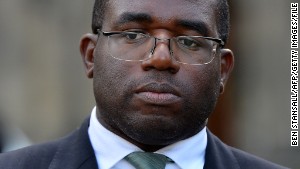
Watching the live footage coming out of Ferguson, Missouri, has brought these memories flooding back.
5 things to know about the Michael Brown shooting
While there are differences between the Tottenham riots and events in Ferguson, the similarities are stark. Michael Brown is not Mark Duggan, but he is yet another black man controversially shot dead by police.
The police officers have different uniforms and the rioters different accents, but the sense of distance and distrust between them is all too familiar.
And the human cost of rioting -- the businesses destroyed, homes damaged and relationships shattered -- transcends all borders.
Soon the violence will stop, the streets will empty and the broken glass will be quietly swept away.
As a degree of normality returns to this Missouri town, journalists will drift away and the TV cameras will move on.
What will be left is a deeply scarred and divided community. The distrust and anger that is compounded by these type of events endures long after public attention has turned away. Healing these divisions will take time, money and commitment.
What is crucial is that Ferguson is not left to deal with this alone. When a community so publicly fractures in the most devastating of circumstances, it needs outside help to heal.
After the violence in London stopped, the Mayor and the Government committed to a series of reviews, commissions and repair funds that would take place over the coming months. While these were not entirely effective, they did ensure that the needs of the community were not simply forgotten.
A damaged community being left to its own devices, with no one to mediate the anger and accusations between different parties, is not a recipe for progress.
Much of this work will focus on repairing the relationship between the police and the communities they operate in. Police forces can operate only with the consent of those that they are policing; deep distrust in the police puts that at risk.
The first part of this process will involve establishing the truth about what lead to Michael Brown's death, and bringing any wrongdoers to justice. But the protesters on Ferguson's streets know that Michael was not the first young black man shot dead in controversial circumstances, and nor will he be the last. Deeper, more long-term fixes are required.
This will require serious effort on both sides to rebuild and move forward. London's current police commissioner, Bernard Hogan-Howe, knew this when he committed to virtually abolishing the controversial and divisive practice of stop and search. So too did New York Mayor Bill de Blasio when he focused his election campaign on the problems caused by its transatlantic cousin: stop and frisk. Similar leadership will be needed in Missouri.
My experience suggests that, with time, police-community relations can be rebuilt. In Tottenham, problems remain but the divisions are nowhere near as deep as they once were.
The solutions, though, must go deeper than police reform.
What became clear from speaking to those who had been involved in the August 2011 UK riots was a sense of alienation -- an awareness that these people felt they had nothing to lose. They were rebelling not just against the local police but against a society they felt they had no stake in. It was, on the whole, those without a job, an education or the hope of a brighter future who were most likely to risk a jail sentence for the sake of a new pair of Air Max trainers.
More must be done, through employment, education, urban regeneration and community programs, to integrate these groups with the rest of society.
So, too, should we address the problems that have arisen from the social revolution of the 1960s and the economic liberal revolution of the 1980s. Liberalism has made our societies fairer and more tolerant, but in excess it leads to a hyper-individualism that trumps our shared interests and makes us aware of our rights but not our responsibilities.
Both in Tottenham and in Ferguson, legitimate protesters were joined by an opportunistic minority. In London, people who had never heard of Mark Duggan rushed down to Footlocker to grab whatever looted trainers they could lay their hands on. Whole families were caught on CCTV making off with widescreen televisions robbed from electronics stores. This sense of entitlement, together with an absence of responsibility or the ability to delay gratification, was also present in pre-crash Wall Street and in the Enron boardroom; it has been very visible in recent years at both ends of society.
Since the 2011 UK riots, similar disturbances have taken place in Sweden, Italy, Belgium, Spain, France and the USA. While the immediate anger usually forms around a particular event or a specific government policy, all of these events stem from much deeper and more fundamental issues that continue to rumble below the surface in communities across the developed world.
Every now and then we see an eruption, as in Ferguson. It is a sign of the fractures that have emerged in our societies. We should not allow ourselves to think that they are nothing more than isolated events.
Full coverage of shooting, unrest in Ferguson
Magazine: The Aftermath in Ferguson
Read more about the flash point in the Heartland at CNN.com/US
Brothers die in Japan landslides
8/20/2014 6:46:58 PM
- NEW: At least 10 people are missing in Japanese city
- Authorities fear the number could be much higher
- Heavy rains have pounded the area, bringing landslides
Tokyo (CNN) -- Residents combed through mud and debris looking for bodies of their loved ones after heavy rains triggered landslides that swallowed up homes in the western Japanese city of Hiroshima.
The landslides Wednesday killed at least 39 people, including a 2-year-old boy and his 11-year-old brother who were buried by debris in Asaminami Ward, authorities told the Kyodo news agency.
At least 10 others are missing, according to Hiroshima police. Authorities fear the number could be much higher because the landslides hit a crowded residential area.
A neighbor said he heard the boys' mother scream for help and rushed to help her, digging with his bare hands, Kyodo reported. He reached the toddler, but could not free him in time.
"His body was still warm," the man told Kyodo.
An elderly resident of the Asakita Ward, one of the hardest-hit areas, described roads as resembling rivers. "I thought it was dangerous to go outside, so I was in my room listening to disaster information all through the night," she told Kyodo.
Heavy rains have pounded the area. In the last 24 hours, it received a record 9.5 inches of rain, the Kyodo news agency said.
Hiroshima Mayor Kazumi Matsui acknowledged evacuation advisories came late, Kyodo reported. Matsui said city officials will investigate how they can improve.
According to Hiroshima's disaster control center, as of Thursday morning 1,018 people have been evacuated from destroyed houses and moved to public facilities. An evacuation advisory is in place for 164,108 residents or 68,813 households in Asakita and Asaminami wards in Hiroshima.
About 600 emergency personnel have been deployed to the area. Search and recovery continued Thursday.
Rescuers pull out 90 bodies after landslides in India
ISAF member killed in Afghanistan
8/20/2014 9:01:38 PM
Kabul (CNN) -- A coalition service member died Wednesday after being stabbed in the neck -- allegedly by a Taliban member -- near the international airport in Afghanistan's capital, a spokesman for Kabul's police chief said.
The name and nationality of the service member, serving the NATO-led International Security Assistance Forces, weren't immediately released.
The victim was taken to a hospital, where he died, Kabul police spokesman Hashmat Stanikzai said.
A suspect -- identified as a low-level Taliban commander Abdul Fatah Jahadwal -- was arrested hours later and confessed to stabbing the man, Stanikzai said.
U.S. general killed in Afghanistan
Ferguson, consider Brown's parents
8/21/2014 3:30:45 PM
- William and Valerie Bell's son was unarmed when police killed him on his wedding day
- Bells: Police too often kill unarmed black men; Brown's death has roiled Ferguson
- The Bells stand in solidarity with Ferguson's call for justice in the killing of the unarmed teen
- Bells: But protests must be nonviolent for the sake of the Brown family, who need peace
Editor's note: William and Valerie Bell are the parents of Sean Bell, who was unarmed when he was shot and killed by New York police officers on November 25, 2006. The officers who shot Bell were acquitted. The opinions in this commentary are solely those of the writers.
(CNN) -- The intense situation in Ferguson, Missouri, is disturbingly familiar to us. In November, it will be eight years since we suffered the same tragedy as Michael Brown's parents. Our unarmed son, Sean Bell, was killed in a barrage of 50 shots fired by New York plainclothes police officers on his wedding day, November 25, 2006.
Our prayers go out to the Brown family, and we offer Michael's parents, Lesley McSpadden and Michael Brown Sr., our hearts and support. We know how it feels to have your child snatched away, slain by the police. I remember the gut-wrenching moment we learned the details of our son's brutal final moments.
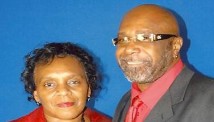
As if that wasn't enough, we also had to deal with the public defamation of our son's character, which seemed to be saying: "He was an animal, he deserved to die." The killing of unarmed black men has become a staggering pattern across the United States, and for the city of Ferguson, the outrage has reached its boiling point.
But we are concerned about the effects the citizens' outrage and their retributive actions might have on the grieving family. My wife, Valerie, believes the racial situation in Ferguson has forced its citizens to aggressively rebel against the infringement of their civil rights. It's true, protesters initially responded to the killing with violence and looting -- which, if continued at that level, would have ultimately destroyed their community and produced the opposite of what they were fighting for in their search for justice.
The Brown family called for peace in the midst of looting and violent protesting. Although the looting has stopped, clashes between protesters and police stayed heightened this week, with the Missouri National Guard, troopers and police in riot gear confronting angry demonstrators. The chaos is reminiscent of the Civil Rights movement. I was born and raised in Alabama and clearly recall the protesters armed with passion for change, protest signs, and their voice of power confronting police armed with batons, water hoses, shotguns and police dogs.
In this new day, things are different. Various reports, often contested, say police and protesters were in full battle, with armed police using armored vehicles, tear gas and rubber bullets as shotguns rang out and some protesters threw Molotov cocktails. The tactics have changed in the new generation's battle, but the causes remain the same: justice and equality. My wife and I stand in solidarity with Ferguson's call for justice in the killing of the unarmed teenager Michael Brown.
But we also stand with the Brown family's call for peaceful protesting. It seems protests are calming down, which is very good news. During this dynamic climate of change in Ferguson, it is imperative not to lose sight of what is in the best interest of the family.
Ferguson seems to be in a civil war as Michael Brown's family struggles with the legal complexity of this fight. They are at the core of it all. Many miles must be traveled in their journey for justice. My wife and I know well the transitional process the Brown family must endure. Finding a balance between fighting for justice and mourning the loss of your child can become overwhelmingly challenging.
When their time comes to lay their son to rest, it should be a time of peace, giving the family space for grieving and moving forward. Many emotions are running high in Ferguson. However, not one of those emotions can compare with the anguish the family is experiencing; and that should be considered throughout this journey for justice.
Read CNNOpinion's new Flipboard magazine.
Follow us on Twitter @CNNOpinion.
Join us on Facebook.com/CNNOpinion.
Will athletes use power for good?
8/21/2014 9:36:15 PM
- Gold medalist gymnast says athletes do have a platform of higher visibility
- She says it's vital they use it to give back, but athletes share much in common with us all
- Shannon Miller: Everyone can make a difference and strengthen society
Editor's note: Shannon Miller is a former gymnast and Olympic gold medalist who will take part Thursday evening in a CNN Dialogues program on "Athletes and Social Responsibility" at the Center for Civil and Human Rights in Atlanta. The opinions expressed in this commentary are hers.
(CNN) -- I never set out to be an Olympic gold medalist. I never said out loud that I wanted to be the world's best at any particular thing. As a scrappy little girl I certainly never imagined that I would be the most decorated at any given sport. I was a shy middle child, the peacemaker, growing up in Oklahoma. At 5 years old, I followed my older sister into the sport of gymnastics.
Our parents were concerned over our treatment of their furniture with our jumping and somersaults and took us to a gymnastics facility. I fell in love from that first day. It was tough, it was even scary at times, but I loved it. I enjoyed the challenge and the feeling of accomplishment I received when I learned a new skill. I also realized I could prove myself without words. My actions would speak for me.
Our parents taught us from an early age that actions are important. You can say a lot of things, but at the end of the day, can you back it up? We also learned that our actions do have consequences, good and bad. However, if you made a poor decision, all was not lost. Much of the time you still had an opportunity to correct the mistake, to choose another path or sometimes simply state, "I'm sorry."

I was never taught that I had more social responsibility because I was an athlete. Rather I learned from an early age that regardless of whether or not I could do a full twisting double back off of a 4-inch-wide beam, I was expected to give back in whatever way I could, just like my sister and brother, just as my parents did.
While we may not always have had the resources to give financially, we were able to assist with fund-raisers, bring food and toys to those in need, or simply share a kind word with another. We could give of our time and talent, if not treasure. And soon as I was able, I could give of that treasure, too.
I did not grow up in a world of social media where everyone knew exactly what you were doing at every moment of every day. I chuckle at the look of shock I get from those younger athletes who cannot comprehend that I had never even logged on to the Internet until after the 1996 Olympics.
We now often feel this need to share with the whole world every little thing we are doing. I'm as guilty as anyone else with Twitter, Facebook and YouTube. However, at the end of the day, social responsibility isn't about being front-page news. It's about helping others.
Professional and Olympic athletes who are able to bring awareness to a cause by generating news coverage can be an essential way to spread a positive message and educate others. However, that doesn't mean that those athletes who choose to donate anonymously or work with others away from the spotlight are any less important.
The point is to make a difference in small and big ways. In fact, the point is that everyone, professional athlete or not, can and should share in this social responsibility.
Certainly some people will have a broader audience than others. I don't know that this means they should be held to a higher standard. Instead, the idea should be that we all hold ourselves to the highest standard.
I am blessed that I have the opportunity to shine a light on critical issues that I am passionate about such as cancer awareness, childhood obesity and women's health. I realize I am able to reach more people in less time by simple virtue of the success I had in gymnastics.
In some ways, it's like having this special super power, and you can choose to use it for good or evil. We need to choose the positive over the negative. That doesn't mean we're all going to be perfect.
It's not perfection that matters, it's what you do with that mistake when it does happen. How do you handle it? How can you share your humanity in a way that inspires and strengthens others?
I do my best to be a positive role model, not because I'm an Olympic gold medalist, but rather, because I am a human being. I often view things through the lens of a mother and as a daughter. Am I or is a particular athlete doing something I would want my child to emulate? As a daughter, is what I'm doing something my parents would be proud of?
Yes, athletes are role models. The fact is that social responsibility is taken to a heightened level when you are a prominent and public figure. However, I believe that the question is not whether or not an athlete is socially responsible. The critical question is: Are we as people socially responsible?
Read CNNOpinion's new Flipboard magazine
Follow us on Twitter @CNNOpinion.
Join us on Facebook.com/CNNOpinion.
Foley's murder 'a message to Britain'
8/21/2014 4:32:36 AM
- ISIS releases video showing the beheading of journalist James Foley
- Furedi: The executioner in the video appeared to have a London accent
- Furedi: Many radical British Muslims reject, loathe cultural values of British society
- Furedi: British leaders failed to define common purpose that can unite all parts of society
Editor's note: Frank Furedi is Emeritus Professor of Sociology at the University of Kent, Canterbury. His book "First World War: Still No End In Sight" is published by Bloomsbury. The views expressed in this commentary are solely those of the author.
(CNN) -- It was a gruesome act performed atop the stage of the global theater -- the grotesque image of a masked man, dressed all in black, beheading an American journalist in a production intended to strike terror into the hearts of millions around the world.
This act of sadism was horrific enough on its own. But what some will also find deeply disturbing was that the jihadist executioner communicated his threat with a distinct London accent. The realization that there are people who grew up in Britain who are prepared to engage in such barbaric acts of depravity makes James Foley's murder feel more intimate than if it was perpetrated by a foreign-sounding killer from a different society.
Propaganda films from ISIS -- the Sunni militant group that has seized large tracts of land in Syria and Iraq in recent months -- regularly feature British recruits to demonstrate the group's capacity to influence young Muslims living in Europe. Earlier this week another threatening video from ISIS featured a group of jihadists speaking with British accents as they interrogated a Japanese hostage. Some of them weren't even hiding their faces.
The beheading of Foley was staged as a "Message to America," but it constituted a direct warning to Britain. It served as a reminder that the killing of a young English soldier Lee Rigby on the streets of south London by two home-grown jihadists last year was not an isolated event.
There has been a dramatic shift since September 11, 2001 in the way that the risk of terrorism is perceived in Britain and Western societies. Western governments have been forced to confront an unexpected and deeply disturbing reality -- that it is sometimes the people already living in these societies who constitute the greatest security threat.
The emergence of the "home grown terrorist" raises the fundamental question -- why do these radicalized jihadists reject the values and ways of life of the societies they inhabit?
Thankfully only a small fraction of a minority of young radical Muslims turn into hardened executioners of innocent victims. But a far greater number reject, even loathe, the cultural values of British society.
Many radical Muslims aren't fervent ISIS supports -- but some do regard the war to establish a global caliphate as a cause worth supporting. Their response is integral to an uncomfortable reality that British society ignores at its peril.
Losing the battle of ideas
Since the terrorist bombings in London in July 2005, the challenge of winning hearts and minds has been evident to policy makers. At the time, British Prime Minister Tony Blair declared:
"It's important, however, that those engaged in terrorism realize that our determination to defend our values and our way of life is greater than their determination to cause death and destruction to innocent people in a desire to impose extremism on the world."
Unfortunately very little progress has been made in upholding and explaining the values and way of life that are at stake -- and the shallowness of this statement was exposed a few years year later when the government's plans to launch a British Day had to be quietly abandoned.
The idea for organizing a British Day was a direct response to the London bombings. At the time, Chancellor Gordon Brown stated:
"We have to face uncomfortable facts that while the British response to July 7th was remarkable, they were British citizens, British born apparently integrated into our communities, who were prepared to maim and kill fellow British citizens irrespective of their religion.
"We have to be clearer now about how diverse cultures which inevitably contain differences can find the essential common purpose also without which no society can flourish."
Sadly the government failed to give meaning to the idea of this "common purpose" and gave up on the idea. The very attempt to celebrate "Britishness" only revealed an absence of clarity of what it was that ought to be valued and celebrated.
The answer to the question of what it means to be British continues to elude policy makers. Prime Minister David Cameron has called for teaching Britishness in school, in response to recent allegations about radical Islamist influence in the classroom. But if political leaders find it difficult to explain what Britishness represents, then how can teachers be expected to instruct their pupils?
Unless British values actually mean something in public life they cannot be taught. This is a challenge that has been evaded during the past decade. After the tragic murder of James Foley, this challenge must no longer be avoided.
READ: Foley's beheading recalls past horrors
READ: ISIS: Is it really a threat to the U.S.?
The views expressed in this commentary are solely those of Frank Furedi.
Tycoon calls Chinese 'mongrels'
8/21/2014 10:09:28 AM
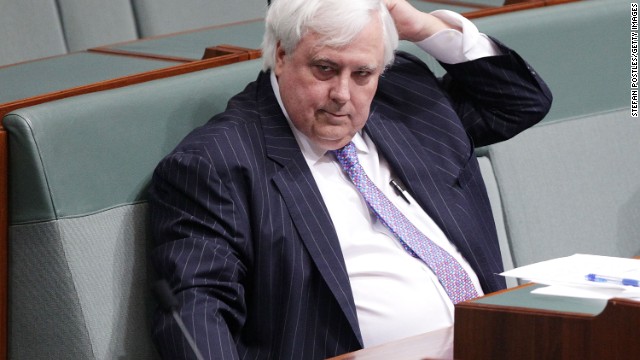
- Australian tycoon Clive Palmer delivers scathing tirade against China
- The insulting remarks widely condemned in China and Australia
- Many Chinese took to social media to back remarks, believing them to be about their government
Hong Kong (CNN) -- Offensive remarks about China made by Australian tycoon and politician Clive Palmer have struck a chord on Chinese social media -- with some users actually seeing them in a positive light.
The outspoken leader of the Palmer United Party went on a tirade on Monday night during a televised interview on Australian television channel ABC.
When asked about his legal battle with Chinese firm CITIC Pacific Ltd, Palmer defended his position before launching into a verbal attack on China, calling the Chinese people "bastards" and "mongrels" who "shoot their own people."
"I'm saying that because they're Communist, because they shoot their own people, they haven't got a justice system and they want to take over this country [Australia]," said Palmer.
On Tuesday, Palmer clarified that his statements were meant for the Chinese state-owned company that he is locked in a dispute with, and not for the Chinese community or the Chinese government.
'Vicious attack'
Palmer's words sparked outrage among Chinese and Australian citizens and officials -- though they did find support on Weibo, the Chinese micro-blogging platform.
"Please separate the Chinese people from the Chinese government. Smart people will know what he is really talking about," wrote one Weibo user. "If those who kill their own citizens aren't bastards, then what are they?"
"He [Palmer] was clearly referring to 'Communist,' not to China as a whole, and not about Chinese people. Global Times please do not take things out of context," wrote another microblogger, referring to an opinion piece published in the state-controlled English-language news outlet, Global Times.
The article described Palmer's rant as a "vicious attack by one of the Australian elite" and said that he had called "a whole country 'bastard.'" It also called for sanctions to be imposed on Palmer's companies.
Meanwhile, official voices continued to condemn the Australian businessman.
Australian Prime Minister Tony Abbott called Palmer's outburst "over the top, shrill and wrong" during an interview with an Australian radio station. He said the Chinese economic boom helped Australia get through the global financial crisis.
"Palmer's words about China in recent days are totally irrational and absurd," Ministry of Foreign Affairs spokesman Qin Gang said in a statement released on Wednesday.
READ: Australian billionaire Palmer to build Titanic replica
You are receiving this email because you subscribed to this feed at feedmyinbox.com
If you no longer wish to receive these emails, you can unsubscribe from this feed, or manage all your subscriptions

No comments:
Post a Comment