
| CNN.com - Top Stories |
| CNN.com delivers up-to-the-minute news and information on the latest top stories, weather, entertainment, politics and more. |
WHO: Untested drugs 'ethical'
8/13/2014 4:42:47 AM
- NEW: Canada to offer WHO up to 1,000 doses of experimental Ebola vaccine
- WHO panel: It is ethical to offer unproven medication to try to fight Ebola
- Pair who took an experimental drug appear to be improving, but one man who took it died
- Sample doses of the experimental drug ZMapp are on their way to Liberia
(CNN) -- The first two doses of an experimental serum created to treat Ebola went to American missionaries.
Then the drug was sent to treat a Spanish priest.
The two Americans, Dr. Kent Brantly and Nancy Writebol, appear to be recovering. The priest, Miguel Pajares, died Tuesday morning.
That's the problem with experimental drugs that have never been clinically tested in humans: No one knows whether they'll work -- and if they do, in whom.
This week, the World Health Organization gathered a group of ethicists to decide whether unproven medications and vaccines should be used in the current Ebola outbreak. As the death toll from the epidemic soared over 1,000, the WHO panel unanimously concluded that it is ethical to offer medications to fight the Ebola virus, even if their effectiveness or adverse effects are unknown.
"The large number of people affected by the 2014 west Africa outbreak, and the high case-fatality rate, have prompted calls to use investigational medical interventions to try to save the lives of patients and to curb the epidemic," the World Health Organization said Tuesday.
WHO says it believes the virus has infected 1,848 people and killed 1,013, making this the deadliest Ebola outbreak in history.
The difference between this outbreak and other Ebola outbreaks is that traditional methods of stopping the virus from spreading -- protective gear, contact tracing, etc. -- don't seem to be working fast enough, said Dr. Marie-Paule Kieny, WHO's assistant director-general. The health care systems in the affected countries are also weak, so resources are scarce.
"If these treatments can save lives ... should we not use them to save lives?" Kieny said the panel asked.
After the panel's decision, Canadian Health Minister Rona Ambrose announced Tuesday her government will donate between 800 and 1,000 doses of an experimental Ebola vaccine to WHO. A "small supply" will be kept at home "in the unlikely event it is needed for compassionate use in Canada," the Public Health Agency said in a news release.
The drug -- called VSV-EBOV -- is Canadian-made and owned, having been developed by the National Microbiology Laboratory.
It's never been tested on humans, "but has shown promise in animal research," the agency states. A Canadian government ethics advisory group and the WHO panel of medical ethics experts both "informed" the decision to give out VSV-EBOV, despite its "unknown efficacy and adverse effects."
Will it work is just one of the key questions surrounding VSV-EBOV. As with ZMapp, other questions include how and on whom it should be used.
A vicious killer
Ebola can torment its victims with high fevers, internal and external bleeding, vomiting and diarrhea. It often afflicts multiple organ systems and can kill up to 90% of those infected.
The virus spreads through contact with organs and bodily fluids such as blood, saliva and urine.
Since the current Ebola epidemic was declared in Guinea in March, the disease has spread to Sierra Leone, Liberia and Nigeria.
And the impact has spread around the world.
Cynthia Sangbai-Kwennah, a native of Liberia living in Minnesota, has lost nine family members to Ebola in less than two months.
"Every time you pick up the phone and you receive a call ... this family is dead, this person is dead," Sangbai-Kwennah told CNN affiliate WCCO.
First her father perished. Then other relatives who had been taking care of him. Sangbai-Kwennah even lost her younger sister, who had just recently graduated from college.
"Your entire family die in a month and a half," she said. "It's just so scary. I'm just so confused. I don't even know what to do."
There are several experimental drugs and vaccines being created for Ebola, Kieny said, though none has been through the necessary human trials to prove safety and efficacy. And none of them is currently available in unlimited supply. This outbreak, she said, is an opportunity to right a wrong.
"The fact that there is no drug for Ebola is a market failure. This is typically a disease of poor people in poor countries where there is no market."
Desperation has pushed Liberia's government to ask for the experimental serum used to treat the Americans and Spanish priest, in order to treat two local doctors.
The U.S. Food and Drug Administration approved Liberia's request for access to ZMapp, which was created by the San Diego-based biotech firm Mapp Biopharmaceutical Inc. Sample doses of the medicine will be sent to Liberia this week to treat doctors who have contracted the virus, the Liberian government said.
Mapp Biopharmaceutical said Monday that its supply has been exhausted after fulfilling the request of a West African country. (It did not name the country.) Kentucky BioProcessing, which manufactures a version of the drug, is working to increase production of ZMapp, but the process will take several months, company spokesman David Howard said last week.
"There are not adequate supplies of any of the investigational agents anywhere near ready for human use," said Dr. Jesse Goodman, director of the Center on Medical Product Access, Safety and Stewardship at Georgetown University Medical Center, referring to all drugs being developed to treat Ebola.
"Not (adequate) to treat all the patients in this outbreak, even if we knew they worked."
Questions about drug access
The gulf between developed and developing nations appeared to some to widen last week as reports emerged that the Ebola drug was being used to treat Westerners but not West Africans.
"What if it had killed both of them?" Paul Root Wolpe, director of the Center for Ethics at Emory University in Atlanta, said about the two Americans first treated with ZMapp. "It is only because it worked, seemingly very well, that people are screaming, 'How come people in Africa didn't get it?' "
Wolpe said that considering the converse situation could provide some perspective.
"If the first people (to receive doses of ZMapp) would have been Liberian, headlines would have screamed, 'Experimental drug tested on poor Africans,' " Wolpe said.
But the nagging question for some: Was giving the serum to Africans even a consideration? Should it have been?
"Why didn't Dr. Sheik Umar Khan, the chief Sierra Leone physician who died while treating Ebola patients, receive this medication?" Harriet Washington wrote in a recent CNN Opinion piece. "Because another method of determining who gets medications is at work here -- the drearily familiar stratification of access to a drug based on economic resources and being a Westerner rather than a resident of the global South."
WHO will convene a panel at the end of the month to discuss who should get priority access to the experimental drugs, Kieny said. WHO will not broker access, she noted, meaning it will not be responsible for doling out doses. It will simply provide information about companies that have quantities available to people or government agencies that are asking.
Drug safety concerns
More relevant than who got what and when, experts say, are questions about the safety of the current crop of experimental Ebola drugs. For ZMapp and other Ebola drugs currently in the pipeline -- like TKM-Ebola by Tekmira Pharmaceuticals -- there are not good, substantive data in humans to support their use.
"Usually, you treat large numbers of sick people to be sure something isn't going to hurt them," said Goodman, former chief scientist with the Food and Drug Administration. "So while it seems at first glance that two individuals getting something promising in animals and then improving, is convincing, I don't think it's yet convincing. I think it's hopeful."
Wolpe, Washington and Goodman agree that careful study should precede widespread dissemination of any Ebola drug and that Africans should be represented in those studies.
"If (ZMapp) turns out to be as effective as it seems to be, and it's possible to make much more of it, then we end up with a situation where it becomes unethical to withhold treatment," Wolpe said.
"We should do everything we can to nip this epidemic in the bud."
Ebola outbreak likely started with 2-year-old in Guinea
Nine things to know about the Ebola virus
Treating Ebola in Sierra Leone: 'We are two steps behind'
CNN's Carol Jordan, Greg Botelho, Nana Karikari-apau, Hazel Pfeifer, Danielle Dellorto and Samuel Burke contributed to this report.
Family: Help American held in N. Korea
8/13/2014 3:13:35 AM
- Jeffrey Fowle visited North Korea as part of a tour group earlier this year
- Fowle is one of three Americans detained in North Korea
- His family and lawyer asks for help in his return
(CNN) -- The family of Jeffrey Edward Fowle, an American tourist detained in North Korea for apparently breaking an unspecified law, has apologized to the reclusive state and asked for his release.
Fowle's wife and their three children appeared at a news conference in Lebanon, Ohio, Tuesday, in which the family's lawyer, Timothy Tepe read a statement.
"The family would like to express its heartfelt apology to the people and the government of the DPRK (Democratic People's Republic of Korea). Jeff has apologized publicly for his actions and Jeffrey's family petitions the government of the DPRK for mercy toward Jeffrey and asks for his release."

Fowle's family has been writing to U.S. President Barack Obama and previous presidents including George W. Bush, Bill Clinton and Jimmy Carter to help his case. In previous cases of arrested Americans in North Korea, visits by U.S. former heads of state helped secure their return. Carter visited Pyongyang in 2010 to free American Aijalon Mahli Gomes and Clinton also made the trip to free U.S. journalists Laura Ling and Euna Lee in 2009.
"The next few days are critical as we approach the trial date," Tepe said at the news conference, attended by CNN affiliate based in Dayton, Ohio, WHIO.
There was no official announcement of a trial date from North Korea's state-run, Korean Central News Agency (KCNA).
Plea for help
Earlier this month, the Associated Press, which has a bureau in Pyongyang, was granted an interview with Fowle and another American held in the country.
In the interview released on August 1, Fowle told the wires service, that "the window is closing on that process. It will be coming relatively soon, maybe within a month," Fowle said of his trial.
In the interview, Fowle apologized to both the United States and North Korea. He also wrote a letter, in which it stated: "I intentionally left a Bible in a nightclub." He wrote that he had been treated well, but it was unclear whether the statement was written freely or whether he was pressured.
Tepe said the family has received one phone call and one letter from him in North Korea.
"They're desperate for his release and his return home. As you can imagine, Jeffrey is the primary financial provider for his family and [his wife] Tatyana is struggling to manage by herself," Tepe said at Tuesday's news conference.
Three Americans in custody
In June, KCNA reported that authorities were investigating Fowle, whom it said violated the law by acting "contrary to the purpose of tourism."
Citing unidentified sources, Japanese news agency Kyodo reported that Fowle was part of a tour group and that he was detained in mid-May after allegedly leaving a Bible behind.
In a previous statement, the family had said,"Jeffrey loves to travel and loves the adventure of experiencing different cultures and seeing new places."
Fowle is one of three Americans detained in North Korea, including Matthew Todd Miller, who was taken into custody on April 10, according to KCNA and Korean-American missionary, Kenneth Bae, who has been sentenced to 15 years hard labor in 2013.
READ: Kenneth Bae feels abandoned by U.S.
Steve Ballmer buys Clippers
8/13/2014 4:42:22 AM
- NEW: Shelly Sterling's attorney says Donald Sterling shouldn't be able to contest sale
- Former Microsoft CEO Steve Ballmer is new owner of the Los Angeles Clippers
- "I will be hard core" in supporting team, Ballmer says
- Sterling caused an uproar when he made racist remarks in an audio recording in April
Los Angeles (CNN) -- Former Microsoft CEO Steve Ballmer became the new owner of the NBA's Los Angeles Clippers on Tuesday, concluding a public saga in which the league expelled one of the prior co-owners for racist comments.
The sale marks the end of co-ownership by billionaire Donald Sterling, who was ousted from the NBA and then battled his estranged wife, Shelly, in a California probate court over control of the couple's trust, which owned the franchise.
Sterling, 80, lost that legal battle when the probate judge ruled the deal by Shelly Sterling to sell the Clippers to Ballmer could move forward. Sterling bought the Clippers in 1981 for about $12 million and was the longest-tenured owner in the NBA.
The negotiated $2 billion sale price is a record for any professional sports franchise in North America. Ballmer, 58, was ranked No. 35 this year on Forbes' annual world's billionaires list and has a net worth of $20 billion.
Ballmer, players and coach Doc Rivers will meet fans Monday at the Staples Center in Los Angeles during the Clippers Fan Festival.
"I am humbled and honored to be the new owner of the Los Angeles Clippers," Ballmer said in a statement. "Clipper fans are so amazing. They have remained fiercely loyal to our franchise through some extraordinary times. I will be hard core in giving the team, our great coach, staff and players the support they need to do their best work on the court."
Who is Steve Ballmer?
In April, Sterling came under fire for making racist remarks against African-Americans in comments to his companion V. Stiviano. The recorded conversation was published online.
In response, the NBA banned Sterling for life, fined him the maximum $2.5 million and moved toward terminating the Sterlings' ownership rights in the franchise.
Under the sale, Ballmer agreed to give Shelly Sterling the title of "owner emeritus" of the team, allowing her to retain a connection to the franchise.
"I am thrilled that the Clippers now have such a wonderful new owner," Shelly Sterling said. "I am confident that Steve will bring the city a championship team in the very near future. ... I cannot wait for the new season to begin."
The sale of the Clippers closed after "the entry of an order by a California court confirming the authority of Shelly Sterling, on behalf of the Sterling Family Trust, to sell the team," the NBA said Tuesday.
"The NBA Board of Governors previously approved the sale and Ballmer is now the Clippers Governor," the basketball league said.
Pierce O'Donnell, an attorney for Shelly Sterling, said Tuesday evening that he had filed court papers opposing Donald Sterling's petition to an appeals court to direct the probate judge to vacate his order. He said the issue was moot because the family trust had received the $2 billion already.
"Donald Sterling's petitions are patently frivolous," he said.

Ballmer's attorney, Adam Streisand, agreed the legal move would fail.
"I'm confident the appellate court will agree (California probate Judge Michael) Levanas made the correct decision, and it's all academic now, because we already have a new owner of the Clippers," Streisand said.
Sterling and his attorneys couldn't be immediately reached for comment.
On Ballmer's behalf, Streisand devised a legal strategy in probate court using "a provision so rarely invoked that most probate attorneys were unaware of its existence before the Sterling case," his law firm said.
That provision, called Section 1310(b), "authorizes the probate court to make an order to permit a trustee to carry out a transaction even if the court's decision is appealed to a higher court if delay would cause irreparable injury or loss," Streisand's law firm said.
"When Ballmer contacted Streisand about the deal, Streisand says within 60 seconds he told Ballmer about 1310(b) and then presented the plan to lawyers for Shelly Sterling," the firm said.
Shelly Sterling was able to negotiate a sale to Ballmer for $2 billion because her husband had OK'd in a letter her effort to negotiate with a buyer.
But Donald Sterling later opposed a sale of the team, saying the purported letter authorized only a negotiation, not a formal sale.
Shelly Sterling became the sole trustee of the couple's trust in May after two doctors determined that Donald Sterling was mentally incapacitated. He was diagnosed with early Alzheimer's or another brain disease.
Sterling challenged his wife's takeover of the trust, but Levanas ruled in Shelly Sterling's favor, saying she acted properly in removing her husband from the trust that owned the NBA team.
The judge further ruled that the sale could go forward regardless of appeals by Donald Sterling.
Sterling has sued the league for $1 billion, claiming antitrust violations in its handling of the matter.
He also is suing his wife and NBA Commissioner Adam Silver, seeking monetary damages in civil court. Court documents filed by Sterling's attorneys call the potential deal "unlawful" and "fraudulent" and ask for an injunction to block the sale.
How Ballmer's $2 billion Clippers deal could pay off
CNN's Rosalina Nieves contributed to this report.
Depression: We all wear a mask
8/13/2014 4:41:25 AM
- Terrie Williams has seen first-hand the impact mental illness has had on herself, others
- Suicide is a major cause of death, highest among those 46-64
- Williams says depression is often a secret: "You never really know what is going on"
Editor's note: Terrie M. Williams is a celebrity publicist who has represented stars from Eddie Murphy to Chris Rock. She is also a mental health advocate and author of "Black Pain: It Just Looks Like We're Not Hurting." Dr. Dawn Porter is founder of FamilyRenewed.com, child adolescent and adult psychiatrist. The opinions expressed in this commentary are solely those of the author.
(CNN) -- Smart, successful, funny and handsome. Robin Williams seemed to have it all. And yet, today he is dead. Apparently, by his own choice.
But why? What went wrong?
The joy, spontaneity and humor of Robin Williams likely masked the daily torment he endured in his on-again-off-again struggle with depression. He made us laugh out here, but he was in pain in there. Unfortunately, I know that pain.

In his death, we have lost one of the most talented and creative spirits on the planet. Still, his death by suicide should be a wake-up call for us all. It is to remind us that many of us are walking a fine line -- smiling on the outside while slowly dying on the inside.
I didn't know Robin personally, so I am unable to speak with any certainty as to why he chose to end his life. But I have experienced that kind of torment and pain. For years, I, too, struggled with depression. And many days, I still do.
Complete coverage on Robin Williams
Those who are suffering will do just about anything not to feel the pain anymore. And in those moments, their brains become their worst enemies. It often takes an outside force to provide light, to make sure those dark thoughts aren't, as in the case of Robin, our last thoughts.
According to the Centers for Disease Center, suicide rates increased from 2000 to 2011 from 10.4 deaths per 100,000 to 12.3 deaths per 100,000.
The rate of suicide is higher and rising among men. In 2011, 78.5% of suicides were by men, at a rate of 20.2 deaths per 100,000.
The rate of suicide is rising in all age groups except 85 and older and is highest in individuals 45 to 64, according to the American Foundation for Suicide Prevention.
We know and feel that the stigma of mental health is making it even harder for those of us who need support to reach out and get it. Living with depression is isolating and demoralizing and often reinforces the pain that we are in.
We can't let these tragedies continue. The ripple effect is immeasurable. Now, his loss has to change how we move forward.
When someone dies, it is tragic. But when someone dies by suicide, there are so many competing emotions from all who are touched that there is no understanding the impact. We all wonder 'why?'
No two lives are identical and to make judgments about another's choice is often more destructive than helpful. But we have to remember that everyone is dealing with their own stuff behind their own mask. We don't know what's really going on, so we must be careful not to judge.
Too many are dying because of the deafening silence. Everyone you know goes through or is going through the fire, and that's the truth.
For me, depression has been part of my journey for a very long time. Long before I knew what to call it, there it was walking with me, side by side. There it was, holding my hand, invading my thoughts causing me to sleep longer, eat more and rarely smile whenever I spent time alone with myself.
I learned to dance the dance, to smile for my friends, for my parents, for the audience, for the camera. I smiled, all while inside a hurricane was sweeping me into an ocean of darkness.
You are ashamed. I was ashamed. We are all somehow very ashamed to admit to others our feelings of doom.
There is no one size fits all reason for depression's presence. For some it is childhood demons. For others, a chemical imbalance. It can be brought on by stressful situations or hang around forever in the background like a stubborn gray cloud.
Just as there is no single explanation for this emotional predator, there can be no one-size-fits-all solution. It starts with sharing and admitting the pain. Nothing can be fixed until we admit that it is broken, until we acknowledge that there is a problem. From that point forward, we must work toward our healing solutions, because we are fighting for our life.
My battle with depression has diminished greatly, although I'm not sure that it will completely disappear. What I do know is that having it gone completely is a personal goal that I've set and will continue to take whatever steps are necessary to accomplish it.
Writing my book "Black Pain: It Just Looks Like We're Not Hurting" was part of the journey. I wanted to help other people better understand what they were going through. Now I've co-founded with Madeline McCray the New Legacy Leaders Project to carry the mission forward. The mantra of the initiative, "Our Vision Our Journey, Beyond Depression, Obesity and Poverty to Wellness and Prosperity."
How can we stop our best and brightest, our loved ones, from killing themselves when alone in that darkness? How can we make a difference?
First, we have to take off the mask. We must begin to share our pain. By talking about it, everyone will realize that they are not alone. And they do not have to go through this journey alone.
Next, we must get involved and demand that our elected representatives support legislation that make resources available for everyone to get the support and help they need.
Lastly, we've got to reach out to each other. When you see someone struggling, don't just ignore them, write them off or assume they'll just "snap out of it." Call them, visit them, keep an eye on them. Have a cup of coffee and just listen. We all have a shared responsibility in the health and well-being of our society, one friend at a time.
Robin Williams' death is a stark reminder to all of how much work there is to do. He was brilliant, and he brought joy to so many others. Yet it seems that inner peace escaped him. But he is at peace now. Still, those he left behind -- his family and friends -- are left to try to make sense of it.
Videos: The world according to Robin Williams
It might not ever make sense.
You never really know what goes on inside someone's head. We all wear a mask.
Read CNNOpinion's new Flipboard magazine
Follow us on Twitter @CNNOpinion.
Join us on Facebook.com/CNNOpinion.
Dr. Dawn Porter contributed to this article. For more information on battling depression go to CNN.com/Impact or call the National Suicide Prevention Lifeline at 1-800-273-8255.
'Heroic' mission saves desperate Iraqis
8/13/2014 3:23:43 PM
- The United States conducts airstrikes around Mount Sinjar
- Yazidis fled there to escape the march of ISIS
- A CNN crew was on the rescue flight
- Yazidis, among Iraq's smallest minorities, are of Kurdish descent
(CNN) -- The face of 15-year-old Aziza says it all.
Her mouth slightly agape, tears stream down her face as she glances around the inside of a helicopter with confusion in her eyes.
She looks completely exhausted, overcome with emotion. She cries the whole flight to safety.
The Iraqi air force and fighters with the Kurdish peshmerga carried out a dramatic rescue mission Monday at Mount Sinjar, taking supplies to desperate Yazidis and ferrying a handful of people out, including Aziza.
15 year old Aziza cried whole flight to safety. Her father got separated during ISIS attack 1 week ago. Still missing pic.twitter.com/VSmTbhpHet
— Ivan Watson (@IvanCNN) August 11, 2014 A CNN crew was on the flight that took diapers, milk, water and food to the site where thousands of people have been driven by ISIS, which calls itself the Islamic State.
Map: Where is ISIS?
CNN's Ivan Watson, who was on the chopper, described the mission as "heroic."
Teams hurled out bags and boxes of food from as high as 50 feet before approaching the ground.
"We landed on several short occasions, and that's where -- amid this explosion of dust and chaos -- these desperate civilians came racing towards the helicopter, throwing their children on board the aircraft. The crew was just trying to pull up as many people as possible," Watson said.
Soon, some of the trapped families -- including babies and the elderly -- were packed into the flight. A man held a water bottle for a woman trying drink, her head propped up on his shoulder.
Others didn't make it and were left behind as the helicopter pulled away.
"It was chaotic. It was crazy, but we were able to then lift off with about 20 civilians," Watson said.
Iraq's Yazidis trapped, hiding from ISIS in the mountains
Kurdish official warns of genocide
Yazidis, among Iraq's smallest minorities, are of Kurdish descent, and their religion is considered a pre-Islamic sect that draws from Christianity, Judaism and Zoroastrianism.
One of the oldest religious communities in the world, they have long suffered persecution, with many Muslims referring to them as devil worshippers.
More than a week ago, they fled into the surrounding mountains when ISIS fighters stormed the town of Sinjar.
Now, trapped without food, water or medical care in the summer heat, thousands of families are in desperate need of help.
A senior Kurdish official warned Monday of the potential of genocide against the Yazidi people.
Speaking to CNN's Watson, Fazil Mirani repeatedly called for a humanitarian intervention. He estimated that as many as 70,000 people remain trapped on Mount Sinjar, and that at least 100 people have died so far from dehydration and the heat.
CNN could not independently confirm those estimates.
Who are the religious and ethnic groups under threat from ISIS?
'They flew in shooting; they flew out shooting'
The United States on Monday conducted airstrikes on four ISIS checkpoints and "multiple" ISIS vehicles near Mount Sinjar, according to U.S. Central Command.
Rescued Yezidis aboard Iraqi Air Force helicopter that evacuated trapped civilians from Mount Sinjar pic.twitter.com/2m9cJR2d7x
— Ivan Watson (@IvanCNN) August 11, 2014 "Our aircraft remain positioned to strike any terrorist forces around the mountain who threaten the safety of these families," President Barack Obama said the same day. "We're working with international partners to develop options to bring them to safety."
Back on the helicopter, the relief of those already rescued was palpable.
The crowd on board burst into tears as the chopper took off. Young and old, women and men, civilians and servicemen -- all cried with the intensity of the moment.
Gunners had to open fire at the ground in order to make it away from ISIS.
"They flew in shooting; they flew out shooting," Watson reported.
"There was not a dry eye on the aircraft."
Who are the Yazidis? Why does ISIS want to kill them?
CNN's Laura Smith-Spark contributed to this report.
Thousands of refugees flee ISIS
8/13/2014 7:10:16 AM
Iraqi refugees stream across a bridge into Iraqi Kurdistan, fleeing ISIS militants. CNN's Ivan Watson has more.
If your browser has Adobe Flash Player installed, click above to play. Otherwise, click below.
Plane crash kills Brazil candidate
8/14/2014 1:45:55 AM
- NEW: Messages of mourning appear on Eduardo Campos' campaign website
- Campos, a well known politician and presidential candidate, died in a plane crash
- A Cessna taking him to a campaign stop crashed into a residential neighborhood
- All seven people aboard the plane were killed, state media reported
Sao Paulo, Brazil (CNN) -- Brazilian presidential candidate Eduardo Campos died Wednesday when a small plane carrying him to a campaign stop crashed into a residential neighborhood, state media reported.
All seven people aboard the the Cessna 560XL were killed when the aircraft crashed in the coastal city of Santos, Brazil, about 40 miles south of Sao Paulo, state-run Agencia Brasil reported.
As the aircraft prepared to land, it swerved because of bad weather. The air traffic control tower immediately lost contact with the plane, Agencia Brasil said.
One witness, a pilot trainee, said he heard a loud noise and saw the plane flying low before it crashed into a house and then the ground.
It was pitched down at 70 degrees, and "hit the ground like a rock," Matheus Giovannini said.

Campos, 49, was a well known politician running in his first presidential election as a candidate for the Brazilian Socialist Party.
He was most recently the governor of Pernambuco state and was a federal lawmaker from 1998 to 2003. He was married and had five children.
An adviser, photographer, two pilots, and two others from Campos' political team were also killed in the plane crash.
A dozen people on the ground were injured when the plane crashed, Agencia Brasil reported.
Messages of mourning appeared on Campos' campaign website hours after the crash.
"We lost Eduardo Campos when Brazil most needed his patriotism, his selflessness, his fearlessness and his competence," said Roberto Amaral, the party's first vice-president. "It is not just Pernambuco and its people who lose their leader, not just the Brazilian Socialist Party that loses its leader. It is Brazil that loses a young and promising statesman."
Campos' death sent shock waves across the South American country's political landscape less than two months before the October 5 presidential vote, leaving supporters stunned and wondering who would replace him on the ballot.
Campos was among the serious contenders in the election, steady in third place in the polls at about 8%, according to pollster Datafolha. The two leading candidates are incumbent President Dilma Rousseff and center-right candidate Aecio Neves.
Eight other candidates are polling at 3% or lower.
According to Agencia Brasil, Rousseff will suspend her campaign for three days. Neves said on his Twitter account that he would also suspend his campaign activities.
"All of Brazil is in mourning. Today we lost a great Brazilian, Eduardo Campos. We lost a great friend," Rousseff said via Twitter.
Brazil's Superior Electoral Tribunal, which runs the country's elections, announced that Campos' coalition had 10 days to nominate a new candidate. Campos' vice presidential running mate, Marina Silva, a former senator and environmental minister, is also a well known politician with a solid base of supporters. She ran for president in 2010 for the country's Green Party.
The country's Air Force said Wednesday's plane crash was due to bad weather, but it is continuing to investigate the accident.
The plane had departed from Santos Dumont airport in Rio de Janeiro en route to Guaruja airport in Sao Paulo state, Agencia Brasil reported.
Its maintenance and inspection records were up to date, the state outlet said.
Shasta Darlington reported from Sao Paulo. Danny Guerra and Jason Hanna reported from Atlanta. CNN's Arthur Brice, Jessica King, Mariano Castillo and Catherine E. Shoichet contributed to this report.
Bieber agrees to counseling
8/13/2014 7:57:20 PM
- NEW: Judge compares Justin Bieber to a young Robert Downey Jr.
- Bieber must get 12 hours of anger management counseling
- The singer was arrested January 23 while street racing in Miami Beach, police said
- Bieber has had run-ins with the law in Los Angeles and Toronto
(CNN) -- Justin Bieber made a $50,000 donation to a youth charity as part of a plea deal to settle a Miami drunken driving case Wednesday.
Bieber, 20, was not in court when a judge accepted his guilty plea to careless driving and resisting arrest in connection with the Miami Beach incident last January.
Prosecutors dropped the drunken driving charge in the agreement, which requires Bieber to get 12 hours of anger management counseling, attend a program that teaches about the impact of drunken driving on victims and make the large donation to the "Our Kids" organization.
The charity donation, although a prosecution demand, could not legally be required in the plea deal, a prosecutor noted during the hearing. As a result, the payment was made before the judge accepted the agreement.
Judge William Altfield delivered a lecture to Bieber, which he hoped his lawyers would relay to their client, asking him to become a better role model for his young fans.
"I hope that he realizes that his actions not only lead to consequences that affect him, but they lead to consequences that affect others who are looking up to him as a role model," the judge said.
Although Bieber has never been charged with a felony crime or a drug charge -- and he has never been in drug or alcohol rehab -- the judge compared the singer to actor Robert Downey Jr. when he was young.
Altfield said that Downey got into trouble "because of the drugs, because of the alcohol, because of the fame, because of all of the pressures that he had on a daily basis and look at what he's done with his life. He turned himself around."
"Here is someone who is young," Altfield said of Bieber. "His whole life is ahead of him and he just hopefully will get the message. He will grow up. He will use all of his talents positively for young persons."
The lead prosecutor, in a written statement to CNN, said "the strengths and weaknesses of the case" led both sides to agree to the plea deal.
"The ultimate purpose of the Miami Beach Police Department's initial traffic stop was to end some rash juvenile type conduct before a tragedy occurred," State Attorney Katherine Fernandez Rundle said. "The intervention and counseling parts of the plea should provide a pathway toward adult responsibility."
Miami Beach Police Chief Raymond Martinez said officers arrested Bieber January 23 after they saw him driving a yellow Lamborghini in a race against a red Ferrari in a residential area. The cars were speeding at about 55 to 60 mph in a 30 mph zone, he said.
Police said Bieber was argumentative during the arrest and failed a field sobriety test.
Bieber has had a number of run-ins with the law in recent months.
In July, a judge in Los Angeles ordered Bieber to pay $80,900 restitution for damaging his former neighbor's mansion by throwing eggs.
The pop star accepted a plea deal to settle a vandalism charge that puts him on probation for two years. The probation will be supervised until he completes 12 weekly anger management sessions, works five days of community labor and pays the restitution.
He was charged with assault in January after he was accused of hitting his limousine driver in Toronto.
In January, the Federal Aviation Administration looked into allegations that Bieber and other passengers on board a charter flight from Canada to New Jersey interfered with the flight crew, the agency said. In July, the FAA cleared them.
In February, police in Georgia searched Bieber's limousine and found small amounts of marijuana and drug paraphernalia. No charges were filed "due to the small amount," police said.
Bieber, Malala talk online
Bieber v. Bloom: Feud fuels buzz
Swiss train crash leaves 6 injured
8/13/2014 9:56:43 AM
- At least two train cars derailed near Tiefencastel, Switzerland, rail company says
- Six people were injured, police say
(CNN) -- A landslide caused a passenger train to partially derail in the Swiss Alps Wednesday, injuring at least six people, regional police spokesman Peter Faerber said.
The train was headed from St. Mortiz to Chur in eastern Switzerland when at least two carriages derailed near Tiefencastel, said Simon Rageth, spokesman for the Raethische Bahn rail company.
A rescue operation was under way Wednesday afternoon, said Faerber, a spokesman for police in the Swiss canton of Graubuenden.
Golden gladiator born at death's door
8/13/2014 1:59:20 PM
- Kurt Fearnley is one of the world's most successful wheelchair racers
- He has overcome physical limitations caused by rare spinal condition
- Australian has crawled Kokoda Trail and crewed in testing yacht race
- He is seeking to regain his marathon crown at 2016 Paralympics
CNN's Human to Hero series celebrates inspiration and achievement in sport. Click here for times, videos and features
(CNN) -- Born without the lower portion of his spine, Kurt Fearnley was given just a week to live.
Medical staff deemed his condition so severe they even asked his parents if they actually wanted to take him home.
Yet Glenn and Jackie Fearnley had no doubts about that, and their youngest son has gone on to claim three Paralympic gold medals, win the Sydney to Hobart Yacht Race, trek the notoriously-challenging Kokoda Trail and lunch with Britain's Queen along the way.
It's a mightily impressive collection but in his earliest moments, the prospect of such an action-packed life looked decidedly slim.
"There was quite a period of time when they weren't sure whether I would live out the hour, the day, the week, the month," the Australian, 33, tells CNN's Human To Hero series.
"It was slowly after we had been transferred to Sydney that there was the understanding I might be here to hang around, and my parents were then allowed to choose to take me back home -- even though they were offered alternatives."
Despite his condition -- sacral agenesis, which affects approximately one in 25,000 births -- young Kurt was constantly told by his parents that he was no different to his four elder siblings and that he could achieve anything he wanted.
So they perhaps shouldn't have been so surprised when he informed them of his choice of career.
"Telling Mum and Dad that I was turning down my place at university to be a teacher to become a wheelchair racer instead, I could have been sitting across from them saying I wanted to be a professional unicorn hunter," Fearnley recalls.
But he was backed to the hilt -- and not just by his family.
Growing up in the tiny New South Wales village of Carcoar, whose population even now is little more than 250, Fearnley was much-loved and terrifically supported.
Despite having legs so weak that they cannot support his weight, he would enter high jump competitions and play rugby league among other sporting pursuits -- and this indomitable spirit did not go unnoticed.
So when he had to turn down an invite to compete in the United States because he knew his family lacked the funds to send him, the people of Carcoar came to the rescue -- raising enough money within a week to buy both his flight and a racing chair.
Two decades on, the boy from the backwater has become a byword for bravery and belief -- and he did go on to become a teacher, qualified in physical education, as well.
"There were two turning points in my sporting aspirations. One of them would have been when I started to realize that I wasn't going to play cricket or rugby league for Australia as I wasn't competitive in that line," he says with a grin.
"Then there was the introduction to what my life is now -- wheelchair sports. I was about 13-14 when introduced to that lifestyle and culture. It changed my world."
"It was 1994 and I saw these guys who were just these big men and better than any footballer or cricketer. They were these gladiators and I loved it.
"I wanted to be them and here I am 20 years later. I think I'm almost there."
Watching the #closingceremony with Harry. Gold Coast will be a cracking #CommonwealthGames! Nice work Glasgow:) pic.twitter.com/vDXtFKId5K
— Kurt Fearnley (@kurtfearnley) August 3, 2014 Fearnley's modesty grossly belies his herculean feats.
This is a man who can boast six silver medals and two bronzes on top of the three golds he has won since first competing at the Paralympics in 2000, on home soil in Sydney.
This is a man whose times in his 5,000 meters and marathon category (T54) have never been beaten.
And this is a man who has won a staggering 35 marathons out of the 54 he has contested around the world -- finishing on the podium another 14 times.
"The thing I love about racing wheelchairs is that when I get into my wheelchair, there is not another person in the world that is more made to do what I do," explains Fearnley, who won 1,500m silver at last month's Commonwealth Games.
"There are moments when you are racing that the speed is at a certain level or you're taking a corner at the right speed -- and at that moment, you feel like you are absolutely perfect and that this is what you are meant to do. It's an incredible feeling."
And Fearnley, who stands just 4 foot 7 inches and weighs around 50 kg, is an incredible competitor.
He won 2004 Paralympic gold after suffering a puncture with five kilometers still left to race, under a fierce Athenian sun. Two years later, he set a record time in the New York Marathon despite falling over when hitting a pothole.
"The most important quality any athlete needs is resilience. It's essential for a marathoner," says a man who has also survived two serious car crashes, one of them while in his wheelchair.
Yet merely relaying Fearnley's professional exploits doesn't come close to conveying the fullness of his extraordinary drive and ambition.
Just consider his approach to the Kokoda Trail, a testing single-file trek that runs 96 kilometers (59 miles) through the mountains of Papua New Guinea.
The path's rugged nature and precipitous river crossings are so challenging it can take any able-bodied person anywhere from 4-12 days to traverse it, so one can barely imagine the difficulties endured for someone who chooses -- in Fearnley's own words -- to "crawl" across it.
Nonetheless, he took it on for both charitable and patriotic reasons.
In 1942, Japan wanted to seize control of what was then New Guinea before launching a direct assault on the Australian mainland lying south, with seven months of intense fighting required before being ultimately repelled.
"The Kokoda Trail is the only sport in the world where Australia has really fought for the direct defense of Australia. It holds unlimited important to who we are as a nation," Fearnley says.
A slight case of the sniffles means I'm sitting out of the Opening Ceremony. Will be cheering from the couch. #manflu pic.twitter.com/25PxeIY5ZX
— Kurt Fearnley (@kurtfearnley) July 23, 2014 "It is 96 kilometers of mud and untold amounts of hills. The hills are these mudslides that are covered in a honeycomb of tree routes where you just have to try to keep trudging on.
"I crawled it in 2009, and it feels like it was a lifetime ago. I often wonder how it actually took place. When I was asked in the lead-up to it, it was just 'Why not?' If I think I can do something somewhere in the world and I want to, then wouldn't I make that happen?"
It's an attitude that sits very comfortably alongside his approach to life.
"My motto is probably that struggling is alright, and any struggling is strengthening," he says.
For precisely this reason, he chose to spend his Christmas holiday in 2011 on board the 100-foot Supermaxi yacht Loyal as it won the famous Sydney to Hobart race.
Being pummeled by waves and tossed around a buccaneering boat is not everyone's idea of fun but for the pragmatic Fearnley -- who also has a love of surfing -- it was all a way of readying himself for the 2012 Paralympics in London.
"I have had some incredible experiences outside of wheelchair racing, such as sitting down with 12 other people for lunch two years ago and one of them being the Queen," he smiles, referring to his meeting with visiting British royalty.
"Finding myself on board a yacht on the Sydney to Hobart and winning by 300 meters, having crawled around on this thing for 58 hours -- crawling, in the middle of the night, through people's vomit just doing my job and whatever needed to happen."
In spite of his unorthodox methods and his intense training regime, Fearnley failed in his objective to win the 2012 Paralympic marathon in his category.
Yet he was involved in one of the great Paralympic races, taking bronze even though he finished less than a second by the winner.
So he is unequivocal when asked to describe the biggest challenge of what has been a gloriously colorful career.
"I would say the next one -- turning up at the Rio Olympics in two years' time to try to get back to that number one position," he ventures.
"People may think there is not a lot between first and second (and third) place. In my case it was 0.8 of a second over a marathon, but that 0.8 of a second is absolutely everything in my sport.
"So I would say that the biggest challenge that I would ever have come through over the last 20 years will be trying to rectify that 0.8 of a second in the next two years."
Read: Wheelchair warrior in world of 'murderball'
Read: Fast track - cyclist makes history
Read: 'Warrior runner' who wouldn't quit
Read: Gay diver - How I beat drugs, depression
'My neighbors joined slaughter'
8/13/2014 10:20:59 AM
- NEW: Officials estimate 10,000-20,000 Yazidis on Mount Sinjar
- NEW: ISIS has captured more villages in Syria, activists say
- "They join them, and actually they kill us," a Yazidi says of Arab residents
- Yazidis' loved ones in Israel and U.S. fear for them
Faysh Khabur, Iraq (CNN) -- In an exodus of almost biblical proportions, thousands trudge across a river to escape killers belonging to the Islamic State in Iraq and Syria, or ISIS.
Entire families carry nothing but the clothes on their backs. Some are barefoot.
Jamal Jamir, a 23-year-old university student from Sinjar, told CNN his family fled to the barren and windswept Mount Sinjar more than a week ago after ISIS captured their town. The group, which calls itself the Islamic State, has been on a rampage, killing members of various minorities, including Yazidis.
Jamir said after ISIS arrived in his town, Arab neighbors of his turned on the minorities and helped ISIS kill. "They join them, and actually they kill us."
"People you know?" CNN asked.
"Yes," he responded. "People -- our neighbors!"
Jamir's family was among tens of thousands who flocked to the mountain and desperately waited for airdrops of food and water.
His family escaped to Mount Sinjar on foot and made a marathon 15-hour journey to Syria. After traveling northeast along the border, many families have been crossing a bridge in Faysh Khabur, back into Kurdish-controlled Iraq.
Jamir said two of his young brothers didn't make it. "What we do?" he said. "Not enough water and dusty. ... They died.
"We are poor people. We don't have any problem with anybody. We need someone (to) help us."
The Kurdish peshmerga and Iraqi air force have orchestrated helicopter flights to bring necessities to the mountain and lift some people out. One flight crashed Tuesday, killing the pilot and injuring some others on board.
Now, the United States is considering a possible air evacuation, a U.S. official said Wednesday. No decision has yet been made.
An estimated 10,000 to 20,000 people remain on Mount Sinjar, according to Fuad Hussein, chief of staff of the Kurdistan Regional Government. There are only broad figures because of the expanse of the area, he said. Some previous estimates have been substantially higher.
A senior official in Irbil, Iraq, speaking to CNN on condition of anonymity, gave an estimate similar to Hussein's, and added that some endangered Yazidis have not made it to the mountain.
"A few thousand" are moving in the direction of Mount Sinjar from their villages, the official said.
ISIS has also captured part of Syria, in its continuing effort to establish what it calls an Islamic caliphate. Activists said Wednesday the group has overtaken villages near the northern city of Aleppo following violent clashes with rival Islamist groups.
While U.S. airstrikes have helped the fight against ISIS in Iraq, the United States has not taken such action over ISIS-controlled areas in Syria.
An uncertain future
Descendants of Kurds and followers of an ancient pre-Islamic religion, Yazidis are one of Iraq's smallest minorities. They have faced persecution for centuries and have a strong sense of community.
When the refugees crossed a river and stepped into Syria, their suffering did not end.
Relief workers provided two plates of chicken to a family of 12. People slept in the open, perhaps using scraps of cardboard for a bed.
Many were too sick and exhausted to walk any farther.
It's unclear what lies ahead for those who managed to escape ISIS and Mount Sinjar. Some aid groups have teams helping, and the United States is working to help Iraqi leaders organize humanitarian relief. But for now, some Yazidis tell CNN as they re-enter Iraqi territory, they play plan to camp out by the river.
ISIS executes civilians who don't adhere to its version of Sunni Islam. The group celebrates its own savagery, hoisting severed heads on poles and posting numerous videos online.
During one of the airdrops on the mountain, a CNN crew observed as the crewmen tossed food and water to the ground. Then the helicopter landed and was rushed by Yazidis seeking to escape.
In a chaotic scene, some of the adults pushed their children on board, and some climbed on themselves.
When the helicopter finally took off, the refugees wept out of relief.
At the refugee camp near the Iraqi-Syrian border, some people are finding relatives they've not seen for years. Jamir, for instance, reunited with a missing cousin.
"We lost each other!" he said. "We lost each other! Thank God, we arrived!"
In Israel, a desperate Yazidi father
Khairy al-Shingari is among the many Yazidis around the world with family members who fled to Mount Sinjar.
He made it into Israel with his six-month old son who needed life-saving heart surgery -- just days before ISIS overran his village, where his wife and four other children were left behind.
"There were hundreds of young men and children. Like this, they cut off their heads. And they scream 'God is great?' What kind of human beings are they? And they describe us as infidels?"
Al-Shingari told his family to flee to the mountains, where ISIS' vehicles can't reach. "They stayed seven days. There was no water, food, no medicine. They had to come down from the mountains, risking their lives."
Now, he got word that his wife and kids survived, making it into the Kurdish region. And his baby boy is recovering well at a Tel Aviv hospital.
But others are learning the worst.
In the U.S., Yazidis fear for loved ones
Nawaf Suliaman is one of hundreds of Yazidis living in Lincoln, Nebraska, in the central United States. He learned that four relatives, all of them children, died of dehydration while on the hillside.
And his sisters are being held by ISIS -- forced to convert to Islam or die.
Faysal Shaqooli says his sister is being held as well.
"The terrible things she saw with her own eyes," he says. "One pregnant woman refused. They cut her belly."
His sister has a phone which she hides from her captors, he says.
When President Barack Obama announced targeted strikes against ISIS targets, "there was hugs and cries everywhere," says Laila Khoudeida, another member of the Yazidi community in Nebraska.
But the worries continue. "Many of us are sleep-deprived. We cannot eat," she says.
Sometimes when his sister has called, Shaqooli says, he didn't answer. "I didn't know what to say -- what to tell her."
READ: 'Heroic' mission rescues desperate Yazidis from ISIS
READ: Who are the Yazidis? Why does ISIS want to kill them?
READ: 'A catastrophe': Yazidi survivor recalls horror of evading ISIS
CNN's Ivan Watson reported from Faysh Khabur; Sara Sidner from Tel Aviv, and Ted Rowlands from Los Angeles. CNN's Josh Levs, Jason Hanna, Ralph Ellis, Barbara Starr, and John Fiegener contributed to this report.
Family: Please help U.S. man in N. Korea
8/13/2014 10:04:55 PM
- Jeffrey Fowle visited North Korea as part of a tour group earlier this year
- Fowle is one of three Americans detained in North Korea
- His family and lawyer asks for help in his return
(CNN) -- The family of Jeffrey Edward Fowle, an American tourist detained in North Korea for apparently breaking an unspecified law, has apologized to the reclusive state and asked for his release.
Fowle's wife and their three children appeared at a news conference in Lebanon, Ohio, Tuesday, in which the family's lawyer, Timothy Tepe read a statement.
"The family would like to express its heartfelt apology to the people and the government of the DPRK (Democratic People's Republic of Korea). Jeff has apologized publicly for his actions and Jeffrey's family petitions the government of the DPRK for mercy toward Jeffrey and asks for his release."
Fowle's family has been writing to U.S. President Barack Obama and previous presidents including George W. Bush, Bill Clinton and Jimmy Carter to help his case. In previous cases of arrested Americans in North Korea, visits by U.S. former heads of state helped secure their return. Carter visited Pyongyang in 2010 to free American Aijalon Mahli Gomes and Clinton also made the trip to free U.S. journalists Laura Ling and Euna Lee in 2009.
"The next few days are critical as we approach the trial date," Tepe said at the news conference, attended by CNN affiliate based in Dayton, Ohio, WHIO.
There was no official announcement of a trial date from North Korea's state-run, Korean Central News Agency (KCNA).
Plea for help
Earlier this month, the Associated Press, which has a bureau in Pyongyang, was granted an interview with Fowle and another American held in the country.
In the interview released on August 1, Fowle told the wires service, that "the window is closing on that process. It will be coming relatively soon, maybe within a month," Fowle said of his trial.
In the interview, Fowle apologized to both the United States and North Korea. He also wrote a letter, in which it stated: "I intentionally left a Bible in a nightclub." He wrote that he had been treated well, but it was unclear whether the statement was written freely or whether he was pressured.
Tepe said the family has received one phone call and one letter from him in North Korea.
"They're desperate for his release and his return home. As you can imagine, Jeffrey is the primary financial provider for his family and [his wife] Tatyana is struggling to manage by herself," Tepe said at Tuesday's news conference.
Three Americans in custody
In June, KCNA reported that authorities were investigating Fowle, whom it said violated the law by acting "contrary to the purpose of tourism."
Citing unidentified sources, Japanese news agency Kyodo reported that Fowle was part of a tour group and that he was detained in mid-May after allegedly leaving a Bible behind.
In a previous statement, the family had said,"Jeffrey loves to travel and loves the adventure of experiencing different cultures and seeing new places."
Fowle is one of three Americans detained in North Korea, including Matthew Todd Miller, who was taken into custody on April 10, according to KCNA and Korean-American missionary, Kenneth Bae, who has been sentenced to 15 years hard labor in 2013.
READ: Kenneth Bae feels abandoned by U.S.
Suicide doesn't set you free
8/13/2014 5:01:41 PM
- Bill Schmitz: Media should never present suicide as escape for problems. It's often preventable
- He says Oscars tweeted 'Genie, you're free' about Robin Williams. Wrong. His pain now on others
- Schmitz: It's unknown if celebrity suicide causes copycats; adults must address issue responsibly
- Schmitz: Williams tragic death a way to teach people suicide's warning signs, open dialogue
Editor's note: Bill Schmitz is a clinical psychologist and president of the American Association of Suicidology. Follow him on twitter @DrBillSchmitz. The opinions expressed in this commentary are solely those of the author.
(CNN) -- Suicide should NEVER be presented by media as a means to resolve or escape one's problems (contrary to the Academy of Motion Picture Arts and Sciences' twitter post, the genie is not free, the genie's pain has now been dispersed to a very large audience).
While I do not know, and no one knows, if Robin Williams is "free," he is dead, and his loss has devastated us all.
Suicide needs to be talked about as a fatal outcome that is, in the majority of cases, preventable and caused by severe illness and/or extreme psychological anguish.
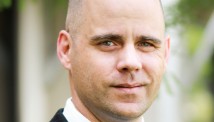
When I learned about Williams' suicide on Monday, it knocked the wind out of me. Sure, I am the president of the American Association of Suicidology, so I am alert to media coverage of suicide.
I talk about suicide every day, but, like most of you, my connection to Williams is personal. I'm from Boulder, Colorado and after I moved away, I would turn on reruns of "Mork & Mindy" any time I felt homesick or alone. Robin Williams' portrayal of a wacky alien just trying to make it in this world provided comfort, laughter, and wonderful memories.
Genie, you're free. pic.twitter.com/WjA9QuuldD
— The Academy (@TheAcademy) August 12, 2014 His death, by any means, is a deeply sad event. That he died from suicide (a cause of death I try to prevent nearly every day) just makes his death that much more painful to me.
Opinion: Why Robin Williams lost to depression
One of the questions I am usually asked after such a high-profile public suicide is: How does the news of a suicide affect others who are at risk? When it comes to high profile suicides, the research about contagion (or "copycat effect") is not clear.
We can't say for sure if media coverage increases the risk of more people attempting suicide. However, our best research suggests that "how" we discuss suicide in the media is more important than "if" it is discussed.
People tend to be afraid to talk about suicide, which is disheartening considering that suicide is the 10th leading cause of death in the United States. It kills more people than motor vehicle accidents and more than twice as many as homicide.
Opinion: Robin Williams and depression: We all wear a mask
But in our high-tech, social media driven culture, we need to recognize that avoidance or denial of suicide simply is no longer possible. A friend of mine told me that her 8-year-old daughter came home from school yesterday talking about suicide. The specific details of Robin Williams' suicide method were discussed by children on the playground nearly 2,000 miles away from Williams' home, less than 24 hours after his death.
The reality is, this 8-year-old knew more "facts" about the death than I did (clearly, not all professional journalists have read or follow the media guidelines regarding the reporting related to suicide and suicidality). At this time mental health professionals do not know how making this information widely available, even to school children, affects their long-term mental health.
What we do know is that responsible adults need to ensure that the messages and stories related to Robin Williams suicide, just like every other suicide, are seen as opportunities to educate people that help is available (National Suicide Prevention Lifeline: 1-800-273-TALK; Crisis Text Line: www.crisistextline.org), that mental health treatments are effective, and that suicidal thoughts, by their very nature, tend to be time-limited -- though they may regularly recur.
Our best experts believe that providing information about how to get help is one of the most useful things we can do after a highly-publicized death by suicide.
When mental illness affects your family
Williams' death is also an opportunity to educate people that there are warning signs for suicide, which, if recognized, can help get people the urgent care they require to avert it. These include talking or writing about death, dying or suicide, when these actions are out of the ordinary, and withdrawal from friends, family and society. There are a number of others, so please take a moment to click here and review the warning signs of suicide.
Suicide is a tragedy that can have an enormous impact on those who are left behind. While Robin Williams touched many of our lives (including mine) throughout his illustrious career, more than 39,000 people commit suicide each year -- meaning as many as 107 other individuals may have died this way on the day Williams took his life.
Hopefully what will come out of this tragic loss of life is a more open dialogue about this very real health issue, which has claimed so many lives.
Read CNNOpinion's new Flipboard magazine
Follow us on Twitter @CNNOpinion.
Join us on Facebook.com/CNNOpinion.
Ebola medics fight fear and myth
8/13/2014 8:12:21 PM
- The CDC has sent nine people to Lagos, Nigeria, to fight the Ebola outbreak
- The World Health Organization says Nigeria has 12 suspected cases, three deaths
- CDC team is helping with tracking the infection, training health care workers
Editor's note: David Daigle is associate director for communications at the Centers for Disease Control and Prevention's Office of Public Health Preparedness and Response. He arrived in Lagos, Nigeria, on August 7 with a team of CDC specialists sent to West African nations battling Ebola.
(CNN) -- There are nine of us from the Centers of Disease Control and Prevention in Lagos, Nigeria.
We arrived from different U.S. states, or from the CDC's polio team already in Nigeria, and possess varying skill sets, including infection control, global migration and quarantine, data management, epidemiology and communications.
We're here to work with colleagues and partners from Nigeria's Ministry of Health, UNICEF, Doctors Without Borders and the World Health Organization to stop the largest Ebola outbreak in history -- the first in a densely populated, urban environment.
Nigeria is the latest country to become affected by the outbreak. The first person to die of Ebola here was an American named Patrick Sawyer, who arrived from Liberia. Now WHO suspects Nigeria has had 12 cases and three deaths.
Our team in Lagos is a small part of the CDC's effort to fight Ebola, with work going on in several African countries, and back in the United States at our headquarters in Atlanta. There, the CDC's Emergency Operations Center has activated its highest level to maintain 24/7 operations to coordinate the agency's efforts.
We are five hours ahead of Atlanta, a fact my family has yet to grasp as I receive texts during odd hours asking, "What's Lagos like?" and "What are you doing?"
Good questions.
A typical day for our team begins at a hotel -- one big advantage of an urban outbreak. After breakfast we move to one of several locations, including the hospital, U.S. Consulate or a training site, depending on the work to be done that day.
Team Lagos is working as part of a much larger team in Nigeria to find and isolate all possible patients, tracking down everyone who could have been exposed to Ebola, and educating the public about the risks.
A great deal has been accomplished in a short time. A Nigerian emergency operations center is up and running now, and we are about to move Ebola patients into a newly, remodeled treatment facility.
There are 60 folks on the contact tracing team, which has been tracking more than 200 people thought to have come in contact with the virus. These teams visit the contacts daily to take their temperatures and check to see if they have developed any symptoms. On Tuesday, 147 of the 152 contacts were visited and assessed. When difficulties arise locating contacts, additional teams are employed and efforts ramped up to conduct the tracing.
The Ebola response team in Nigeria recently saw 30 people finish the 21-day risk period -- the longest time period during which Ebola symptoms have been known to be present. These 30 people were able to leave the contact tracing list, which is a hopeful sign.
There is a great deal of fear in Lagos as many worry about a virus of which they know precious little. CDC communicators like myself work to provide accurate information to the public and health care workers. Health care workers are critical as they are on the front lines of this battle; WHO says 10% of the deaths during this epidemic have been health care workers.
Our infection control experts have been training workers on proper infection control and teaching them how to don Personal Protective Equipment properly, a critical task given this virus.
I was taking pictures of this training near the Ebola ward when one of the trainers came out of the "hot zone" and asked if anybody had a paperback to give one of the patients. I donated a weathered copy of Shakespeare's "Henry the IV, Part 1." (I always carry a book on deployments). So the Bard has entered the Ebola ward in Lagos.

One interesting aspect of this outbreak has been the rumors and misinformation spurred by Ebola. Last week, communicators were working quickly to respond to a rumor that bathing in or drinking salt water would prevent Ebola. I have seen local press coverage that notes two people may have died from attempting this treatment.
As I write this, we are in a temporary emergency operations center at a psychiatric hospital, waiting for remodeling to be complete on our own center. We made the change with some grumbling but did not miss a beat -- flexibility is essential in an evolving outbreak situation.
Our work is made more difficult by traffic in the city, a lack of Internet connectivity and security, which is a concern. We typically make it back to the hotel late, anywhere between 9 and 11 p.m. local time and try to eat together.
Team members who gather are tired, and the outbreak dominates the conversation. But we also try to distract ourselves: On my third night, a team member asked, "Has anyone else noticed that the background music is all Celine Dione?" It was true. Turns out she has quite a few songs, and I am pretty sure we have heard them all.
I am not afraid of catching the Ebola virus. I know how Ebola is transmitted and will not put myself in jeopardy, thinking of my wife and four children at home.
The work is long, hard, challenging but worthwhile. The CDC team in Lagos is amazing, one of the best I have been on. And the larger response team that includes all our partners and our colleagues from Nigeria is doing important work to break the Ebola infection cycle.
Read: Canada to donate untested Ebola vaccines
Read: Patient Zero in Ebola outbreak identified?
Family: Please help man in N. Korea
8/14/2014 12:40:32 AM
- Jeffrey Fowle visited North Korea as part of a tour group earlier this year
- Fowle is one of three Americans detained in North Korea
- His family and lawyer asks for help in his return
(CNN) -- The family of Jeffrey Edward Fowle, an American tourist detained in North Korea for apparently breaking an unspecified law, has apologized to the reclusive state and asked for his release.
Fowle's wife and their three children appeared at a news conference in Lebanon, Ohio, Tuesday, in which the family's lawyer, Timothy Tepe read a statement.
"The family would like to express its heartfelt apology to the people and the government of the DPRK (Democratic People's Republic of Korea). Jeff has apologized publicly for his actions and Jeffrey's family petitions the government of the DPRK for mercy toward Jeffrey and asks for his release."
Fowle's family has been writing to U.S. President Barack Obama and previous presidents including George W. Bush, Bill Clinton and Jimmy Carter to help his case. In previous cases of arrested Americans in North Korea, visits by U.S. former heads of state helped secure their return. Carter visited Pyongyang in 2010 to free American Aijalon Mahli Gomes and Clinton also made the trip to free U.S. journalists Laura Ling and Euna Lee in 2009.
"The next few days are critical as we approach the trial date," Tepe said at the news conference, attended by CNN affiliate based in Dayton, Ohio, WHIO.
There was no official announcement of a trial date from North Korea's state-run, Korean Central News Agency (KCNA).
Plea for help
Earlier this month, the Associated Press, which has a bureau in Pyongyang, was granted an interview with Fowle and another American held in the country.
In the interview released on August 1, Fowle told the wires service, that "the window is closing on that process. It will be coming relatively soon, maybe within a month," Fowle said of his trial.
In the interview, Fowle apologized to both the United States and North Korea. He also wrote a letter, in which it stated: "I intentionally left a Bible in a nightclub." He wrote that he had been treated well, but it was unclear whether the statement was written freely or whether he was pressured.
Tepe said the family has received one phone call and one letter from him in North Korea.
"They're desperate for his release and his return home. As you can imagine, Jeffrey is the primary financial provider for his family and [his wife] Tatyana is struggling to manage by herself," Tepe said at Tuesday's news conference.
Three Americans in custody
In June, KCNA reported that authorities were investigating Fowle, whom it said violated the law by acting "contrary to the purpose of tourism."
Citing unidentified sources, Japanese news agency Kyodo reported that Fowle was part of a tour group and that he was detained in mid-May after allegedly leaving a Bible behind.
In a previous statement, the family had said,"Jeffrey loves to travel and loves the adventure of experiencing different cultures and seeing new places."
Fowle is one of three Americans detained in North Korea, including Matthew Todd Miller, who was taken into custody on April 10, according to KCNA and Korean-American missionary, Kenneth Bae, who has been sentenced to 15 years hard labor in 2013.
READ: Kenneth Bae feels abandoned by U.S.
You are receiving this email because you subscribed to this feed at feedmyinbox.com
If you no longer wish to receive these emails, you can unsubscribe from this feed, or manage all your subscriptions

No comments:
Post a Comment