 | Are You a Baby Boomer? 46% will die broke. Don't become a statistic! Get your FREE "Retirement Kit" Today AVOID this unfortunate fate. Instant download available! From our sponsors |
| CNN.com - Top Stories |
| CNN.com delivers up-to-the-minute news and information on the latest top stories, weather, entertainment, politics and more. |
China convicts corporate investigators
8/11/2014 2:10:10 AM
- Peter Humphrey and wife Yu Yingzeng sentenced to at least two years in prison
- Pair admitted to obtaining personal information on Chinese citizens by illegal means
- They did work on behalf of GlaxoSmithKline's China arm
- The drug giant faces allegations of bribery
Hong Kong (CNN) -- An expatriate corporate investigator has been sentenced to two and a half years in a Chinese jail after being found guilty of stealing and selling personal information for profit, Chinese state media has reported. His wife and business partner was also found guilty of the same charge and was handed a two-year prison sentence.
Briton Peter Humphrey, who has been in detention since July 2013, appeared in a Shanghai court on Friday at the same time as his wife and business partner Yu Yingzeng. Yu is a Chinese-born U.S. citizen.
READ: GSK-linked investigator's trial begins
According to a court statement quoted by official news agency Xinhua, the pair confessed to obtaining private information about Chinese citizens by "illegal means."
They said they would write reports based on this information and sell them to multinational companies.
In court, Humphrey said that he had conducted a two-month investigation on behalf of GlaxoSmithKline's China management into who had filed formal allegations of bribery against the company, Xinhua reported.
Chinese police have accused GSK executives in China of presiding over a web of corruption and bribery. GSK has said its China business is fully cooperating with the ongoing investigation.
READ: China scandal takes toll on Glaxo
In a July 3 statement, GSK said it had hired Humphrey's firm in April 2013 to conduct an investigation following a serious breach of privacy and security related to the company's China general manager.
Humphrey is a veteran corporate detective -- an investigator, similar to a private detective, but one which sniffs out corporate malfeasance -- who spent more than 20 years as a foreign correspondent with Reuters, including stints in Beijing and Eastern Europe.
ChinaWhys, the investigations consultancy that Yu and Humphrey established, assisted in assessing corporate risks, conducting background checks and investigating allegations of corruption and fraud.
The couple's son, who attended court, had told CNN that he believed it would be easier for his parents if they pleaded guilty.
"I'm hoping it will be a situation where they plead guilty and they go for a mitigation defense strategy, and just try to make it as lenient a sentencing as possible," he said before the trial.
READ: China bars Glaxo exec from leaving country
Soccer: Mangala joins Manchester City
8/11/2014 8:18:14 AM

- Manchester City sign French international defender Eliaquim Mangala
- The 23-year-old joins from Portugal's Porto
- Mangala did not play any games at World Cup in Brazil
Editor's note: Follow us at @WorldSportCNN and like us on Facebook
(CNN) -- Manchester City just can't stop spending money as the English Premier League champions have forked out a reported $53 million to sign France international defender Eliaquim Mangala from Portuguese club Porto.
Mangala's transfer, confirmed Monday, comes just three months after City was heavily sanctioned by European football body UEFA for breaching new rules on Financial Fair Play.
Whatever the deal's financial implications, City manager Manuel Pellegrini believes the 23-year-old Mangala has "all of the mental, physical, technical and tactical attributes to become one of Europe's very best defenders."
Pellegrini added on the City website: "Eliaquim is a player I believe will make an immediate impact in the Premier League, thanks to his physicality, his reading of the game and quality on the ball."
Mangala, who began his professional career at Belgian club Standard Liege, was part of France's 2014 World Cup squad but did not play in any games.
"For me, it was an important step to leave Porto and join Manchester City in order to continue my progress. I want to win titles and I believe I can do this. I am ambitious and this is why I am here," Mangala told the City website.
In May, the English champions accepted a UEFA fine of €60 million ($82 million), a restriction on transfer spending and a reduction in the club's squad size for the European Champions League.
Mangala is City's fifth permanent signing since last season, following his former Porto teammate Fernando -- who cost $20 million -- to England.
Argentine goalkeeper Willy Caballero joined for a reported $10 million from Pellegrini's former club Malaga, while compatriot Bruno Zuculini was acquired for $5 million from Racing Club.
Mangala's fellow France World Cup teammate Bacary Sagna moved from Arsenal on a free transfer, while veteran midfielder Frank Lampard will play on loan from City's American feeder club New York City FC.
City's only sale since last season has been midfielder Jack Rodwell's $16.7 million departure to Sunderland, while veteran midfielder Gareth Barry joined Everton on a free transfer.
Read more: Arsenal beat Man City in EPL curtain raiser
Read more: Pelligrini wants to build 'dynasty'
Missouri shooting: Call for justice
8/11/2014 10:34:02 AM
- LZ Granderson: I'm tired of seeing African-Americans die as innocent, unarmed shooting victims
- He says we've had enough of saying race isn't a factor and of ignoring racial disparities
- Granderson: It's too easy for people to become apathetic and accept injustice
- LZ: I'm tired of parents weeping for children who did not have to die
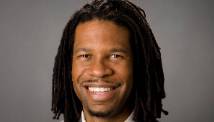
Editor's note: Editor's note: LZ Granderson is a CNN contributor, a senior writer for ESPN and a lecturer at Northwestern University. He is a former Hechinger Institute fellow and his commentary has been recognized by the Online News Association, the National Association of Black Journalists and the National Lesbian and Gay Journalists Association. Follow him on Twitter @locs_n_laughs. The opinions expressed in this commentary are solely those of the author.
(CNN) -- I am tired.
Tired of our streets being peppered with dead, unarmed black people. Tired of listening to armed assailants describe how they feared for their lives. Tired of being told "this has nothing to do with race."
I am tired of having to march to have murderers arrested. Tired of worrying about my 17-year-old being gunned down by some random white guy who thinks his music is too loud. Tired of knowing the same could happen to me.
I am tired of seeing a hashtag in front of a victim's name on Twitter. Tired of seeing Al Sharpton speak on behalf of a family. Tired of waiting for verdicts and hoping for justice --as if hearing "guilty" can ease the anxiety of knowing a police officer shot and killed a 22-year-old black man while he was lying face down and with his hands behind his back.
I'm tired of the cynics who are quick to extend the benefit of the doubt to a gunman but hesitant to do the same for an unarmed teenage girl who had been shot in the face. I am tired of seeing images of police officers with snarling dogs threatening a crowd of black protesters and not knowing if it's from the 1960s or last week.
In the case of Michael Brown's death in Ferguson, Missouri, it's the latter. Witnesses said he was shot multiple times from 35 feet away after his hands were raised. Again, he was unarmed.
I am tired of the U.S. Department of Justice having to closely watch local authorities. I am tired of local authorities advocating for Stop and Frisk one minute and dismissing the notion of racial profiling the next. I am tired of the charlatans who chase the bodies of innocent victims the way sleazy lawyers chase ambulances. I hate black looters at peaceful rallies the way I hate the KKK.
I don't want to get shot by a police officer.
LZ Granderson
And I'm tired of thinking that each time one walks by.
I don't begrudge anyone who has the luxury of not knowing what that kind of siege feels like. I just hope they have the decency not to characterize the socioeconomic disparity along racial lines as a card to be played but rather recognize it as a looming element of our cultural fiber.
For example, from 1934 to 1962, the federal government backed $120 billion of home loans. Because of an appraisal system that deemed integrated communities financial risks, less than 2% of those loans went to minorities.
When you consider that home ownership has long been the prerequisite for the average American to acquire wealth, there is little wonder why white Americans have 22 times more wealth than blacks. That is not a card being played. That is math. And I'm tired of having to explain that.
Just as I'm tired of watching the video of Eric Garner being placed in a chokehold by NYPD, listening to him say "I can't breathe, I can't breathe" and then watching him die minutes later.
But I need to keep watching because apathy is a clever hunter. It cloaks itself with FBI statistics and slips into the system between runs to Starbucks. Then one day as you're sipping your grande decaf mocha, you see a headline about an unarmed black man being shot and killed by police and think nothing of it.
Or worse yet -- assume he did something to deserve it.
I'm tired of unarmed dead black people being put on trial. I'm tired of politicians visiting our churches for votes but skipping out on these funerals
I'm tired of hearing mothers and fathers weep for children who did not have to die.
But most of all I'm tired of the people who are not tired like me.
Read CNNOpinion's new Flipboard magazine.
Follow us on Twitter @CNNOpinion.
Join us on Facebook.com/CNNOpinion.
Is Turkey at a crossroads?
8/11/2014 10:46:40 AM
- Turkish PM Recep Tayyip Erdogan has won the country's first direct presidential election
- The president's role is more formal, he represents the country as the head of the state
- But Erdogan has already indicated he will seek more powers as the president
Editor's note: Viewing this on mobile? Click here to see the infographic.
(CNN) -- Turks have picked prime minister Recep Tayyip Erdogan to be the country's first directly elected president.
Erdogan secured 52% of the votes in the first round of the presidential election, narrowly avoiding a runoff, according to Turkish election board.
Turkey is a parliamentary democracy and the prime minister is the head of its government. The president's role is more formal, and represents the country as the head of the state -- similar to the Queen in the UK.
But Erdogan has already indicated he would like to see more powers being transferred to the presidential palace, speaking about a "new era" in his victory speech.
"With the president elected directly by the citizens, all barriers between the people and the presidential palace have been removed," he was reported as saying in his speech by the Turkish media.
Here is what you need to know about the historic election.
Why does Erdogan want to be president if he is more powerful as prime minister?
The former mayor of Istanbul and the leader and co-founder of the Justice and Development Party (AKP) came to power in 2003 and has been serving his third term as prime minister. While the constitution would have allowed Erdogan to run again when his term finishes next year, his own party rules prohibited him from seeking fourth term.
His transition to presidency was seen as a logical step for a politician who wanted to maintain political power. Karabekir Akkoyunlu, researcher at the London School of Economics, said the country's constitution -- drawn up by the military junta in 1982 -- gave the head of state significant authority.
Erdogan, Akkoyunlu said, would likely push those to the limit by " invoking the 'national will' he claims to embody."
What issues will he face next?
The Kurdish peace process is one of the most pressing issues of the coming months. Turkey passed a law in July establishing a legal framework for peace talks with the Kurdish militants to end three decades of insurgency.
"The Kurdish peace process is also linked with regional dynamics and the rise of the Islamic State, which is now threatening the Kurds in northern Iraq and Syria," Akkoyunlu said.
Erdogan will also have to work with the government in trying to tackle Turkey's economic troubles. The IMF and OECD have both warned Turkey's economy remains vulnerable to dangers outside its borders. High inflation, low employment and the country's chronic inequality are putting it at risk.
Who else was running?
The main opposition parties, the Republican People's Party (CHP) and the Nationalist Movement Party (MHP) had nominated Ekmeleddin Ihsanoglu as their joint candidate. The former secretary general of the Organization of Islamic Cooperation (OIC) was campaigning on the idea of national unity and secured 38% of the vote.
Selahattin Demirtas, a left-wing politician popular with Turkey's Kurdish minority, ran for the Peoples' Democratic Party (HDP) and finished third with 10%. Around 25% of people in Turkey identify themselves as Kurdish.
Why does this matter?
Turkey's geographical position and cultural make-up has contributed to the country being seen as a powerful bridge between Asia and Europe. Its membership of NATO and candidacy to join the European Union reflect its importance.
The country's $800 billion economy is among the 20 biggest in the world and attracts $200 billion in foreign direct investment every year.
Turkey also plays a key role in the Middle East, bordering Syria, Iraq and Iran.
Read more: How Turkey turned into economic mess
Opinion: Turkey's Teflon politician targets top post
John Defterios: Erdogan looks to secure his place in history
Can air power stop ISIS?
8/8/2014 5:35:49 PM
- U.S. strikes ISIS targets in Iraq to stem the group's spread
- Douglas Ollivant: Air power can be very potent when used properly
- He says it works well to stop the enemy from offensive moves
- Ollivant: Air power often fails to dislodge forces from defensive positions
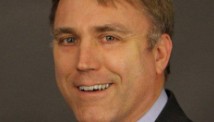
Editor's note: Douglas A. Ollivant, a senior fellow with the New America Foundation, served as director for Iraq at the National Security Council during the Bush and Obama administrations and is now senior vice president of Mantid International, LLC, a strategic consulting firm that has business interests in the south of Iraq, including security, defense and aerospace clients. The opinions expressed in this commentary are solely those of the author.
(CNN) -- The new ISIS offensive in the North of Iraq has both shaken the Kurds and threatened the Yazidi minority with not only genocide, but also cultural extinction. In response the United States early Friday morning used airpower against ISIS targets inside Iraq. This is the first use of force against ISIS both since ISIS rebranded from al Qaeda in Iraq and since the departure of U.S. forces at the end of 2011.
So what can U.S. airstrikes accomplish? Airpower is incredibly potent when properly used, but nearly useless in the wrong situations. ISIS will present both these alternatives in Iraq.
Put very simply, airpower is incredibly effective against an enemy who is on the offense. If an enemy—be it a person or a vehicle or a weapon system—is on the move and/or fighting, they create a "signature" that is easy to spot from the air.
Since there will be no U.S. forces on the ground as target designators or air controllers, being able to see a target from the air will be crucial. So, a column of ISIS trucks or—as seen early Friday morning—a captured artillery piece firing against Kurdish positions, each make easy acquisition. Against these targets, airpower is nearly invincible. One thinks of the devastation released over two decades ago by U.S. airpower on the "Highway of Death" (albeit these forces were not attacking, but retreating—but the signature is the same).
So when President Obama talks about targeted airstrikes to protect American personnel in Baghdad or Irbil, he is, in essence, saying that if ISIS attacks toward these cities, we will use airstrikes on their then-vulnerable forces.
Note that the President did not say that airstrikes would be used to eject ISIS forces from Mosul or Kirkuk or Fallujah. For in densely populated cities like these, airpower has real limitations. An enemy in defensive positions, particularly in urban terrain, is very difficult to engage with airpower. Even if the target can be hit, the possibility for collateral damage that causes civilian casualties is very real. And if the target is missed, the collateral damage can be exponentially higher, even catastrophic.
So while mission creep is always a danger in any war, in this case the chances of it seem rather minimal. The President has chosen one means—airpower—and given it a mission at which it excels; prevent enemy forces from attacking prepared positions, whether in Irbil or Baghdad. This mission is well within the capacity of U.S. airpower. When and if unleashed, U.S. warplanes can absolutely prevent ISIS from moving against these two Iraqi cities.
But reclaiming territory from ISIS will be another matter altogether. This will require a unified Iraqi effort—Arab and Kurd alike—under a new government with the will, legitimacy and resolve to accept the casualties that a ground offensive will require. We need only look at the U.S. experience in Second Fallujah—almost 10 years ago now—to picture what this might look like. Nor will U.S. ground forces be joining in this endeavor. This must be clear. There is no—zero—appetite in the U.S. public for such a commitment.
To that end, we must hope that Iraq remains on its constitutional timeline so that a new government can be formed and begin the long, hard task of regaining control over its territory. Therefore, new Iraqi President Fuad Masum must charge the largest bloc in the Iraqi parliament with forming a government. Soon.
Read CNNOpinion's new Flipboard magazine
Follow us on Twitter @CNNOpinion.
Join us on Facebook.com/CNNOpinion.
Could ISIS retaliate against the West?
8/10/2014 7:10:38 AM
- European militants who have traveled to Syria could go back home and launch attacks
- So far, militants in Iraq and Syria haven't seen attacking the West as a priority
- But officials also fear the conflict could create new terror ties, bomb technology, lone wolves
(CNN) -- The U.S. air strikes carried out Friday against ISIS are likely to have one unintended consequence: immediately increase the terrorist threat in Europe and the United States, Western counter-terrorism officials tell CNN.
Within hours of U.S. military jets and drones conducting a strike on ISIS artillery that had been used against Kurdish forces defending Irbil, ISIS supporters called for retaliatory attacks against the United States.
"It is a clear message that the war is against Islam and the mujahideen. The mujahideen must strive and seek to execute proactive operations in their own home, America, to discipline America and its criminal soldiers," Abu al-Ayna al-Khorasani, an administrator of Shumukh al-Islam, the top-tier forum for ISIS propaganda, wrote on his account Friday, according to a translation by the SITE Intelligence group.
Other ISIS supporters railed against the United States using the Twitter handle #AmessagefromISIStoUS, posting images of the wreckage of the twin towers. "Don't forget 11 Sept .. Maybe US citizens want more like that," one extremist tweeted. In June after ISIS captured Mosul, its supporters had warned against strikes in a Twitter campaign #CalamityWillBefallUS.
Here are three ways ISIS and its supporters could retaliate for U.S. military action against its fighters:
1. ISIS could unleash a crash program to attack the West
The nightmare scenario is that ISIS leaders initiate a crash program to launch attacks in the West. They are well-positioned to unleash such carnage if they choose.
ISIS, which calls itself the Islamic State but formerly was known as the Islamic State in Iraq and Syria, is thought to have tens of millions of dollars in cash reserves and it operates training camps on a scale last seen in Taliban-run Afghanistan. The 9/11 operation, by point of reference, cost $500,000.
European officials tell CNN up to 1,000 European extremists are believed to have joined ISIS. Dozens of Americans are probably fighting with the group, too. This gives ISIS the opportunity to train them and send them back home to launch attacks.
These European fighters also could pose a threat to the United States because many Europeans do not need a visa to enter the U.S.
There also are fears these Western fighters might be equipped with sophisticated devices that could evade airport security. Early this year, U.S. officials became worried that some AQAP bomb-makers trained by master-bombmaker Ibrahim al Asiri may have traveled to Syria.
This combination of threats was described by U.S. Attorney General Eric Holder as "more frightening than anything I think I've seen as attorney general," in an interview with ABC News several weeks ago.
So far, though, ISIS has not seen attacking the West as anything near a priority.
Its focus instead has been on expanding the territory it controls in Syria and Iraq.
The political turmoil brought about by the Arab Spring has made the ultimate dream of global jihadists -- the adoption of their kind of Islamic rule across the Arab world -- seem tantalizingly close. Attacking the West, which for al Qaeda leaders was always a means to this end, has become something of a sideshow.
It is possible that the limited aerial campaign initiated by U.S. President Barack Obama will not see a significant switch of focus from ISIS towards attacking the West. The White House's stated objectives do not include degrading the group.
ISIS -- previously known as al Qaeda in Iraq -- has never prioritized targeting Western soil, instead preferring to focus on fighting "infidels" at home.
Map: Where is ISIS?
In the decade since the Jordanian terrorist Abu Musab al-Zarqawi created the group, it has not been directly behind any plot on Western soil, even during the years the United States military engaged it in intense counter-insurgency operations across Iraq.
By contrast, in the decade after the September 11 terrorist attacks, al Qaeda operatives in Pakistani tribal areas provided wave after wave of Western recruits training on how to make bombs out of chemicals and components readily available in home-improvement and beauty-supply stores in the West.
To date, only one suspected ISIS recruit who has returned to Europe is alleged to have built such a device.
In February, French police arrested a man they identified as Ibrahim B., a 23-year-old French-Algerian, and retrieved three soda cans filled with nearly a kilogram (about two pounds) of the high explosive TATP from his Cannes apartment. French police suspect that in the 18 months he fought in Syria, he learned how to make TATP, an unstable and difficult-to-transport high explosive used to build detonators in multiple al Qaeda plots against the West.
It is not clear whether ISIS signed off on his alleged plot.
While some Western recruits are taught how to make improvised explosive devices in Syria, there is little indication yet that the group has created a training program tailored to attacking the West. The worry is that that could change. After a decade of insurgency in Iraq, no other group has more expertise in making IEDs.
2. Returned fighters could take matters into their own hands
The most immediate threat to the West comes from hundreds of extremists who have returned home after fighting with terrorist groups in Syria. While little evidence has emerged so far that ISIS has directed them to launch attacks, their urban warfare skills would make them especially dangerous.
The first terrorist attack on Western soil linked to Syria probably followed this trajectory. Mehdi Nemmouche, a French-Algerian who spent a year in Syria and was recruited into ISIS, has been charged with gunning down four people at a Jewish museum in Brussels, Belgium, in May. ISIS itself did not claim responsibility for the attack, suggesting to investigators that Nemmouche planned the attack himself.
Among Western countries Europe has by far the greatest number of returnees.
"The threat of attacks has never been greater -- not at the time of 9/11, not after the war in Iraq -- never," a European counterterrorism official told CNN in June. He envisaged a flood of small-scale but effective and chilling attacks similar to the Brussels shooting.
European counterterrorism officials are worried the gains made by ISIS in Iraq will lead to a surge of travel to the region. In identifying who has traveled, they are often playing catchup.
"In most cases, we know within two weeks a guy has gone to Syria. But 10%-15% of the time, it can be several months before we figure it out. Inevitably, there will be some we have no idea about," one official told CNN.
But even those they know about are difficult to track. Nemmouche was on a watch list when he returned to Europe. European officials tell CNN it is impossible, because of the cost, to conduct 24-hour surveillance on any but a small fraction of people who have returned from Syria.
3. 'Lone wolves' could lash out
The Boston Marathon bombings illustrated the danger posed by extremists learning bomb-making skills over the Internet without having to travel to jihadist encampments overseas.
European officials say anger about events in Syria and Iraq and excitement about the gains made by ISIS have spiked radicalization to unprecedented levels across the continent.
Though the animus is not directed as squarely against the West as it was during the Iraq war, ISIS' viscerally anti-Western ideology is attracting a growing following in extremist circles in Europe. It matters little that European countries are not currently involved in air strikes: ISIS supporters believe all Western countries are working together to attack Islam.
The Costs of inaction
The likely increased terrorist threat in the West that will arise in the coming weeks and months from U.S. air strikes in Iraq should be weighed against the risks of letting ISIS grow unchecked.
If ISIS is able to consolidate its territorial gains, it could set up training camps to rival any run by al Qaeda in Afghanistan before 9/11. Though its focus may be in Iraq and Syria for now, its viscerally anti-Western ideology means it would be foolish to discount it as a major potential future threat.
Though the unfolding humanitarian crisis in Iraq may have left the Obama administration little choice but to act, the concern is the limited US aerial campaign has now stirred the hornet's nest without doing anything to decisively degrade ISIS.
And there could be one other unintended consequence. A rally-round-the-flag effect may now strengthen the ISIS position in the global jihadist movement, leading to even higher levels of fundraising and recruitment.
In recent months the group has faced fierce criticism from al Qaeda and others for its declaration of an Islamic caliphate and its brutal methods. But with the budding Islamic State now being bombarded by the "Crusaders," such criticisms may fade, at least for a time.
Race, shootings, U.S. justice: I'm tired
8/11/2014 3:51:24 PM
- LZ Granderson: I'm tired of seeing African-Americans die as innocent, unarmed shooting victims
- He says we've had enough of saying race isn't a factor and of ignoring racial disparities
- Granderson: It's too easy for people to become apathetic and accept injustice
- LZ: I'm tired of parents weeping for children who did not have to die
Editor's note: Editor's note: LZ Granderson is a CNN contributor, a senior writer for ESPN and a lecturer at Northwestern University. He is a former Hechinger Institute fellow and his commentary has been recognized by the Online News Association, the National Association of Black Journalists and the National Lesbian and Gay Journalists Association. Follow him on Twitter @locs_n_laughs. The opinions expressed in this commentary are solely those of the author.
(CNN) -- I am tired.
Tired of our streets being peppered with dead, unarmed black people. Tired of listening to armed assailants describe how they feared for their lives. Tired of being told "this has nothing to do with race."
I am tired of having to march to have murderers arrested. Tired of worrying about my 17-year-old being gunned down by some random white guy who thinks his music is too loud. Tired of knowing the same could happen to me.
I am tired of seeing a hashtag in front of a victim's name on Twitter. Tired of seeing Al Sharpton speak on behalf of a family. Tired of waiting for verdicts and hoping for justice --as if hearing "guilty" can ease the anxiety of knowing a police officer shot and killed a 22-year-old black man while he was lying face down and with his hands behind his back.
I'm tired of the cynics who are quick to extend the benefit of the doubt to a gunman but hesitant to do the same for an unarmed teenage girl who had been shot in the face. I am tired of seeing images of police officers with snarling dogs threatening a crowd of black protesters and not knowing if it's from the 1960s or last week.
In the case of Michael Brown's death in Ferguson, Missouri, it's the latter. Witnesses said he was shot multiple times from 35 feet away after his hands were raised. Again, he was unarmed.
I am tired of the U.S. Department of Justice having to closely watch local authorities. I am tired of local authorities advocating for Stop and Frisk one minute and dismissing the notion of racial profiling the next. I am tired of the charlatans who chase the bodies of innocent victims the way sleazy lawyers chase ambulances. I hate black looters at peaceful rallies the way I hate the KKK.
I don't want to get shot by a police officer.
LZ Granderson
And I'm tired of thinking that each time one walks by.
I don't begrudge anyone who has the luxury of not knowing what that kind of siege feels like. I just hope they have the decency not to characterize the socioeconomic disparity along racial lines as a card to be played but rather recognize it as a looming element of our cultural fiber.
For example, from 1934 to 1962, the federal government backed $120 billion of home loans. Because of an appraisal system that deemed integrated communities financial risks, less than 2% of those loans went to minorities.
When you consider that home ownership has long been the prerequisite for the average American to acquire wealth, there is little wonder why white Americans have 22 times more wealth than blacks. That is not a card being played. That is math. And I'm tired of having to explain that.
Just as I'm tired of watching the video of Eric Garner being placed in a chokehold by NYPD, listening to him say "I can't breathe, I can't breathe" and then watching him die minutes later.
But I need to keep watching because apathy is a clever hunter. It cloaks itself with FBI statistics and slips into the system between runs to Starbucks. Then one day as you're sipping your grande decaf mocha, you see a headline about an unarmed black man being shot and killed by police and think nothing of it.
Or worse yet -- assume he did something to deserve it.
I'm tired of unarmed dead black people being put on trial. I'm tired of politicians visiting our churches for votes but skipping out on these funerals
I'm tired of hearing mothers and fathers weep for children who did not have to die.
But most of all I'm tired of the people who are not tired like me.
Read CNNOpinion's new Flipboard magazine.
Follow us on Twitter @CNNOpinion.
Join us on Facebook.com/CNNOpinion.
How many unarmed kids have to die?
8/11/2014 9:13:55 PM
- LZ Granderson: I'm tired of seeing African-Americans die as innocent, unarmed shooting victims
- He says we've had enough of saying race isn't a factor and of ignoring racial disparities
- Granderson: It's too easy for people to become apathetic and accept injustice
- LZ: I'm tired of parents weeping for children who did not have to die
Editor's note: Editor's note: LZ Granderson is a CNN contributor, a senior writer for ESPN and a lecturer at Northwestern University. He is a former Hechinger Institute fellow and his commentary has been recognized by the Online News Association, the National Association of Black Journalists and the National Lesbian and Gay Journalists Association. Follow him on Twitter @locs_n_laughs. The opinions expressed in this commentary are solely those of the author.
(CNN) -- I am tired.
Tired of our streets being peppered with dead, unarmed black people. Tired of listening to armed assailants describe how they feared for their lives. Tired of being told "this has nothing to do with race."
I am tired of having to march to have murderers arrested. Tired of worrying about my 17-year-old being gunned down by some random white guy who thinks his music is too loud. Tired of knowing the same could happen to me.
I am tired of seeing a hashtag in front of a victim's name on Twitter. Tired of seeing Al Sharpton speak on behalf of a family. Tired of waiting for verdicts and hoping for justice --as if hearing "guilty" can ease the anxiety of knowing a police officer shot and killed a 22-year-old black man while he was lying face down and with his hands behind his back.
I'm tired of the cynics who are quick to extend the benefit of the doubt to a gunman but hesitant to do the same for an unarmed teenage girl who had been shot in the face. I am tired of seeing images of police officers with snarling dogs threatening a crowd of black protesters and not knowing if it's from the 1960s or last week.
In the case of Michael Brown's death in Ferguson, Missouri, it's the latter. Witnesses said he was shot multiple times from 35 feet away after his hands were raised. Again, he was unarmed.
I am tired of the U.S. Department of Justice having to closely watch local authorities. I am tired of local authorities advocating for Stop and Frisk one minute and dismissing the notion of racial profiling the next. I am tired of the charlatans who chase the bodies of innocent victims the way sleazy lawyers chase ambulances. I hate black looters at peaceful rallies the way I hate the KKK.
I don't want to get shot by a police officer.
LZ Granderson
And I'm tired of thinking that each time one walks by.
I don't begrudge anyone who has the luxury of not knowing what that kind of siege feels like. I just hope they have the decency not to characterize the socioeconomic disparity along racial lines as a card to be played but rather recognize it as a looming element of our cultural fiber.
For example, from 1934 to 1962, the federal government backed $120 billion of home loans. Because of an appraisal system that deemed integrated communities financial risks, less than 2% of those loans went to minorities.
When you consider that home ownership has long been the prerequisite for the average American to acquire wealth, there is little wonder why white Americans have 22 times more wealth than blacks. That is not a card being played. That is math. And I'm tired of having to explain that.
Just as I'm tired of watching the video of Eric Garner being placed in a chokehold by NYPD, listening to him say "I can't breathe, I can't breathe" and then watching him die minutes later.
But I need to keep watching because apathy is a clever hunter. It cloaks itself with FBI statistics and slips into the system between runs to Starbucks. Then one day as you're sipping your grande decaf mocha, you see a headline about an unarmed black man being shot and killed by police and think nothing of it.
Or worse yet -- assume he did something to deserve it.
I'm tired of unarmed dead black people being put on trial. I'm tired of politicians visiting our churches for votes but skipping out on these funerals
I'm tired of hearing mothers and fathers weep for children who did not have to die.
But most of all I'm tired of the people who are not tired like me.
Read CNNOpinion's new Flipboard magazine.
Follow us on Twitter @CNNOpinion.
Join us on Facebook.com/CNNOpinion.
Erdogan celebrates big win
8/11/2014 3:45:08 PM
- Erdogan avoided a runoff by winning more than 52% of the votes
- Erdogan stopped short of declaring victory when he spoke Sunday night
- "We will continue to work for our nation," Erdogan told a crowd in Istanbul
(CNN) -- Turkish Prime Minister Tayyip Erdogan will become the country's first directly-elected president by a wide margin of votes, according the semi-official Anadolu News Agency.
Erdogan stopped short of declaring victory when he spoke Sunday night.
"We will continue to work for our nation, we will continue to serve our homeland," Erdogan told a crowd in Istanbul. "We will continue our fight for advanced democracy and sovereignty of democracy standards."
With nearly 98% of the votes counted, Erdogan avoided a runoff by winning more than 52% of the votes, according to CNN Turk and Anadolu News Agency.
Diplomat Ekmeleddin Mehm Ihsanoglu came in second with 38% of the votes. Kurdish politician Selahattin Demirtas was a distant third with 9%.
READ: Opinion: Turkey needs Erdogan
READ: Four things you should know about the poll
CNN's Hande Atay and Chandrika Narayan contributed to this report.
Clinton pummels Obama foreign policy
8/11/2014 9:37:41 AM
- Hillary Clinton rejects idea of foreign policy based on "don't do stupid stuff"
- Frida Ghitis: Clinton declared her independence and her interest in running in 2016
- She says Clinton advocated a more muscular, ideological policy than President Obama
- Ghitis: Clinton would have aided Syrian rebels earlier and backed Israel more strongly
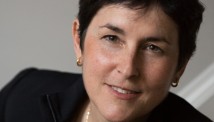
Editor's note: Frida Ghitis is a world affairs columnist for The Miami Herald and World Politics Review. A former CNN producer and correspondent, she is the author of "The End of Revolution: A Changing World in the Age of Live Television." Follow her on Twitter @FridaGhitis. The opinions expressed in this commentary are solely those of the author.
(CNN) -- Yes, Hillary Clinton is running for president, and she is running away from President Barack Obama's record on foreign policy.
That's a very clear message from the interview just published in The Atlantic in which she drew sharp distinctions between her view of America's role in the world and those of the President, while also expressing significant disagreements with him over the right approach to ongoing crises in the Middle East.
In a dramatic dismissal of the Obama administration's self-described foreign policy doctrine of "Don't do stupid stuff," Clinton declared, "Great nations need organizing principles and 'Don't do stupid stuff' is not an organizing principle."
Clinton clothed her criticism in respect of her "incredibly intelligent" former boss, but Obama may have clenched his jaw with irritation when he read the polite pummeling from his former secretary of state. Clinton promptly explained that even she didn't think that Obama really meant that is his foreign policy doctrine. (The name Obama used to describe the policy, incidentally, uses a four-letter word instead of "stuff.") She claimed that the catchy phrase was an effort to convey to Americans wary of U.S. misadventures in faraway lands that he was not about to do "something crazy."
Still, Clinton articulated a vision for a much more assertive U.S. role in the world, one that contrasts sharply with Obama's. In doing so, she brandished a lacerating analysis of the administration's foreign policy. Most troubling for Obama was her intimation that some of the most difficult, dangerous and deadly problems raging in the Middle East today might have been avoided if Obama had acted more promptly and less hesitantly.
Clinton splits with Obama on foreign policy
The interview with The Atlantic's Jeffrey Goldberg was a landmark moment in her quest for the office. She has made the big break with Obama and filled out an important part of her job application, telling Americans concerned about the country's place in the world why they should vote for her.
Like any statement made by a political candidate, there were unmistakable political calculations in her well-chosen words. It is clear that she believes her biggest political challenge lies on the right, not on the left, if nothing happens to dissuade her from running, which she evidently wants to do. The strategy is already that of a nominee, safe in the support of her party, seeking to peel away centrist voters and even conservative voters in the general election rather than courting the Democratic base in the primaries.
Many in the base, the hard-core, left-of-center Democrats, will resent her implied denunciation of Obama's cautious style which, she contended, has swung too far in the opposite direction after the Bush years.
"When you're down on yourself," she said, "when you're hunkering down and pulling back, you're not going to make any better decisions than when you were aggressively, belligerently putting yourself forward." The government, she said, has a tendency to swing between those extremes.
She proposes a midcourse. "We've learned the limits of America's power to spread freedom and democracy," she acknowledged, "but we've also learned the importance of our power, our influence, and our values appropriately deployed and explained." Right now, she argued, "We don't tell our own story very well."
When the Soviet Union fell, an ideological vacuum was filled by dangerous ideologies. Clinton appears to view Islamic extremism as the foremost foe facing America. She also is concerned about muscular nationalism of the kind Russian President Vladimir Putin is utilizing to spread Russia's influence.
America's main threats are Jihadi groups, now controlling territory in Syria and Iraq and determined to expand; Clinton views them as ideological enemies of the United States. "I'm thinking a lot about containment, deterrence, and defeat," she said, drawing a parallel with the Cold War era.
She did not push back against the suggestion that the rise of the Islamic extremists of ISIS might have been prevented if Obama had armed Syrian moderates three years ago.
Although he has approved increased support, Obama has rejected the notion that "former farmers or teachers or pharmacists" in the opposition could have succeeded with U.S. help. But Clinton disagrees. By failing to arm a force of carefully vetted moderates, the United States made it possible for extremists to take over the fight. Some of those extremists, who have captured large swaths of Syria, are now in Iraq, where Obama reluctantly agreed last week to intervene in what is a strategic and humanitarian calamity.
Clinton took what appears to be a harder line than the administration on nuclear negotiations with Iran. She laughed in describing Iranian Supreme Leader Ayatollah Ali Khamenei's position "that they don't have any intention of having a nuclear weapon but they nevertheless want 190,000 centrifuges." She rejected Iran's claim that it has a right to enrichment, and said America's stance should allow only a minimal number of centrifuges for research purposes.
Regarding Israel and the Palestinians, she spoke in words that Israel's supporters will find reassuring. "There's no doubt in my mind that Hamas initiated this conflict." Israel, she said emphatically, "has the right to defend itself." That is something Obama has said repeatedly, but Clinton spoke much more forcefully than the Obama administration has.
Regarding civilian casualties, she spoke of the difficulty of fighting an enemy embedded in civilian areas. "The ultimate responsibility," she said, "rests with Hamas."
Hamas, she said, is not a group the United States could work with, given its commitment to the destruction of Israel, "married to very nasty tactics and ideologies, including virulent anti-Semitism." Clinton argued that international criticism of Israel and disproportional attention to what it does is partly the result of anti-Semitism, particularly in Europe.
She listed the many times Israel has made far-reaching peace proposals to Palestinians. "I don't care about revisionist history," she said. "I know that (Yasser) Arafat walked away," and expressed sympathy for Prime Minister Benjamin Netanyahu's position on a military withdrawal from the West Bank. "If I were the prime minister of Israel," she said, "You're damn right I would expect to have control over security, for a number of years." "With Syria and Iraq," she said "it is all one big threat."
It is no secret that Clinton has advocated a much more internationally engaged, muscular and even ideological foreign policy, aimed at promoting America's values, which "also happen to be universal values."
She has now cast herself apart from the Obama administration on key aspects of world affairs, and sent a message to centrist voters, and to international audiences, that a Hillary Clinton administration would not look like its predecessor's.
Read CNNOpinion's new Flipboard magazine
Follow us on Twitter @CNNOpinion.
Join us on Facebook.com/CNNOpinion.
Soccer: Klose hangs up 'golden boots'
8/11/2014 10:02:55 AM

- World Cup finals' most prolific striker calls it a day following Germany's 2014 triumph
- Klose scored 16 goals in four World Cup finals and 71 in total for Germany in 137 matches
- Klose: "Records never concerned me -- it was always about giving my best for the team."
(CNN) -- The World Cup's most prolific goal scorer has hung up his golden boots.
Germany striker Miroslav Klose, who scored a total of 16 goals at four World Cup finals, announced his retirement from international football on Monday.
The 36-year-old scored two goals at this summer's tournament to surpass former Brazil striker Ronaldo's record of 15 as Germany lifted the trophy for the first time in 24 years.
Polish-born Klose scored five goals at the 2002 World Cup in Korea/Japan and five more in Germany four years later -- a feat that earned him the Golden Boot that year.
Four more followed in South Africa in 2010 before two goals -- a crucial equalizer in the group game against Ghana and a second in Germany's 7-1 rout of hosts Brazil in the semifinals -- completed his tally.
Klose also has the distinction of being Germany's all-time top goal scorer with 71 goals from 137 internationals.
"The success of the team stood and always stands for me in the highest place," Klose said in a statement published on the German national side's official website.
"With the national team I achieved our greatest goal, a goal which we had together within the squad.
"In addition, I achieved personal goals and those who know me know that I am very ambitious, but I am a striker and the task of a striker is to score goals.
"Therefore the records never concerned me, but it was always about giving my best for the team."
German national coach, Joachim Low heaped praise on the retiring marksman.
"He has given everything for Germany," Low said in a statement.
"I have the greatest respect for Miroslav's decision as well as (his) incredible national team career that will be hard to beat ... I am happy and grateful that I was able to work with Miroslav Klose.
The striker announced in July that he will play club football for one more season before retiring altogether.
Klose, who joined Lazio from Bayern Munich in 2011, signed a one-year extension to his contract with the Serie A side in May.
Read more: U.S. soccer legend Donovan retires
You are receiving this email because you subscribed to this feed at feedmyinbox.com
If you no longer wish to receive these emails, you can unsubscribe from this feed, or manage all your subscriptions

No comments:
Post a Comment